In a real estate landscape increasingly dominated by modern construction, clean lines, and uniform design, it has become rare to encounter a property that carries both architectural history and restoration potential in equal measure. Many newer homes prioritize efficiency, minimal maintenance, and standardized layouts, but in doing so, they often lose something harder to define—character.
Historic homes, by contrast, offer something distinctly different. They reflect the design philosophies, craftsmanship, and materials of another era, preserving a sense of continuity with the past. For buyers who value individuality and long-term vision, these properties present opportunities that go beyond traditional homeownership.
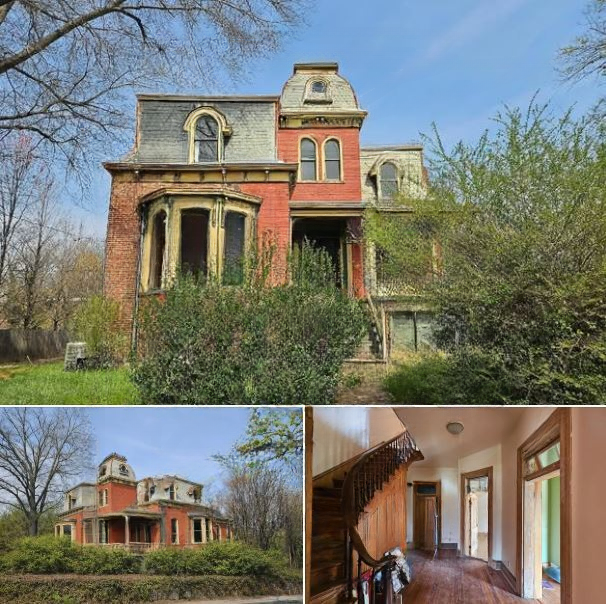
One such example is the William Carroll Residence, located in the historic Federal Hill area. Priced at $239,900, this late 19th-century home represents a rare chance to acquire a structurally significant property with strong potential for thoughtful restoration and personalized redesign.
Built in 1876, the residence stands as a testament to the Second Empire architectural style, a design movement that once symbolized elegance, sophistication, and modernity in its time. Today, it offers something equally valuable: a solid foundation for transformation while preserving its historical identity.
A Glimpse Into Second Empire Architecture
To understand the significance of the William Carroll Residence, it helps to first explore the architectural tradition it belongs to.
The Second Empire style originated in France during the reign of Napoleon III and became widely popular in the United States between the 1860s and 1880s. It was often associated with progress, refinement, and a desire to express architectural grandeur in residential design.
Although many variations exist, several defining characteristics make this style instantly recognizable.
One of the most prominent features is the Mansard roof. This distinctive four-sided roof design, with its steep lower slope and flatter upper section, not only creates a visually striking silhouette but also allows for additional usable living space in the upper floors. At a time when maximizing interior space was a practical concern, this design was both innovative and efficient.
Equally important is the emphasis on symmetry and ornamentation. Second Empire homes often feature tall windows, decorative trims, and carefully proportioned façades that reflect a balance between structure and artistry. Unlike many modern homes that prioritize simplicity, these buildings were designed to be visually expressive.
The William Carroll Residence preserves many of these architectural principles, making it a valuable example of 19th-century residential design.
Exterior Presence: Character That Cannot Be Replicated
From the outside, the home immediately communicates its historic identity. Even in its current condition, the structure carries a presence that distinguishes it from surrounding properties.
The roofline, in particular, draws attention, emphasizing the vertical elegance typical of Second Empire architecture. The proportions of the building create a sense of balance and permanence, suggesting both strength and history.
While time has naturally left its mark, the underlying structure remains visually compelling. With restoration work, the exterior offers significant potential for renewed curb appeal. Careful preservation of its original features combined with modern maintenance could transform the property into one of the most distinctive homes in the neighborhood.
For many buyers interested in historic real estate, this combination of authenticity and opportunity is precisely what makes properties like this so appealing.
Interior Layout: Space Defined by a Different Era
Stepping inside the William Carroll Residence reveals a layout that reflects the priorities of its time—space, proportion, and adaptability.
Unlike many contemporary homes designed around open-concept efficiency, this property offers a more segmented and spacious floor plan. Rooms are generously sized, with clear functional separation that allows for flexible use depending on the needs of the occupant.
The home includes five bedrooms, making it suitable for larger households, guest accommodations, or even repurposing as office or creative spaces. Each room offers its own potential, shaped by natural light and architectural structure.
With four full bathrooms, the home provides a level of convenience that is especially valuable in older properties, where modern updates have often been carefully integrated over time.
One of the most notable interior features is the presence of high ceilings. This design choice enhances the sense of openness throughout the home, allowing air and light to circulate more freely than in lower-ceilinged modern builds. It also contributes to the overall feeling of spaciousness that defines the property.
Original hardwood flooring remains in several areas, offering the opportunity for restoration rather than replacement. When refinished properly, these surfaces can become one of the home’s most visually striking features.
In addition, decorative woodwork throughout the residence reflects the craftsmanship of the late 19th century. Trim details, molding, and structural accents contribute to the home’s historic character, providing texture and depth that modern construction rarely replicates.
Several rooms also include fireplaces, which serve as architectural focal points. Beyond their functional history, these fireplaces add warmth and visual continuity, anchoring the design of individual spaces.
Dual Kitchen Layout: A Rare and Flexible Feature
One of the more unusual aspects of this property is its dual kitchen setup. While not commonly found in homes of this era, this feature opens the door to multiple modern possibilities.
Depending on the owner’s vision, the second kitchen space could support multi-generational living arrangements, allowing different household units to operate independently while sharing the same property. It could also be adapted for guest accommodations, offering privacy and convenience.
For those considering investment use, the layout may support rental configurations where permitted by local regulations. Alternatively, the space could be redesigned entirely, combining both kitchen areas into a single larger, modern culinary space while retaining structural flexibility.
This adaptability adds a layer of practical value that enhances the home’s long-term potential.
Lower-Level Living: The English Basement Advantage
The property also includes an English basement, a partially below-ground level that provides additional usable space beyond the main floors.
This area offers significant flexibility in how it can be developed. With thoughtful renovation, it could serve as a private guest suite, a home office, a recreational space, or even a self-contained rental unit where regulations allow.
Basements in historic homes often require careful updating to meet modern standards, but they also present some of the greatest opportunities for added value when properly restored. The presence of this space further strengthens the home’s versatility.
Restoration Reality: Challenges and Opportunities
Like many historic properties, the William Carroll Residence requires renovation and updates. Age-related wear has affected various systems and finishes, meaning that any future owner must be prepared for a restoration process.
However, in historic real estate, such conditions are often viewed not as drawbacks, but as opportunities.
Renovation allows for full customization, giving owners the ability to blend modern convenience with preserved architectural character. This balance between old and new is often what defines successful historic home projects.
Additionally, well-executed restoration work can significantly enhance property value over time, particularly in established neighborhoods where demand for unique homes remains strong.
Preserving original features wherever possible is also important. Elements such as hardwood flooring, fireplaces, and decorative woodwork contribute to the authenticity of the home and should be maintained when feasible.
At the same time, core systems such as electrical wiring, plumbing, and structural components must be updated to meet modern safety standards. Achieving this balance requires careful planning and, ideally, collaboration with professionals experienced in historic restoration.
Federal Hill: A Neighborhood with Lasting Appeal
Location is one of the most important factors in real estate value, and Federal Hill continues to be recognized for its historic charm and community atmosphere.
The neighborhood offers walkable streets, a strong sense of identity, and a mix of preserved historic homes alongside updated properties. Local amenities, including shops, dining, and essential services, contribute to its livability.
This combination of heritage and convenience makes the area particularly attractive to buyers seeking both character and accessibility.
Investment Perspective: Long-Term Value Potential
From an investment standpoint, historic homes occupy a unique position in the market. Their value is often tied not only to location and size but also to architectural rarity and restoration quality.
The William Carroll Residence presents several potential advantages:
Its distinctive Second Empire design makes it stand out among surrounding properties. Its flexible interior layout allows for multiple use scenarios, from private residence to income-generating property. And its location within an established neighborhood supports long-term appreciation potential.
For buyers willing to invest in restoration, properties like this can offer both financial return and personal satisfaction.
Conclusion: A Home with History and Possibility
The William Carroll Residence is more than a structure—it is a reflection of a different architectural era, preserved in form and ready for renewal.
While it requires restoration, it also offers something increasingly uncommon: the opportunity to shape a historic property into a modern living space without erasing its identity.
For those with vision, patience, and appreciation for architectural heritage, this Federal Hill home represents a meaningful intersection of past and future.
In a housing market often defined by uniformity, this residence stands apart as a reminder that history, when carefully preserved, can still be lived in today.