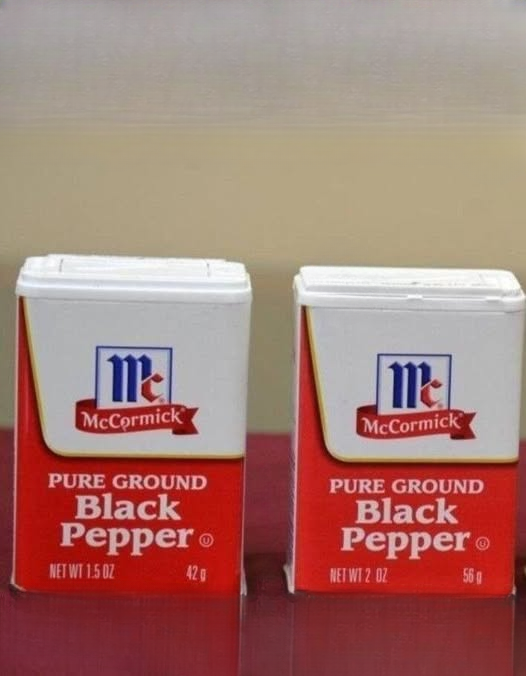
In modern retail environments, consumers are surrounded by more choices than ever before. Grocery store shelves are filled with dozens of competing brands offering similar products in slightly different shapes, sizes, and designs. In many cases, shoppers make decisions quickly. They may rely on brand recognition, packaging design, color schemes, or container size rather than carefully reading labels or comparing detailed measurements.
Because of this fast-paced decision-making process, even small differences in packaging or presentation can influence how products are perceived. A subtle design change—such as altering the amount of product inside a container while maintaining the same exterior dimensions—may affect how customers interpret value.
A recent legal disagreement in the spice industry highlights how seemingly modest adjustments can lead to larger conversations about fairness, transparency, and consumer trust. The matter involves McCormick & Company, one of the most widely recognized spice brands in the world, and Watkins Incorporated, a smaller but well-established competitor. The issue centers around the size and presentation of a pepper container and how its design may influence customer perception.
While the case continues to develop, it raises broader questions that apply far beyond one product category. How much do packaging visuals influence buying decisions? What responsibilities do companies have when making product changes? And how can shoppers protect themselves from confusion in a crowded marketplace?
This article explores these questions in depth, offering a balanced, informative perspective on why small product differences often matter more than most people realize.
The Power of Packaging in Consumer Decision-Making
When consumers enter a store, they are exposed to thousands of products competing for attention. Research in consumer behavior consistently shows that people often make purchasing decisions in seconds. In those brief moments, visual cues become powerful influencers.
Packaging plays several important roles:
-
It communicates brand identity.
-
It suggests value and quality.
-
It differentiates products from competitors.
-
It conveys information about quantity and pricing.
However, shoppers do not always study every detail. Instead, they rely on quick impressions. The height of a bottle, the width of a box, or the fullness of a container can shape assumptions about how much product is included.
This reality is not necessarily deceptive by design. Many companies focus on maintaining brand consistency and shelf visibility. However, when packaging remains visually similar while the amount of product inside changes, misunderstandings can arise.
Understanding the Pepper Container Dispute
The legal dispute between McCormick & Company and Watkins Incorporated began after a packaging adjustment involving ground pepper.
According to public reports, one of McCormick’s pepper products was reformulated in quantity. A container that previously held close to eight ounces was modified to hold approximately six ounces. While the internal quantity changed, the outer container maintained a similar size and appearance.
Watkins has argued that this design choice may create the impression that the product contains the same amount as before. Because the container remains opaque, customers cannot easily see how much spice is inside. By contrast, Watkins uses smaller, transparent containers that allow customers to visually assess the contents.
Watkins contends that when products are displayed side by side, McCormick’s container may appear larger and therefore seem to offer greater value, even if the actual quantity is similar to competing products.
McCormick has responded by stating that its packaging clearly displays the net weight information, allowing customers to review accurate details before purchasing.
At its core, the disagreement centers on how presentation affects perception, not necessarily on whether labeling complies with regulatory requirements.
The Broader Issue: Shrinkflation
The situation also connects to a broader retail trend often referred to as “shrinkflation.” This term describes the practice of reducing product quantity while keeping packaging size similar and maintaining or slightly increasing price.
Shrinkflation can occur for several reasons:
-
Rising production costs
-
Supply chain disruptions
-
Inflationary pressures
-
Changes in ingredient sourcing
Rather than raising prices significantly, companies may adjust product volume as a cost-management strategy.
While shrinkflation is legal when properly disclosed through net weight labeling, consumers may feel frustrated if they perceive the change as unclear or unexpected.
The spice industry dispute reflects how shrinkflation can become controversial when packaging design appears unchanged.
Visual Perception and Cognitive Shortcuts
Human beings rely on cognitive shortcuts, known as heuristics, to process information quickly. When shopping, consumers often use simple cues such as:
-
Container size
-
Brand familiarity
-
Shelf placement
-
Price per item (rather than price per ounce)
Few shoppers routinely calculate unit pricing or compare weight labels across brands. As a result, packaging dimensions can strongly influence perceived value.
A tall container may appear to offer more than a shorter one, even if both contain the same net weight. An opaque container may appear full regardless of internal adjustments.
These perception patterns are not unique to spices. They occur across food, household goods, and personal care products.
Transparency Versus Technical Compliance
A key theme in the dispute is the difference between regulatory compliance and consumer clarity.
Most consumer products are required to list net weight or volume on the label. As long as this information is accurate and visible, companies typically meet legal requirements.
However, some critics argue that transparency goes beyond technical compliance. They suggest that businesses should consider how the overall presentation aligns with consumer expectations.
For example:
-
If a container looks identical to a previous version but contains less product, should the change be highlighted more clearly?
-
If packaging size remains large for shelf presence, does that create confusion?
These questions are not simple, and they often become matters for courts or regulatory agencies to examine.
Consumer Reactions and Class Action Claims
In addition to the dispute between the two companies, a class action lawsuit has reportedly been filed by consumers who claim they were unaware of the quantity reduction when purchasing the product.
These customers argue that the packaging led them to believe they were buying the same amount as before. The matter is being reviewed in federal court, where judges will evaluate whether the presentation could reasonably mislead shoppers.
It is important to note that legal claims are allegations until resolved by the court. The case will ultimately determine whether the packaging meets legal standards for fairness and transparency.
Economic and Psychological Impact on Shoppers
For everyday shoppers, packaging changes can have both financial and emotional effects.
Financial Impact
If consumers rely on visual size rather than net weight, they may believe they are receiving better value than they actually are. Over time, repeated misunderstandings can affect household budgets.
Psychological Impact
Trust plays a significant role in brand relationships. When customers feel surprised by quantity changes, they may experience disappointment. Even if the change is legal and disclosed, perception matters.
Brand loyalty is often built over decades. Maintaining that loyalty requires consistency and clear communication.
The Competitive Landscape in Retail
Large brands often compete with smaller companies for shelf space and customer attention. Packaging design is one way companies differentiate themselves.
Opaque containers may offer brand recognition and protection from light exposure. Transparent containers may signal openness and allow customers to see contents directly.
Each approach has advantages and drawbacks. However, when competitors use different strategies, comparisons can become contentious.
The dispute between McCormick & Company and Watkins Incorporated illustrates how even small presentation differences can influence competitive positioning.
Consumer Awareness in the Digital Age
Today’s shoppers have more access to information than ever before. Social media discussions, online reviews, and price comparison tools allow consumers to share observations quickly.
When packaging changes occur, customers often notice and discuss them publicly. This increased transparency can accelerate legal scrutiny and public debate.
Companies must therefore consider not only regulatory compliance but also public perception in a connected marketplace.
How Shoppers Can Protect Themselves
Consumers can take simple steps to make more informed purchasing decisions:
-
Check Unit Pricing – Many stores display price per ounce or price per gram, making comparisons easier.
-
Read Net Weight Labels – Look beyond container size to confirm quantity.
-
Compare Similar Products – Evaluate value across brands.
-
Stay Informed – Pay attention to product updates or public announcements.
These habits can reduce confusion and support smarter budgeting.
The Importance of Corporate Responsibility
Businesses operate within legal frameworks, but long-term success often depends on public trust.
Transparent communication about product changes can strengthen customer relationships. This may include:
-
Updating packaging design clearly
-
Highlighting new quantities
-
Providing explanations when changes occur
Consumers generally understand that companies face rising costs. Clear messaging can prevent misunderstandings.
Small Differences, Big Consequences
At first glance, a two-ounce reduction in a pepper container may seem minor. However, when multiplied across millions of units sold, the financial implications become significant.
More importantly, perception shapes purchasing behavior. If consumers believe they are receiving consistent value, trust is maintained. If they feel uncertain, loyalty may decline.
The spice industry case demonstrates how minor visual differences can influence economic outcomes, legal action, and public discussion.
Lessons for Businesses and Consumers
This situation offers broader lessons:
For Businesses
-
Transparency builds credibility.
-
Packaging design carries psychological influence.
-
Legal compliance should align with ethical clarity.
For Consumers
-
Quick decisions may overlook important details.
-
Comparing net weight improves accuracy.
-
Awareness supports better financial planning.
The Long-Term Impact of Trust
Trust is not built overnight. It develops through consistent experiences over time. Once disrupted, it can be difficult to restore.
Companies that proactively communicate product changes may reduce backlash. Consumers who feel respected are more likely to remain loyal.
In competitive markets, credibility can become a key differentiator.
Conclusion: Why Details Matter
The dispute involving McCormick & Company and Watkins Incorporated serves as a reminder that small product differences can have outsized effects.
Packaging is more than a container—it is a communication tool. Its size, transparency, and design influence how value is perceived.
In fast-moving retail environments, visual impressions often guide decisions. That reality makes clarity essential.
Ultimately, this case highlights a broader truth: details matter. Whether in product design, labeling, or communication, small adjustments can shape trust, competition, and consumer confidence for years to come.