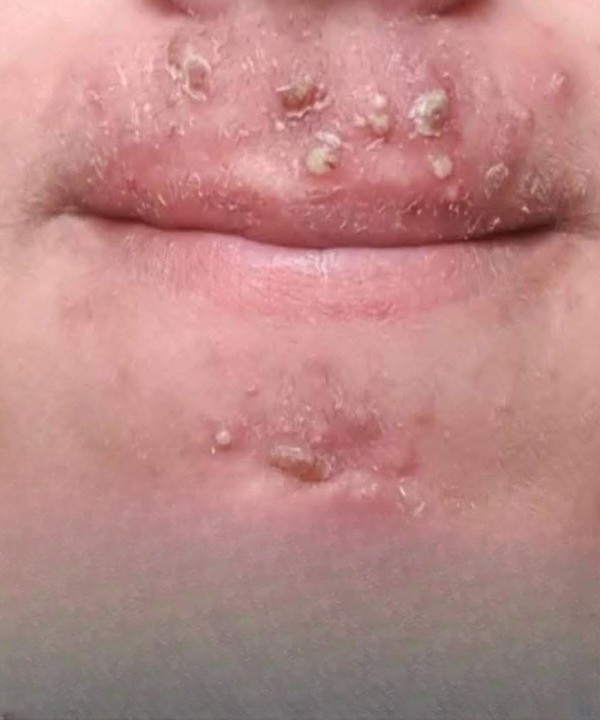
Skin changes around the mouth, chin, and upper lip can be concerning, especially when they appear suddenly. Redness, dryness, flaking, small bumps, or crusting can develop for a variety of reasons, ranging from mild irritation to infections that require medical treatment.
Because the skin in this area is sensitive and frequently exposed to saliva, skincare products, shaving, and environmental factors, even minor triggers can sometimes lead to noticeable reactions.
While it is not possible to identify a specific condition from appearance alone, understanding the most common possibilities can help guide safe next steps and avoid actions that may worsen the irritation.
Understanding What May Be Happening
When the skin around the mouth becomes red, irritated, flaky, or develops crusting, it usually indicates that the skin barrier has been disrupted. The skin barrier is the outer protective layer that helps retain moisture and protect against bacteria, irritants, and allergens.
Once this barrier is weakened, the area becomes more sensitive and reactive. This can lead to a combination of symptoms such as:
- Redness and inflammation
- Dry or flaky patches
- Small bumps or pustules
- Crusting or oozing in some cases
- Burning or itching sensations
Because several different conditions can produce similar symptoms, careful observation and, in many cases, professional evaluation are important.
Possible Causes of the Rash
There are multiple potential explanations for irritation around the mouth. Some are mild and temporary, while others may require medical treatment.
1. Bacterial Skin Infection (Such as Impetigo)
One possible cause of crusting and irritation around the mouth is a superficial bacterial infection commonly known as impetigo. This condition is contagious and can spread through direct contact or contaminated objects such as towels, bedding, or personal care items.
Typical features may include:
- Red sores around the nose or mouth
- Small blisters or lesions that may break open
- Yellow or “honey-colored” crust forming on the surface
- Mild itching or discomfort
Because it can spread easily and worsen without treatment, impetigo often requires medical evaluation and prescription antibiotics.
2. Perioral Dermatitis
Another possible explanation is perioral dermatitis, a skin condition that commonly affects the area around the mouth and sometimes extends to the nose or eyes.
This condition often appears as:
- Small red or skin-colored bumps
- Patchy redness around the mouth
- Mild scaling or dryness
- Sensitivity or burning sensations
Unlike acne, perioral dermatitis is not caused by clogged pores in the traditional sense. In fact, harsh acne treatments, heavy creams, or steroid-based products may sometimes worsen the condition rather than improve it.
3. Contact Dermatitis (Allergic or Irritant Reaction)
Contact dermatitis occurs when the skin reacts to an irritant or allergen. This is one of the most common causes of sudden facial irritation.
Possible triggers include:
- Toothpaste ingredients such as fluoride or flavoring agents
- Skincare or cosmetic products
- Shaving creams or aftershaves
- Fragrances or preservatives in personal care items
- Repeated friction or rubbing in the area
Symptoms may include redness, dryness, burning, or small bumps. In some cases, the reaction can develop gradually or appear shortly after exposure to a new product.
4. Eczema or Skin Sensitivity
Eczema, also known as atopic dermatitis, can affect the area around the mouth. It is often linked to a naturally sensitive skin barrier and may flare due to environmental changes, stress, or irritants.
Common signs include:
- Dry, itchy patches
- Redness and inflammation
- Occasional cracking or flaking
- Periodic flare-ups and remissions
Eczema around the mouth may also be worsened by saliva exposure, lip licking, or harsh skincare routines.
5. Cold Sores (Herpes Simplex Virus)
Cold sores are another possible cause of irritation in this area. They are caused by the herpes simplex virus and often appear as:
- Small fluid-filled blisters
- Tingling or burning before eruption
- Crusting after blisters break
- Recurring outbreaks in the same area
Cold sores are contagious and tend to recur in some individuals, especially during times of stress or illness.
6. Irritation From Everyday Habits
Not all skin reactions are caused by infections or medical conditions. Sometimes, irritation develops due to everyday habits such as:
- Frequent lip licking
- Excess saliva exposure during sleep
- Harsh face washing or scrubbing
- Shaving irritation in the beard or mustache area
- Overuse of skincare products
These factors can weaken the skin barrier and lead to redness and flaking that resembles other conditions.
Why Self-Diagnosis Can Be Difficult
One of the challenges with facial skin irritation is that many conditions look similar at early stages. Redness, bumps, and crusting can overlap across several different causes, making it difficult to identify the exact issue without professional evaluation.
For example:
- Impetigo may resemble eczema or cold sores
- Perioral dermatitis may resemble acne
- Irritant reactions may resemble infections
Because of this overlap, relying solely on appearance can sometimes lead to incorrect assumptions or inappropriate treatment.
What You Should Avoid Doing
When the skin around the mouth is inflamed or damaged, certain actions can make the condition worse.
It is generally best to avoid:
- Picking, scratching, or squeezing affected areas
- Using strong exfoliants or scrubs
- Applying multiple new products at once
- Using steroid creams without medical advice
- Covering the area with heavy makeup or cosmetics
These actions may further disrupt the skin barrier and potentially worsen irritation or spread infection if one is present.
Safe Basic Care Steps
While waiting for professional advice or observing mild symptoms, gentle care is usually the safest approach.
Helpful steps include:
- Washing the area with a mild, fragrance-free cleanser or plain water
- Patting the skin dry gently instead of rubbing
- Keeping skincare routines simple and minimal
- Avoiding known irritants or recently introduced products
- Using clean towels and avoiding shared personal items
Maintaining hygiene while minimizing irritation is key during this time.
When Medical Attention Is Recommended
It is important to seek medical evaluation if symptoms:
- Are spreading or worsening
- Include yellow crusting or pus
- Cause pain, swelling, or warmth
- Are associated with fever or general illness
- Do not improve after several days of gentle care
- Appear frequently or repeatedly
A healthcare professional can determine whether the condition is bacterial, inflammatory, allergic, or viral and recommend appropriate treatment.
For bacterial infections such as impetigo, prescription antibiotics are often necessary. Dermatological evaluation can also help distinguish between similar-looking conditions and prevent complications.
Prevention and Skin Protection Tips
Once the skin begins to recover, preventing recurrence becomes important. Some useful strategies include:
- Using gentle, fragrance-free skincare products
- Avoiding frequent product changes on the face
- Keeping the skin well-moisturized with non-irritating creams
- Washing pillowcases and towels regularly
- Avoiding excessive touching of the face
- Identifying and eliminating potential irritants
Even small changes in daily habits can significantly reduce the likelihood of flare-ups.
Final Thoughts
Skin irritation around the mouth can be uncomfortable and worrying, especially when it appears suddenly. However, there are many possible causes, and most are treatable once correctly identified.
Because several conditions can look similar—ranging from mild irritation to bacterial or viral infections—careful observation and professional evaluation are often the safest approach.
The most important step is to avoid aggressive self-treatment and instead focus on gentle care, hygiene, and early medical consultation when symptoms are persistent or worsening.
With the right approach, most cases improve significantly, and the skin can return to a healthy, stable state without long-term effects.