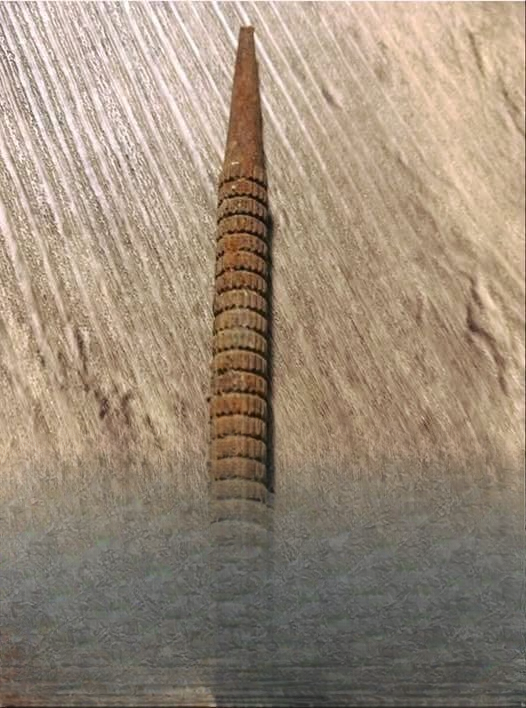
workshops, toolboxes, and construction sites, there are tools that immediately stand out due to their size, complexity, or power. Drills, saws, and sanders often attract the most attention. However, some of the most important tools in craftsmanship are the simplest ones. Among these is a small but highly effective instrument known as the nail punch, also commonly referred to as a nail set.
Although it may appear unremarkable at first glance, this tool plays a critical role in achieving clean, professional-quality finishes in woodworking and construction. Its purpose is not to build or cut, but to refine and perfect the final appearance of a surface. Despite its simplicity, the nail punch remains widely used today because of its precision, reliability, and effectiveness.
What a Nail Punch Is and How It Works
A nail punch is a small handheld tool designed to drive the head of a nail slightly below the surface of wood or similar materials. This process is known as “setting” a nail. The goal is to ensure that the nail head does not remain visible or raised above the surface, which would interfere with finishing work such as painting, staining, or varnishing.
The tool is typically used after a nail has already been partially or fully driven into the material using a hammer. The user places the pointed tip of the nail punch directly on the nail head and then strikes the opposite end with a hammer. This controlled force pushes the nail further into the material without damaging the surrounding surface.
Once the nail is set below the surface, the small indentation left behind can be filled with wood filler or putty. After sanding and finishing, the result is a smooth, seamless surface with no visible fasteners.
The Importance of a Smooth Finish in Woodworking
In woodworking and carpentry, appearance is just as important as structural strength. A well-constructed piece that looks rough or uneven may be considered incomplete, especially in furniture making or interior design work.
Exposed nail heads can create several issues, including:
- Visual imperfections in the finished surface
- Difficulty applying paint or stain evenly
- Increased risk of rust or corrosion over time
- Potential snagging or surface damage
By allowing nails to be recessed below the surface, the nail punch helps ensure that the final product is both functional and visually refined.
This is particularly important in areas where craftsmanship quality is highly valued, such as cabinetry, flooring installation, trim work, and furniture construction.
Historical Development of Nail-Setting Techniques
While the modern nail punch is a refined tool, the concept behind it has existed for centuries. Early builders and craftsmen have always needed ways to secure materials while maintaining a smooth surface.
In ancient construction practices, fasteners and joining methods were far less standardized than they are today. Early craftsmen often used rudimentary metal spikes, wooden pegs, or hand-forged nails. To create smoother finishes, they would use simple tools such as stones, chisels, or pointed metal rods to push fasteners deeper into the material.
As woodworking techniques improved over time, especially during periods of industrial advancement, the need for more precise and specialized tools increased. The introduction of mass-produced nails made construction faster and more consistent, but it also created a demand for tools that could ensure clean finishing work.
Over time, this led to the development of the dedicated nail punch—a purpose-built tool designed specifically for setting nails with accuracy and control.
The Role of the Nail Punch in Modern Woodworking
Today, the nail punch continues to be a standard tool in both professional and amateur woodworking environments. Despite the rise of advanced power tools and automated systems, its role has not diminished.
Modern woodworking values precision finishing, especially in projects where aesthetics matter. The nail punch remains essential because it allows craftsmen to:
- Create flush or recessed nail finishes
- Prepare surfaces for painting or staining
- Avoid surface splitting caused by over-hammering
- Improve the durability and appearance of finished work
In many cases, it is used in combination with other finishing tools such as sandpaper, wood filler, and finishing hammers.
Design and Structure of a Nail Punch
The nail punch has a simple yet carefully engineered design. Most versions are cylindrical in shape and made from hardened materials such as steel. This ensures that the tool can withstand repeated hammer strikes without deforming or breaking.
A typical nail punch consists of two main parts:
- The Tipped End
This is the working end of the tool. It is usually tapered into a fine point or slightly concave shape, allowing it to sit securely on the head of a nail without slipping. Different sizes may be used depending on the size of the nail being set. - The Striking End
The opposite end is flat and designed to be struck with a hammer. It is built to absorb impact forces while transferring energy efficiently to the nail below.
Some modern versions also include ergonomic grips or textured surfaces to improve handling and reduce slipping during use. Precision sets may come in multiple sizes, often color-coded for quick identification.
Different Types of Nail Punches
There are several variations of nail punches designed for different tasks and levels of precision:
- Standard Nail Punch: The most common type, used for general woodworking tasks.
- Automatic Nail Set: Uses a spring-loaded mechanism to deliver consistent force without requiring a separate hammer strike.
- Fine-Finish Nail Punch: Designed for delicate work where precision is critical.
- Heavy-Duty Nail Punch: Built for construction environments where larger nails and tougher materials are used.
Each type serves a specific purpose, but they all share the same fundamental function: recessing nail heads below the surface.
Practical Applications in Construction and DIY Projects
The nail punch is widely used across various fields and projects. In professional construction, it is commonly used in:
- Installing wooden trim and moldings
- Building furniture frames
- Flooring installation
- Cabinet making
- Structural finishing work
In DIY and home improvement projects, it is also extremely useful for:
- Repairing wooden furniture
- Assembling small wooden structures
- Hanging decorative panels
- Refinishing older wood surfaces
Even in modern workshops filled with power tools, the nail punch remains valuable because of its simplicity and precision.
Advantages of Using a Nail Punch
One of the main reasons the nail punch remains popular is its practicality. Some of its key advantages include:
- Precision control: Allows accurate depth adjustment for nails
- Surface protection: Prevents hammer damage to wood surfaces
- Improved aesthetics: Enables smooth, professional finishes
- Durability: Simple design means long service life
- No power required: Works anywhere without electricity or batteries
These benefits make it a reliable tool in both professional and casual settings.
Maintenance and Proper Use
Although the nail punch is a low-maintenance tool, proper care ensures long-term performance. Users should:
- Keep the tip clean and free of debris
- Avoid using excessive force that could damage the tool or surface
- Store it in a dry place to prevent rust
- Occasionally inspect for wear or deformation
Using the correct size punch for the nail is also important, as mismatched sizes can lead to slipping or damage to the work surface.
Why Simple Tools Still Matter Today
In an era where advanced machinery and automated tools are widely available, it may seem surprising that simple hand tools like the nail punch remain relevant. However, its continued use highlights an important principle in craftsmanship: not every task requires complexity.
The nail punch survives because it solves a very specific problem efficiently. It does not require power, calibration, or maintenance-intensive systems. Instead, it delivers consistent and reliable results through a straightforward mechanical action.
This balance of simplicity and effectiveness is why it continues to be trusted by professionals and hobbyists alike.
Conclusion
The nail punch may not be the most visually impressive tool in a workshop, but its role in woodworking and construction is undeniably important. By allowing nails to be set below the surface, it ensures smooth finishes, improved durability, and a higher level of craftsmanship.
From traditional woodworking practices to modern construction projects, this simple tool has maintained its place through centuries of evolving techniques and technologies. Its design has been refined, but its purpose remains unchanged.
Ultimately, the nail punch serves as a reminder that some of the most valuable tools are not the most complex, but the most purposeful. It continues to quietly support builders, carpenters, and DIY enthusiasts in creating clean, polished, and professional-quality work.