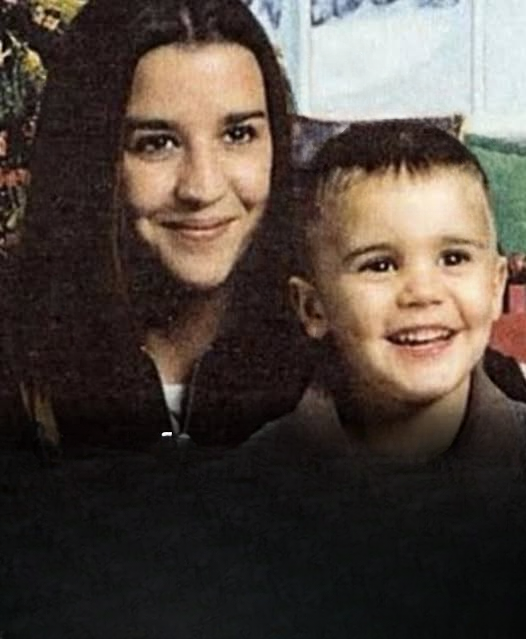
At just 17 years old, Pattie Mallette found herself standing at a crossroads that would shape the rest of her life. Pregnant, afraid, and already carrying emotional wounds from a deeply painful past, she was pressured by many around her to make a decision that she says she was not willing to make.
Decades later, she would reflect publicly on that time—not as a polished success story, but as a raw account of survival, trauma, and the complicated journey of becoming a mother under extreme circumstances.
Before she became a parent, Mallette’s teenage years were marked by instability and abuse. In interviews and in her memoir Nowhere But Up: The Story of Justin Bieber’s Mom, she described enduring years of sexual abuse during her childhood and adolescence. The emotional consequences, she explained, were devastating. Shame, confusion, and isolation followed her into her teenage years, eventually contributing to severe depression.
In her own words, she reached a breaking point before adulthood even truly began. She has spoken openly about a suicide attempt during her youth, describing it as the result of accumulated trauma, substance use, and emotional despair. For Mallette, those experiences were not just painful memories—they shaped how she saw herself and how she believed the world saw her.
So when she discovered she was pregnant at 17, the situation felt overwhelming in every direction. She has described facing strong pressure to terminate the pregnancy, along with fears about her ability to provide stability for a child while still trying to survive emotionally herself.
But she made a decision that she has since described as both instinctive and difficult: she chose to continue the pregnancy.
“I didn’t know how I was going to manage,” she later shared in an interview, “but I knew I couldn’t go through with it. I wanted to give him a chance.”
That decision would lead to the birth of her son, Justin Bieber—a child who would later become one of the most globally recognized pop stars of his generation.
But at the time, fame was unimaginable. Mallette was not stepping into a world of opportunity; she was stepping into single motherhood with limited resources, unresolved trauma, and very little external support. The early years were defined by financial hardship, uncertainty, and the constant challenge of simply staying afloat.
She has often described those years as a balancing act between survival and devotion. There were moments when she had no clear answers, no stable foundation, and no roadmap for what came next. Still, she committed herself to raising her son as best she could, even when life felt unstable.
In interviews, she has recalled the moment she first heard her son cry after birth. It was not just a medical moment—it was emotional, almost symbolic. She described it as one of the most grounding experiences of her life, a sound that made her feel, for the first time in years, that something pure and meaningful had entered her world.
As Justin grew, Mallette worked to provide structure and support, even when circumstances were difficult. She leaned on family when she could and navigated the challenges of young motherhood while still processing her own unresolved past.
Over time, her son’s musical talent began to emerge. What started as casual performances and small local opportunities eventually developed into something far larger. Videos shared online caught attention, and within a few years, Justin’s career began to accelerate beyond anything either of them could have imagined.
As his fame grew rapidly, Mallette found herself thrust into a completely different kind of life—one defined not just by motherhood, but by public attention, scrutiny, and global visibility. She transitioned from a young single mother struggling quietly to a public figure connected to one of the most recognizable names in entertainment.
Yet through it all, she has emphasized that her story is not defined by her son’s fame, but by her personal resilience. In her memoir and interviews, she consistently returns to the same themes: healing from trauma, finding faith, and learning to forgive both herself and others for the painful parts of her past.
She has also spoken about how motherhood became a turning point in her emotional recovery. While she did not have all the answers when her son was born, she described feeling a sense of responsibility that pushed her toward stability and growth. Raising a child forced her to confront her own pain in new ways, and over time, she began to rebuild her life piece by piece.
Today, looking back over more than three decades, Mallette’s perspective is shaped less by the struggles of her teenage years and more by what she describes as perseverance. She acknowledges the hardship without romanticizing it. She does not present her journey as easy or ideal, but as deeply complicated and often painful.
Still, she views her decision at 17 as one of the defining moments of her life—not because it guaranteed success, but because it set her on a path she could not have predicted.
Her story is often shared in public discourse as an example of resilience in the face of adversity. But at its core, it is also a deeply human story: a young woman confronting trauma, fear, and uncertainty, and choosing a path that would shape both her life and her child’s future in ways she could never have imagined.
Today, Justin Bieber stands as one of the most successful pop artists in the world, while Pattie Mallette continues to speak about healing, faith, and the long process of rebuilding a life after trauma.
And beneath the headlines and fame, her message remains consistent: even in the most uncertain beginnings, a life can grow into something meaningful—not through perfection, but through persistence, love, and survival.