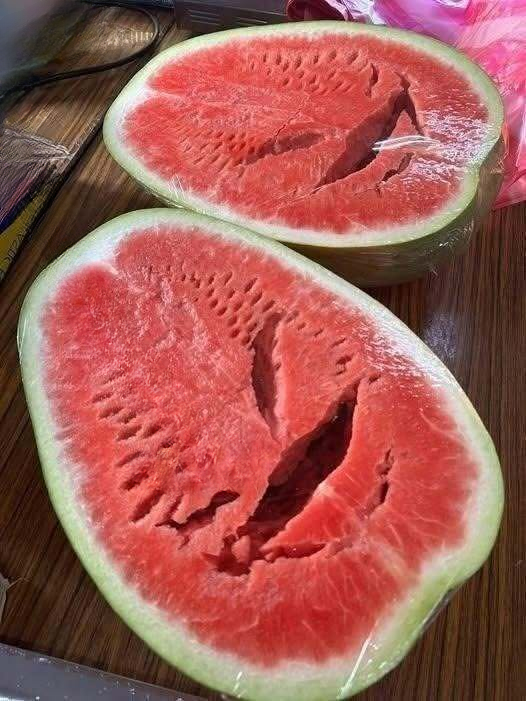
Few things hit better on a hot day than slicing into a cold watermelon. It’s sweet, juicy, and refreshing. But sometimes, after cutting one open, you might notice something unexpected inside—cracks, hollow spaces, or unusual splits in the flesh.
For many people, that can look alarming at first. It raises questions like whether the fruit is safe, whether it went bad, or whether something unnatural was done during farming.
Online rumors have only added to the confusion, with some claims suggesting that cracked watermelons are the result of chemicals or artificial processing. In reality, the explanation is usually far more ordinary and natural.
In most cases, internal cracking happens because of how the fruit grows, not because anything is wrong with it. Understanding why it occurs can help you avoid throwing away perfectly good fruit.
Why Watermelons Develop Cracks Inside
Watermelons are made up mostly of water, and they grow quickly while absorbing nutrients from the soil. If growth happens unevenly, the inside of the fruit can separate slightly, forming cracks or gaps.
This is generally known as hollow heart, internal splitting, or growth-related separation. It’s a well-documented agricultural condition rather than a safety issue.
What “Hollow Heart” Actually Is
Despite the dramatic name, hollow heart doesn’t mean the watermelon is empty or spoiled. It simply refers to internal gaps or cracks that form while the fruit is developing.
Farmers and researchers have known about this for a long time, and it shows up in different ways, such as:
- Star-like cracks in the center
- Small internal cavities
- Irregular gaps in the flesh
- Uneven separation of fruit tissue
The appearance varies from watermelon to watermelon.
What Causes It
Several natural factors can lead to hollow heart:
Fast growth
When conditions are ideal, watermelons can grow too quickly, and the inside doesn’t always keep up evenly.
Pollination issues
If pollination is uneven, the fruit may develop irregularly, increasing the chance of internal gaps.
Weather changes
Sudden rain, heat waves, or inconsistent watering can disrupt normal development.
Variety differences
Some watermelon types are simply more likely to develop internal cracking than others.
Is It Caused by Chemicals?
A common internet myth is that cracked watermelons are injected with chemicals or artificially enhanced.
There’s no scientific evidence supporting that idea.
Internal cracking has been observed long before modern farming techniques, and it is widely recognized as a natural growth variation rather than contamination.
Is It Safe to Eat?
In most cases, yes.
A watermelon with internal cracks can still be completely safe and enjoyable as long as it is fresh and not spoiled.
Instead of focusing only on cracks, it’s better to check overall quality.
Signs the Watermelon Is Still Fresh
Look for:
- Bright, healthy color
- Firm texture
- Sweet, mild smell
- Juicy flesh
- No mold or strange discoloration
If these are normal, internal cracks alone are usually not a problem.
When You Should Throw It Away
Regardless of cracks, avoid eating watermelon if you notice:
Bad smell
A sour or fermented odor is a warning sign.
Slimy texture
Fresh watermelon should feel firm and crisp.
Mold
Any visible mold means it’s no longer safe.
Severe discoloration
Dark or unusual patches can indicate spoilage.
Does It Affect Taste?
Sometimes slightly, sometimes not at all.
Most people say cracked watermelons taste just as good as normal ones, though the texture might be a bit less consistent.
Possible differences include:
- Slight softness in some areas
- Uneven texture
- Minor variation in sweetness
Why Some Even Taste Sweeter
Sweetness depends more on growing conditions—like sunlight, soil, and harvest timing—than on whether the fruit has cracks.
So a cracked watermelon might taste extra sweet purely by coincidence.
Why It Happens in Simple Terms
Watermelons grow fast. If development isn’t perfectly balanced, the inside can stretch or separate unevenly. That stress creates internal cracks.
Most of the time, it’s just a cosmetic or structural variation, not a defect.
Common Misconceptions
“It’s unsafe to eat” → Usually false if the fruit is fresh
“It’s caused by chemicals” → No scientific support
“It’s always spoiled” → Not true
“It’s poor quality fruit” → Not necessarily
Final Thoughts
Finding cracks inside a watermelon can be surprising, but in most cases it’s just a natural result of how the fruit grows. Conditions like weather, pollination, and growth speed all play a role in shaping its internal structure.
The real test of a watermelon’s quality isn’t the presence of cracks—it’s freshness. If it smells normal, looks healthy, and feels firm, it’s usually safe to enjoy.
In the end, these irregularities are just part of nature’s variation, not something to worry about.