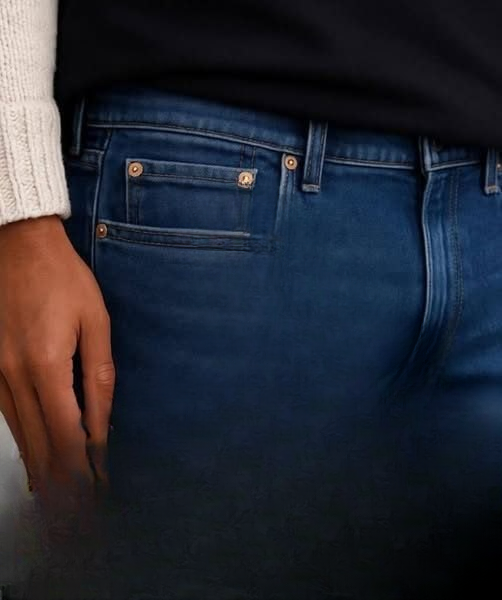
If you have ever worn a pair of jeans, you have likely noticed a very small pocket placed inside the right front pocket. At first glance, it seems almost unnecessary. It is too small to hold a modern smartphone, not very practical for larger items, and often ignored in daily use.
However, this tiny detail is far from meaningless. In fact, it carries a long and interesting history that dates back nearly two centuries. What appears today as a minor design feature was once an essential part of everyday clothing, created with a very specific purpose in mind.
In this article, we will explore the origin of this small pocket, why it was introduced, how its use has changed over time, and why it continues to be included in modern denim design. By the end, you will see this small feature not as a random addition, but as a meaningful piece of fashion history.
Understanding the Small Pocket on Jeans
Most traditional jeans are designed with a five-pocket structure. These include:
- Two front pockets
- Two back pockets
- One small internal pocket inside the right front pocket
This fifth pocket is commonly known as the coin pocket, watch pocket, or mini pocket. Even though it is small, it has remained part of jeans for generations.
Today, many people assume it is simply decorative. However, its original purpose was highly functional and important in the past.
The Historical Origins of Jeans Design
To understand the purpose of this pocket, we need to go back to the 1800s, when jeans were first created not as fashion items, but as durable workwear.
During this time, workers such as miners, farmers, railroad laborers, and cowboys required clothing that could withstand extremely harsh conditions. Ordinary trousers were not strong enough to handle physical labor, so denim became the fabric of choice due to its durability and resistance to wear and tear.
Jeans were designed with practicality in mind. Every stitch and pocket served a purpose. Nothing was included purely for style.
The Role of Pocket Watches in the 19th Century
One of the most important personal items during the 1800s was the pocket watch. Before wristwatches became common, pocket watches were the primary way people kept track of time.
These watches were often valuable, delicate, and easily damaged if not stored properly. For individuals working in physically demanding environments, carrying a pocket watch in a regular trouser pocket was risky.
Common problems included:
- The watch bouncing around during movement
- Scratches caused by tools or rough surfaces
- Accidental drops leading to breakage
- Loss of the watch during physical labor
For workers who depended on accurate timekeeping, damaging or losing a watch could cause serious inconvenience.
This created a clear need for a safer and more secure storage solution.
The Creation of the Watch Pocket
To solve this problem, clothing manufacturers introduced a small, reinforced pocket inside the main front pocket of jeans. This special compartment was designed specifically to hold a pocket watch securely.
This new feature became known as the watch pocket.
Its main purposes were:
- To keep pocket watches safely in place
- To prevent movement while working
- To reduce the risk of damage or scratches
- To provide quick and easy access to the watch
This innovation was extremely practical at the time. It was not added for appearance, but as a direct response to the needs of workers.
How the Purpose Changed Over Time
As technology progressed, pocket watches gradually became less common. By the early 20th century, wristwatches replaced them as the standard timekeeping device.
With this change, the original function of the small pocket started to fade. It was no longer essential for storing watches, so its practical purpose became less relevant.
However, instead of being removed, the pocket remained part of jean design.
Why the Small Pocket Was Not Removed
Even after its original purpose became outdated, the pocket continued to exist for several important reasons.
1. Preservation of Traditional Design
Jeans had already become an iconic piece of clothing. The five-pocket structure was widely recognized and associated with authenticity and heritage.
Removing the small pocket would have altered the classic design that people had come to identify with jeans.
2. Symbol of Durability and Craftsmanship
The continued presence of the pocket also reflected quality craftsmanship. It showed that the garment was designed with attention to detail and a strong construction standard.
For many manufacturers, keeping traditional design elements helped reinforce the idea that jeans were built to last.
3. Cultural and Fashion Value
Over time, jeans transitioned from workwear to everyday fashion. They became a global clothing staple worn by people of all ages and backgrounds.
In fashion, even functional elements can become symbolic. The small pocket became part of the identity of jeans, representing their historical roots.
Modern Uses of the Small Pocket
Although it is no longer needed for pocket watches, people today still find creative and practical uses for this small space.
Some common modern uses include:
- Storing coins or small change
- Holding USB flash drives
- Keeping guitar picks
- Carrying small keys
- Storing rings or jewelry
- Placing earbuds or earphones
- Keeping folded emergency cash
While it is not essential, it still offers convenience for small items that might otherwise be easily lost.
The Cultural Importance of the Small Pocket
Beyond its physical use, the small pocket carries symbolic meaning in modern fashion.
A Link to the Past
It represents a direct connection to the history of workwear and industrial design. Every pair of jeans carries a small reminder of its original purpose.
A Reminder of Functional Design
The pocket is an example of how clothing was once designed primarily for function rather than appearance. It highlights a time when practicality was the top priority.
A Timeless Fashion Element
Even as trends change, certain design features remain constant. The small pocket is one of those rare elements that has survived generations of fashion evolution.
The Evolution of Jeans Over Time
To fully appreciate this detail, it is helpful to understand how jeans have changed overall.
Early Stage: Work Clothing
Jeans were originally created as durable clothing for labor-intensive jobs. Strength and functionality were the main priorities.
Middle Stage: Popular Adoption
As decades passed, jeans became popular among different social groups. They were no longer limited to workers but became part of everyday casual wear.
Modern Stage: Global Fashion Staple
Today, jeans are worn worldwide in countless styles, cuts, and designs. Despite all the variations, the classic five-pocket structure remains mostly unchanged.
Why Small Design Details Matter
The story of the small pocket demonstrates an important principle in design: small details often have meaningful origins.
Good design is not only about appearance. It is about solving real problems. Even when those problems disappear, the solutions often remain because they become part of tradition and identity.
The small pocket is a perfect example of how practical design can evolve into a lasting cultural symbol.
Interesting Facts About the Small Pocket
Here are a few notable facts about this unique feature:
- It has existed for nearly 200 years
- It was originally designed for pocket watches
- It is part of the original five-pocket jean structure
- Its design has changed very little over time
- It remains one of the most recognizable yet misunderstood clothing features
Conclusion
The small pocket on jeans may look insignificant today, but its history tells a much deeper story. What began as a practical solution for protecting pocket watches has become a lasting element of one of the most iconic clothing items in the world.
Although its original purpose is no longer relevant in modern life, it continues to exist as a symbol of tradition, durability, and thoughtful design.
In a world where fashion constantly changes, this tiny pocket remains a reminder that the best designs are not only functional but also timeless.