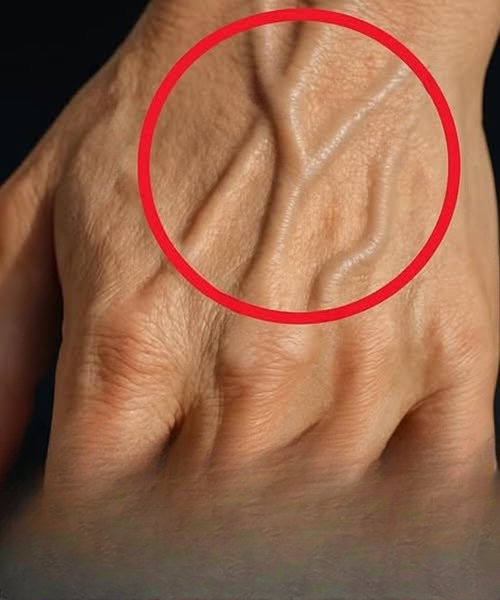
Do the veins on your hands say something about your kidneys? It’s a question that has gained attention online, especially in health forums and social media posts where visible veins are sometimes linked to hidden organ problems. Many people notice their hand veins becoming more prominent and immediately wonder if it signals something serious—like kidney disease.
The short answer is reassuring: visible veins on the hands are almost never a sign of kidney disease. In most cases, they are a normal variation in anatomy influenced by skin thickness, body fat, temperature, and circulation. However, because kidney health is critical to overall well-being, it’s important to understand what these veins actually mean—and what real warning signs of kidney disease look like.
Why Veins on the Hands Become More Visible
The appearance of veins is influenced by how light interacts with the skin and how close veins are to the surface. Several everyday factors can make them stand out more clearly.
Aging and Skin Thinning
As we age, the skin naturally becomes thinner due to reduced collagen and elastin production. These structural proteins are responsible for keeping skin firm and full. When they decrease, the skin loses volume, making underlying structures—like veins—more visible.
This is especially noticeable on the hands because they are constantly exposed to sunlight, washing, and environmental stress over time.
Low Body Fat
Another major factor is body composition. People with lower levels of subcutaneous fat have less tissue between their skin and veins. As a result, veins appear closer to the surface.
This is particularly common in athletes, physically active individuals, or naturally lean people. In these cases, prominent veins are simply a normal anatomical trait, not a medical concern.
Genetics and Natural Variation
Genetics play a strong role in how visible your veins are. Some people are simply born with more superficial vascular structures or thinner skin. Just as eye color or facial structure varies, so does vein visibility.
If your parents or siblings have visible veins, there’s a good chance yours are naturally similar.
Exercise and Physical Activity
During exercise, muscles demand more oxygen. Blood flow increases, and blood vessels expand in a process called vasodilation. This temporarily makes veins more prominent, especially in the hands and arms.
Once the body returns to rest, the veins usually become less visible again.
Heat and Temperature Changes
Warm environments also affect vein appearance. When the body heats up, blood vessels expand to release heat and regulate temperature. This pushes blood closer to the skin’s surface, making veins look darker or larger.
This is why veins often appear more visible after a hot shower or on a summer day.
Hydration Levels
Mild dehydration can slightly reduce blood plasma volume, making veins appear more pronounced. However, this effect is temporary and not harmful in healthy individuals.
Importantly, hydration-related vein visibility does not indicate kidney disease.
Understanding Kidney Function and What Disease Actually Does
To understand why veins are not a reliable kidney indicator, it helps to know what the kidneys actually do.
The kidneys are essential organs responsible for:
- Filtering waste from the blood
- Balancing fluids in the body
- Regulating electrolytes like sodium and potassium
- Controlling blood pressure
- Producing hormones that support red blood cell production
When kidney function declines, these processes become disrupted. But the body does not typically show this through visible veins in the hands.
Instead, symptoms are internal and systemic.
Real Symptoms of Kidney Disease
Kidney disease—especially chronic kidney disease (CKD)—develops gradually. Symptoms often appear slowly and may include:
- Swelling in the feet, ankles, hands, or around the eyes
- Persistent fatigue or weakness
- Changes in urination (frequency, color, or volume)
- Foamy urine (due to excess protein)
- Difficulty concentrating or brain fog
- Nausea or reduced appetite
- High blood pressure
One key point is important: prominent hand veins are not listed among recognized symptoms of kidney disease.
In fact, kidney problems more often cause fluid retention, which leads to swelling—not more visible veins.
Fluid Balance: Why Kidney Disease Usually Hides Veins Instead of Highlighting Them
A major function of the kidneys is regulating fluid balance. When they are not working properly, the body often retains excess fluid, leading to a condition called edema.
Edema commonly affects:
- Feet
- Ankles
- Hands
- Face
- Around the eyes
Swelling like this actually pushes tissues outward, which can make veins less visible—not more.
This is the opposite of what many people assume when they see prominent veins.
When Visible Veins Do Relate to Medical Conditions
Although hand veins are not a kidney indicator, there are certain medical conditions that can affect veins themselves.
Varicose Veins
These occur when vein valves weaken, causing blood to pool and veins to enlarge. They are most common in the legs but reflect circulation issues, not kidney function.
Phlebitis
This is inflammation of a vein, often causing pain, redness, and tenderness.
Circulatory or Vascular Changes
Some circulation disorders can make veins more visible, but they are usually accompanied by symptoms like discomfort, swelling, or skin changes.
None of these conditions are directly linked to kidney disease.
The Exception: Dialysis and Arteriovenous Fistulas
There is one situation where veins may appear larger in people with kidney disease—but it is not a natural symptom.
In advanced kidney failure, patients often require dialysis. To make dialysis possible, surgeons create an arteriovenous (AV) fistula, which connects an artery to a vein.
Over time, this causes the vein to:
- Become thicker
- Expand in size
- Become more visible under the skin
However, this change is medically induced, not a symptom of kidney disease itself.
How Kidney Disease Is Actually Diagnosed
Because symptoms can be subtle, kidney disease is diagnosed through medical testing, not visual observation.
Doctors rely on:
- Blood tests (creatinine levels and eGFR)
- Urine tests (checking for protein or blood)
- Blood pressure monitoring
- Imaging tests such as ultrasounds
These provide accurate insight into kidney function—something appearance alone cannot do.
The Bottom Line
Visible veins on your hands are usually completely normal. They are influenced by harmless factors like age, body composition, genetics, temperature, and activity level.
They are not a reliable indicator of kidney disease.
Kidney problems instead reveal themselves through changes in:
- Urine
- Blood pressure
- Energy levels
- Fluid balance
- Blood chemistry
If you notice persistent symptoms such as swelling, changes in urination, or unexplained fatigue, it’s important to seek medical evaluation.
But if your concern is simply visible veins on your hands, in most cases, the explanation is far simpler—and far less serious—than kidney disease.