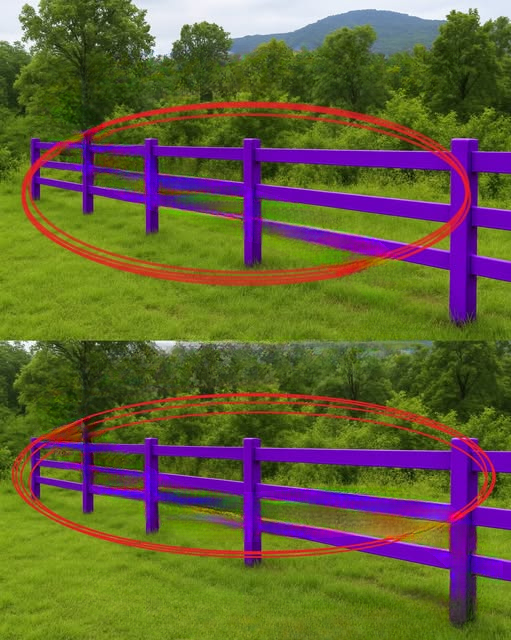
Picture yourself taking a quiet walk through open countryside, farmland, or a wooded hiking trail. The air is calm, the scenery peaceful, and the fences you pass are the usual shades—white, brown, gray, maybe weathered wood. Then suddenly, something catches your eye: a fence post or tree marked with a bold stripe of purple paint.
At first glance, it may seem like a decorative choice or a quirky splash of color. But that purple marking is not random—and it is not decorative. In many parts of the United States, a purple-painted fence post or tree carries a very specific message:
Private property. No trespassing.
This system may sound unusual, but it is a practical and legally recognized method used by landowners to mark boundaries clearly and efficiently. What appears to be an odd color choice is actually a carefully designed communication tool backed by state laws in certain regions.
Below is a detailed explanation of what purple fence markings mean, where the practice began, how it works, why purple was chosen, and what you should know if you ever encounter one.
The Practical Problem Purple Paint Solved
The Challenge of Protecting Private Land
For generations, rural property owners have faced a common issue: how to clearly mark private property boundaries in areas that may stretch across acres of land.
Traditional “No Trespassing” signs present several problems:
-
They fade under sunlight.
-
They are damaged by rain, wind, or snow.
-
They can be torn down or stolen.
-
They require ongoing maintenance and replacement.
-
They may be difficult to see in wooded or brush-heavy areas.
On large rural properties, installing and maintaining dozens of signs can be expensive and time-consuming. Landowners needed something more durable and low-maintenance.
That’s where purple paint came in.
The Origin of the Purple Paint System
The use of purple paint as a property boundary marker began gaining traction in the southeastern United States during the late 20th century. Landowners started applying purple stripes to fence posts and trees as a clear visual signal that the land beyond was private.
In 1997, the state of Arkansas became one of the first to formally recognize purple paint as a legal indicator of “No Trespassing.” The idea quickly spread to other states that saw the benefit of a more permanent and weather-resistant marking system.
Today, several states have enacted similar laws recognizing purple paint markings as legally valid notices against trespassing. While the exact rules vary, the concept remains consistent: clearly marked purple stripes serve the same purpose as posted warning signs.
Why Purple? The Reason Behind the Color
Choosing purple was not arbitrary. There are several practical and psychological reasons behind the selection.
1. It’s Highly Unusual
When we think of fence posts or boundary markers, we typically imagine neutral tones: wood brown, white, or gray. Purple stands out dramatically against natural landscapes like green forests, open fields, or dirt roads.
Its rarity makes it instantly noticeable.
2. Strong Visibility in Natural Environments
Purple contrasts sharply with:
-
Green vegetation
-
Brown tree bark
-
Tan soil
-
Blue sky
This makes it easy to see from a distance, especially in rural settings.
3. It Carries Psychological Weight
Historically, purple has been associated with authority, power, and importance. It is not a color people casually ignore. When someone sees a deliberate stripe of purple paint on a post or tree, it signals intention and seriousness.
4. It’s Not Common in Nature
Unlike red or orange—which can appear naturally in certain soils, leaves, or seasonal changes—purple is uncommon in large solid patches outdoors. That makes it less likely to be mistaken for something accidental.
How Purple Paint Laws Work
In states that legally recognize purple paint markings, the paint serves as an official notice that entry is prohibited without permission.
This means:
-
A person crossing into property clearly marked with compliant purple paint may be subject to trespassing penalties.
-
The markings are considered legally equivalent to “No Trespassing” signage.
-
Property owners do not necessarily need additional signs if the paint meets legal standards.
However, it’s important to understand that not all states recognize purple paint as a legal boundary indicator. Laws vary by location. Property owners must confirm local regulations before relying solely on paint markings.
Official Guidelines for Proper Purple Markings
Simply splashing purple paint onto a fence does not automatically create a legally recognized boundary. In states that recognize this system, strict requirements typically apply.
While details vary by state, common standards include:
1. Vertical Stripes Only
The purple marking must be a vertical line—not a random splash, dot, or horizontal streak. The vertical format ensures clarity and intentionality.
2. Specific Size Requirements
In many states, the stripe must be:
-
At least one inch wide
-
At least eight inches long
This ensures the mark is clearly visible and distinguishable from accidental paint.
3. Proper Height Placement
The stripe is usually required to be placed:
-
Between three and five feet above ground level
This height ensures visibility while preventing obstruction by grass or low vegetation.
4. Regular Spacing
To effectively mark a boundary, stripes are often required to appear at consistent intervals—commonly every 100 feet along the property line.
This prevents confusion and ensures anyone walking along the edge of the land sees multiple warnings.
Where You’re Most Likely to See Purple Fence Markings
Purple boundary markings are most common in:
-
Rural farmland
-
Ranches
-
Timberland
-
Hunting properties
-
Wooded areas
-
Large undeveloped tracts of land
They are less common in suburban or urban neighborhoods, where traditional signage is more typical.
If you enjoy hiking or exploring nature, you may notice purple paint on fence posts or even directly on trees near trails. When you see these markings, it is wise to treat them as a clear indication that the land beyond is private.
Purple Paint on Trees: Same Meaning, Same Message
It’s not just fences that may carry purple stripes. In heavily wooded areas, landowners often mark trees directly.
The purpose is identical:
-
Define property boundaries
-
Discourage unauthorized entry
-
Provide clear visual notice
When placed correctly and consistently, these markings create a visible line through forests or along trails that indicate where private property begins.
If you see a row of trees marked with vertical purple stripes at eye level, it is likely serving as a legal boundary marker.
Why Landowners Prefer Paint Over Signs
The growing popularity of purple paint markings is driven by several advantages.
Durability
Paint lasts longer than many paper or metal signs exposed to weather.
Lower Maintenance
Unlike signs that must be replaced after storms or vandalism, paint requires less frequent upkeep.
Cost Efficiency
A can of paint can mark hundreds of feet of boundary at a lower cost than multiple signs.
Reduced Visual Clutter
Paint markings are noticeable but less visually intrusive than large signage, which can alter the natural aesthetic of rural landscapes.
Legal Considerations for Property Owners
If someone is considering marking property with purple paint, they should first verify:
-
Whether their state recognizes purple paint as legal notice.
-
The exact measurement and spacing requirements.
-
Whether additional signage is required by local ordinance.
Failure to comply with official guidelines could weaken legal standing in a trespassing dispute.
Even in states where purple paint is recognized, some property owners still choose to use traditional signage in addition to paint for added clarity.
What Happens If Someone Ignores a Purple Marking?
In states where purple paint is legally recognized, crossing into properly marked land without permission may result in:
-
Warnings
-
Fines
-
Trespassing charges
-
Civil penalties in certain cases
Enforcement depends on state law and the circumstances involved. However, the key takeaway is that purple markings are not decorative—they are a formal warning in many jurisdictions.
The Broader Purpose: Respecting Boundaries
Beyond legal implications, purple fence markings serve a broader social purpose: clearly communicating boundaries.
In rural communities, respect for property lines is essential. Clear boundary indicators help:
-
Prevent misunderstandings
-
Protect crops and livestock
-
Preserve wildlife habitats
-
Reduce liability risks
-
Avoid accidental encroachment
When hikers, hunters, or recreational visitors recognize and respect these markings, it promotes safer and more respectful land use overall.
How Widespread Is the Purple Paint Law?
While Arkansas was an early adopter, other states have followed with similar laws over the years. Adoption varies regionally, with higher usage in southern and midwestern states.
However, the system is not nationwide. Travelers should not assume purple paint has legal meaning everywhere. When in doubt, treat it as a serious boundary indicator and avoid entering without permission.
Common Misunderstandings About Purple Fences
“It’s Just Decorative”
Highly unlikely in rural settings. In areas where purple paint laws exist, it is almost always intentional.
“It Doesn’t Look Official”
Even though it may not resemble a traditional sign, the paint can carry legal authority if applied according to law.
“It’s Probably Old Paint”
Proper markings are consistent, vertical, and repeated at intervals. Random faded paint splashes are usually easy to distinguish from intentional stripes.
What To Do If You See Purple Markings
If you encounter purple paint on fences or trees:
-
Do not cross beyond the marked boundary without permission.
-
Look for additional signs or markers.
-
If unsure whether you are on public land, consult maps or local authorities.
-
Respect the property owner’s intent.
It is always safer to assume that the marking indicates private property.
Why This System Continues to Grow
The increasing adoption of purple paint laws reflects changing needs in rural land management.
As properties grow larger and signage maintenance becomes more expensive, paint offers a streamlined alternative.
It is:
-
Clear
-
Recognizable
-
Cost-effective
-
Legally supported in certain states
-
Durable against weather
Its simplicity is its strength.
Final Thoughts: More Than Just an Unusual Color
A purple-painted fence post may look unusual, but it carries a very specific and practical meaning in many rural areas. It is a straightforward way for landowners to communicate boundaries without relying solely on traditional signage.
The next time you’re walking through farmland or wooded trails and spot a vertical stripe of purple paint, remember:
It is not decoration.
It is not random.
It is not artistic flair.
It is a clear message: This is private property. Please do not enter without permission.
Understanding this system helps promote respectful exploration, prevent accidental trespassing, and maintain positive relationships between landowners and outdoor visitors.
Sometimes, the simplest solutions—like a stripe of purple paint—are the most effective.