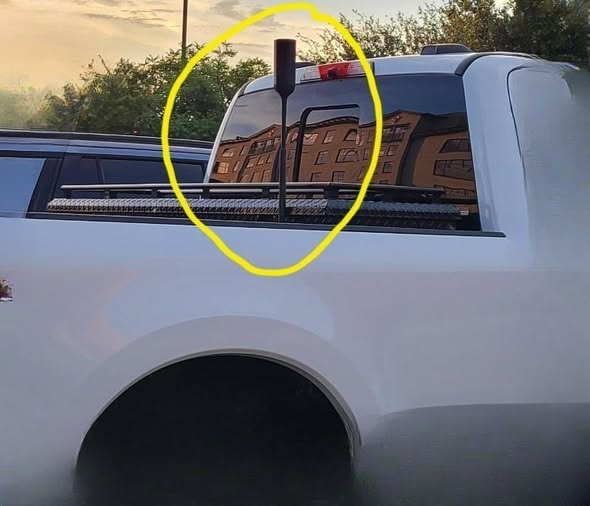
If you’ve ever driven behind a pickup truck on the highway or spotted one parked near a remote work site, you may have noticed something unusual mounted behind the cab:
a tall rod or antenna-like pole extending upward into the air.
At first glance, it can look confusing.
Some people assume it’s:
- A custom off-road accessory
- A radio antenna
- A decorative modification
- Specialized work equipment
- Or even part of a suspension setup
But in many cases, that strange-looking pole serves a very practical and increasingly important purpose.
It is often part of a mobile cell phone signal booster system — technology designed to improve phone reception in places where normal cellular service becomes weak or unreliable.
As more people depend on smartphones for navigation, emergency communication, work coordination, and internet access, these systems have become especially popular among truck owners, rural workers, travelers, and outdoor enthusiasts.
What That Pole Actually Does
The tall rod mounted behind the truck cab is usually an external antenna connected to a cellular signal booster.
Its job is simple:
capture weak mobile signals from distant cell towers and help strengthen them inside the vehicle.
In rural areas, mountainous terrain, deserts, forests, construction zones, and remote highways, phone signals can become extremely weak. Calls may drop, maps may stop loading, and internet access can disappear completely.
Signal booster systems are designed to reduce those problems.
The external antenna mounted outside the truck picks up whatever cellular signal is available, even if it is very weak.
That signal is then sent into a booster unit inside the vehicle, where it is amplified before being rebroadcast inside the truck cabin.
The result can include:
- Stronger call quality
- Faster mobile data speeds
- More reliable navigation
- Better reception in weak-signal areas
- Improved emergency communication capability
For people who spend long hours traveling through remote regions, that extra reliability can make a major difference.
Why Pickup Trucks Often Use Them
Pickup trucks are commonly associated with:
- Rural work
- Long-distance travel
- Off-road driving
- Construction sites
- Ranching and farming
- Outdoor recreation
- Towing and hauling equipment
Many of these environments are located far from strong cell towers.
As a result, truck owners often experience weak cellular reception during important moments.
For example:
- A contractor may need to contact a crew from a remote job site
- A rancher may need weather updates in isolated areas
- A traveler may need GPS access during long highway drives
- An outdoor enthusiast may need emergency communication while camping or hiking
In situations like these, maintaining a reliable connection becomes far more than a convenience.
It becomes a safety tool.
How Mobile Signal Boosters Work
Most vehicle-based signal booster systems rely on three primary components.
1. The External Antenna
This is the visible pole or antenna mounted outside the truck.
Its purpose is to capture weak cellular signals from nearby towers.
The higher and more exposed the antenna sits, the better it can usually receive available signals.
That is why many truck owners mount the antenna:
- Behind the cab
- On the roof
- Near a bed rack
- Or on specialized mounting brackets
The antenna is often designed to withstand:
- Rain
- Dust
- Wind
- Vibration
- Off-road conditions
2. The Signal Amplifier
Inside the vehicle sits the amplifier itself.
This device takes the weak incoming signal captured by the antenna and strengthens it significantly.
Without amplification, weak signals may not be strong enough to support reliable calls or mobile internet usage.
The amplifier essentially acts like a bridge between distant cell towers and the phone inside the truck.
3. The Internal Antenna
Once amplified, the signal is rebroadcast inside the cabin through a smaller internal antenna.
This helps phones inside the truck receive stronger cellular service.
Some systems support:
- Multiple devices at once
- Several major mobile carriers
- Voice calls and mobile data simultaneously
This makes them useful not only for individual drivers but also for work crews or families traveling together.
Why Weak Cell Service Is Still a Problem
Many people assume cellular coverage exists almost everywhere today.
While mobile networks have improved dramatically, large areas still experience weak service.
This is especially true in:
- Mountain regions
- National parks
- Rural highways
- Desert areas
- Forested zones
- Oil fields
- Remote construction sites
Physical geography can interfere with signal strength significantly.
Hills, dense trees, rock formations, and long distances between towers all reduce coverage.
Even modern 5G networks, while extremely fast in cities, may not always extend effectively into isolated areas.
For people whose jobs or lifestyles regularly take them beyond urban environments, signal boosters remain extremely useful.
The Safety Benefits of Signal Boosters
One major reason these systems continue growing in popularity is safety.
Imagine experiencing:
- A vehicle breakdown far from town
- Severe weather while traveling
- A medical emergency in a remote location
- Navigation failure during an off-road trip
Without reliable communication, these situations can become far more dangerous.
A signal booster cannot create service where absolutely none exists, but it can often strengthen weak signals enough to allow:
- Emergency calls
- GPS functionality
- Messaging
- Weather alerts
- Internet access
For many drivers, that added reliability provides peace of mind during long trips or isolated work conditions.
Truckers and Long-Distance Drivers Depend on Connectivity
Long-haul truck drivers have especially embraced this technology.
Modern trucking depends heavily on mobile communication systems for:
- Route coordination
- Delivery updates
- GPS navigation
- Safety reporting
- Communication with dispatchers
- Real-time traffic information
Losing signal for extended periods can create delays, frustration, and logistical complications.
In earlier decades, truckers relied primarily on CB radios for communication.
Today, smartphones have largely replaced many of those functions.
That shift increased demand for stronger mobile connectivity on the road.
A Modern Evolution of the CB Radio Era
For older drivers, these signal boosters may feel like a technological descendant of classic CB radio culture.
During the peak years of trucking culture, CB radios were essential communication tools.
Drivers used them to:
- Share road conditions
- Warn about accidents
- Discuss weather
- Coordinate routes
- Stay socially connected during long drives
While CB radios still exist today, smartphones and mobile internet have replaced many of their everyday functions.
The signal booster represents a more modern approach:
instead of relying on radio channels, drivers now focus on maintaining reliable mobile service.
In a way, the tall antenna on modern trucks reflects how transportation technology continues evolving alongside communication needs.
Popular Types of Vehicle Signal Boosters
Several companies manufacture signal booster systems designed specifically for vehicles.
Some popular systems support:
- Multiple major cellular carriers
- 4G and 5G networks
- Simultaneous device connections
- Large vehicles and RVs
- Trucks, SUVs, and commercial fleets
Many systems are designed to function automatically without requiring constant adjustments from the driver.
Once installed properly, they work continuously while the vehicle is operating.
Are Signal Boosters Worth the Cost?
For people who rarely leave cities or suburbs, a signal booster may not feel necessary.
But for individuals regularly traveling through weak-service areas, many consider them worthwhile investments.
Common users include:
- Truck drivers
- Contractors
- Farmers and ranchers
- Utility workers
- Campers and RV travelers
- Hunters and outdoor enthusiasts
- Construction crews
Vehicle signal boosters often range in price from several hundred dollars upward depending on:
- Signal strength capability
- Vehicle size compatibility
- Installation complexity
- Supported carriers and technologies
For many users, the added reliability outweighs the cost.
Especially when communication affects work productivity or personal safety.
More Than Just Work Equipment
Although signal boosters are heavily associated with work trucks, recreational users also benefit from them.
People traveling long distances for leisure often depend on:
- GPS navigation
- Streaming music
- Weather apps
- Emergency communication
- Travel planning tools
Losing service unexpectedly can quickly turn stressful.
Campers and overlanding enthusiasts especially appreciate improved connectivity in remote areas where standard reception becomes unreliable.
The Increasing Technology Inside Modern Pickup Trucks
Today’s pickup trucks have evolved far beyond simple utility vehicles.
Modern trucks now include:
- Advanced navigation systems
- Touchscreen infotainment centers
- Driver assistance technology
- Built-in Wi-Fi systems
- Smartphone integration
- Safety sensors and cameras
The addition of signal boosters reflects this broader technological transformation.
Connectivity has become an expected part of modern driving.
For many truck owners, maintaining communication capability matters almost as much as towing power or engine performance.
Why the Antenna Placement Looks So Unusual
Some people wonder why the antenna often appears tall or awkwardly positioned.
The reason is largely practical.
Antennas perform better when they:
- Sit above surrounding metal surfaces
- Avoid signal interference
- Remain unobstructed
- Stay elevated for maximum signal capture
Mounting the antenna higher behind the cab often improves performance significantly compared to lower placements.
While the setup may appear unusual aesthetically, the positioning helps maximize effectiveness.
The Difference Between Signal Boosters and Satellite Systems
It’s important to understand that signal boosters are different from satellite communication systems.
A booster does not create an entirely independent communication network.
Instead, it strengthens existing cellular signals already present nearby.
If absolutely no signal exists in an area whatsoever, a booster may not help much.
However, in many weak-signal situations where phones show one bar or intermittent service, boosters can improve reliability noticeably.
How They Help During Emergencies
One of the strongest arguments for using a booster is emergency preparedness.
When traveling far from cities, communication becomes critically important.
A stronger signal can help drivers:
- Contact roadside assistance
- Reach emergency responders
- Receive severe weather warnings
- Send location information
- Access navigation during detours
For individuals working alone in remote environments, those capabilities can become extremely valuable.
Why More Drivers Are Installing Them
As remote work, outdoor travel, and mobile lifestyles continue growing, more people spend time in areas where connectivity remains inconsistent.
At the same time, smartphones now handle more responsibilities than ever before:
- Navigation
- Banking
- Communication
- Work coordination
- Emergency alerts
- Entertainment
- Weather monitoring
That growing dependence on mobile connectivity explains why signal booster systems have become increasingly common on trucks across the country.
Final Thoughts
The strange pole mounted behind certain pickup trucks may look mysterious at first glance, but its purpose is surprisingly practical.
In many cases, it is part of a mobile signal booster system designed to improve cellular reception in weak-service areas.
For truck owners traveling through rural highways, remote job sites, mountain roads, forests, deserts, or off-road trails, these systems help maintain:
- Communication
- Navigation
- Productivity
- Safety
- Peace of mind
What once looked like an unusual truck accessory is actually part of a larger shift toward constant connectivity in modern life.
And for the people who rely on their phones far from reliable cell towers, that strange-looking antenna may be one of the most useful tools mounted on the entire vehicle.