Introduction: The Tag That Sparks Confusion in Bedrooms Everywhere
You’re settling into bed after a long day. The sheets are fresh, the lighting is soft, and your pillow feels just right — until that small fabric tag brushes against your cheek.
It scratches. It folds awkwardly. It refuses to stay flat. And suddenly, comfort turns into irritation.
So naturally, your first instinct is to grab a pair of scissors and remove it.
But then you notice the bold wording printed on the tag:
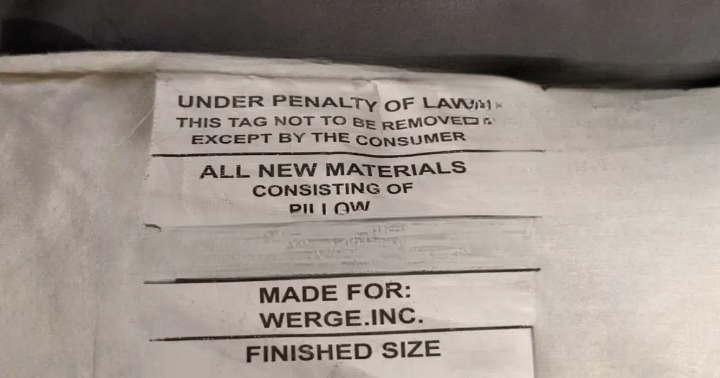
“UNDER PENALTY OF LAW THIS TAG NOT TO BE REMOVED EXCEPT BY THE CONSUMER.”
Wait. Penalty of law?
Are you about to break a rule by cutting that little tag off your own pillow?
If you’ve ever paused mid-snipping, unsure whether you were about to commit a minor crime, you’re not alone. This warning has puzzled people for decades.
The good news? The truth is far less dramatic than the wording suggests.
In this comprehensive guide, we’ll unpack:
-
What those tags actually are
-
Why they exist in the first place
-
Who the warning really applies to
-
Whether it’s illegal for you to remove them
-
When you might want to keep them
-
Why the language sounds so intense
-
Special cases involving mattresses, baby products, and furniture
-
Practical advice for deciding whether to snip or save
Let’s clear up the mystery once and for all.
What Is That Pillow Tag Actually Called?
That small white fabric label sewn into your pillow, mattress, or cushion isn’t just a random branding tag.
It has an official name: a law label.
Yes, “law” is literally part of its name — which explains the intimidating tone.
Law labels are regulated information tags required on certain stuffed or upholstered products. Their purpose is simple: transparency.
They tell you what’s inside the item.
Common information on a law label includes:
-
Filling materials (e.g., polyester fiber, down, foam)
-
Percentage breakdown of materials
-
Manufacturing location
-
Registration numbers
-
Certification statements
These tags exist to ensure buyers know exactly what they are purchasing before making a decision.
Why Do Law Labels Exist?
To understand why these tags are mandatory, we need to go back in time.
A History of Questionable Stuffing Practices
In the late 19th and early 20th centuries, some manufacturers used less-than-desirable materials to stuff bedding and upholstered furniture.
Examples historically documented include:
-
Mixed fabric scraps
-
Unwashed fibers
-
Recycled stuffing
-
Low-quality fillers
Consumers had no way of knowing what was inside their mattress or pillow.
Concerns about hygiene, allergens, and material quality eventually led to consumer protection regulations requiring full disclosure of product contents.
Law labels were created to protect buyers from misleading or undisclosed materials.
In short: these tags were designed to protect consumers — not intimidate them.
Breaking Down the Famous Warning
The most attention-grabbing part of the label reads:
“UNDER PENALTY OF LAW THIS TAG NOT TO BE REMOVED EXCEPT BY THE CONSUMER.”
Let’s break that down carefully.
-
“Under penalty of law” sounds serious.
-
“Not to be removed” seems strict.
-
“Except by the consumer” is the key phrase many people overlook.
That final line changes everything.
The warning is directed at:
-
Manufacturers
-
Retailers
-
Distributors
It is not directed at you once you’ve purchased the item.
So, Is It Illegal to Cut Off Your Pillow Tag?
No.
If you own the pillow, you are the consumer. The label explicitly states it may not be removed except by the consumer.
That means once you’ve bought it, you can legally remove the tag if you choose.
The restriction applies to sellers before purchase. They must leave the label attached so customers can see what they are buying.
You are not breaking any laws by trimming that tag off your own pillow.
Why the Warning Sounds So Dramatic
The language dates back to early regulatory standards in the early 1900s.
At the time, legal wording tended to be formal and authoritative.
Over the years, while some clarifications were added (like “except by the consumer”), the strong phrasing remained.
It may feel overly intense by modern standards, but it persists largely because:
-
It meets regulatory requirements.
-
It clearly signals compliance.
-
Manufacturers continue using standardized phrasing.
The dramatic tone is historical — not personal.
What Happens If a Retailer Removes the Tag?
For sellers, removing the label before sale could result in penalties, including fines.
That’s because:
-
Consumers must have access to material information.
-
Regulations require disclosure.
-
Removing the tag interferes with transparency.
But again — this only applies before purchase.
Do You Actually Need to Keep the Tag?
Legally? No.
Practically? It depends.
Let’s look at situations where keeping the tag might be helpful.
Situations Where Keeping the Tag Can Be Useful
1. Returns or Exchanges
Some stores may request:
-
Product details
-
Material breakdown
-
Registration numbers
While many retailers don’t require the law label for returns, keeping it intact during the return window can be helpful.
2. Warranty Claims
Manufacturers sometimes ask for:
-
Model numbers
-
Material specifications
-
Production codes
These may appear on the law label.
Removing it immediately could make future warranty discussions slightly more complicated.
3. Reselling the Item
If you ever decide to resell:
-
A mattress
-
A decorative pillow
-
A sofa
-
A cushion set
Buyers may appreciate proof of material composition.
It can increase buyer confidence.
4. Donation Requirements
Some shelters and donation centers require visible labels to confirm:
-
The item is new or lightly used
-
The filling meets safety guidelines
Removing the tag may limit donation options in certain areas.
5. Cleaning Instructions
Although most pillows include a separate care label, occasionally important details are printed on the law label.
Before cutting it off, double-check for:
-
Washing temperature guidance
-
Drying recommendations
-
Fiber content notes
Keeping that information handy can prevent accidental damage during laundering.
When It’s Perfectly Fine to Remove It
If:
-
The pillow is yours.
-
You don’t plan to return it.
-
You’ve noted any important care instructions.
-
The tag causes discomfort.
Then removing it is completely acceptable.
Many people trim tags immediately for comfort reasons.
Special Cases: Mattresses, Baby Products, and Safety Items
While pillow tags are usually safe to remove, certain products deserve extra consideration.
1. Crib Mattresses and Baby Bedding
Items intended for infants may include:
-
Safety certifications
-
Regulatory compliance statements
-
Warning labels
Keeping those intact can be helpful for future reference.
2. Car Seats and Child Safety Gear
Labels may contain:
-
Serial numbers
-
Safety standards
-
Expiration dates
Removing these can complicate recalls or manufacturer communications.
3. Mattresses
Mattress law labels often include:
-
Manufacturing dates
-
Warranty identifiers
-
Material breakdown
Some warranties reference the tag specifically.
Before cutting, verify warranty terms.
Why Do People Think It’s Illegal?
The misunderstanding stems from:
-
The phrase “penalty of law”
-
The bold lettering
-
Lack of context
-
Widespread myths
Over time, this created a cultural joke: “Don’t cut the tag — it’s illegal!”
In reality, the warning is not aimed at household owners.
Consumer Protection at Its Core
Law labels were introduced to:
-
Prevent deceptive practices
-
Protect public health
-
Ensure product transparency
-
Standardize manufacturing disclosures
They are a consumer safeguard — not a restriction on personal use.
Can Removing the Tag Damage the Pillow?
Physically, removing the tag does not affect:
-
Structural integrity
-
Filling quality
-
Comfort
-
Safety
However, cutting too close to stitching may loosen seams.
To remove cleanly:
-
Use sharp scissors
-
Cut close to the tag base
-
Avoid cutting structural threads
What About Furniture Tags?
Couches, armchairs, and cushions often carry similar labels.
The same rule applies:
-
Retailers must keep them attached.
-
Owners may remove them.
However, furniture warranties may reference them, so checking terms first is wise.
Why Hasn’t the Wording Been Updated?
Regulatory language tends to change slowly.
Reasons include:
-
Standardization across states or regions
-
Manufacturing consistency
-
Legal clarity
Even though the tone feels outdated, it still fulfills its purpose.
Common Myths About Pillow Tags
Let’s address a few common misconceptions.
Myth 1: You Can Be Fined for Removing It
False. Once purchased, it’s your property.
Myth 2: Police Can Penalize You
No. The warning does not apply to personal use.
Myth 3: Cutting the Tag Voids All Warranties
Not always. Some warranties reference the label, but many do not. Check your specific warranty terms.
Practical Advice Before Cutting
If you’re unsure, consider:
-
Taking a photo of the tag before removing it.
-
Saving it temporarily during the return window.
-
Reviewing warranty documentation.
That way, you keep the information without the irritation.
The Psychological Impact of Strong Warnings
Interestingly, bold legal language tends to create compliance even when unnecessary.
Phrases like:
-
“Penalty of law”
-
“Do not remove”
-
“Violation”
Trigger caution.
This psychological effect likely contributes to the long-standing confusion.
Cultural Humor Around Pillow Tags
The label has become something of a cultural inside joke.
Many people remember childhood warnings from parents or relatives:
“Don’t cut that — it’s illegal!”
In reality, the law label protects you before purchase — not restricts you afterward.
Final Verdict: Can You Cut It Off?
Yes.
If you are the consumer and you own the pillow, you may remove the law label.
You are not breaking any laws.
However, consider keeping it if:
-
You may return the item.
-
You need warranty documentation.
-
You plan to donate or resell it.
-
It contains care instructions you haven’t recorded.
Otherwise, feel free to prioritize comfort.
Closing Thoughts
The “under penalty of law” warning may sound intimidating, but it serves a practical consumer-protection purpose.
It ensures transparency before purchase.
Once the item belongs to you, the decision is yours.
So if that tag is scratching your cheek in the middle of the night, rest easy knowing you’re well within your rights to remove it.
Comfort, clarity, and consumer knowledge — all in one small fabric label.