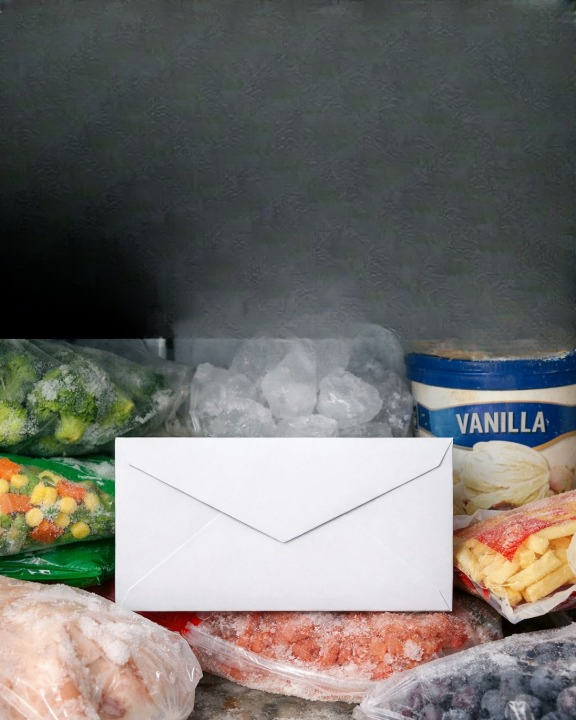
Introduction: That “Oh No” Moment After Sealing an Envelope
Almost everyone has experienced it at least once.
You carefully fold a letter, slide it into an envelope, seal the flap… and then suddenly realize you forgot something important. Maybe it was a document you meant to include. Perhaps you spotted a typo. Or maybe you sealed the wrong version entirely.
Now you’re stuck with a sealed envelope and a decision to make. Do you tear it open and ruin it? Start over with a new one? Try to carefully pry it apart and risk damaging what’s inside?
This is where a long-standing household trick comes into play — placing the sealed envelope in the freezer.
At first glance, it sounds unusual. Why would freezing an envelope help? It may even seem like something from an old home-tips book. Yet this method has been shared for generations as a way to loosen traditional envelope adhesive with minimal damage.
In this in-depth guide, we’ll explore:
-
What the freezer envelope method actually is
-
The science behind why it sometimes works
-
The types of envelopes it works best on
-
Why it fails in certain situations
-
Step-by-step instructions for trying it safely
-
Alternative methods for opening sealed envelopes
-
When you should avoid attempting it
-
Practical tips to prevent envelope mishaps in the future
By the end, you’ll understand not only how the trick works, but also whether it’s worth trying in your specific situation.
What Is the Freezer Envelope Method?
The “freezer trick” is a simple technique intended to loosen the adhesive on certain types of sealed envelopes.
The concept is straightforward:
-
Place a sealed envelope into a freezer for a short period.
-
Allow the cold temperature to affect the adhesive.
-
Attempt to gently lift the flap without tearing the paper.
The goal is not to freeze the paper itself, but to temporarily change the structure of the glue holding the flap closed. In some cases, this makes the adhesive less flexible and easier to separate.
However, this method is not universal. It works under specific conditions and depends heavily on the type of glue used.
Understanding How Traditional Envelope Adhesive Works
To see why freezing can sometimes help, we need to look at how traditional envelopes are sealed.
Water-Activated Adhesive
Many classic envelopes use a water-activated glue. This adhesive is typically starch-based, often made from dextrin, a compound derived from starch.
Here’s how it functions:
-
The glue is dry when manufactured.
-
When moisture is applied (usually by licking or dampening the flap), the adhesive activates.
-
As it dries, it forms a bond between the flap and the body of the envelope.
The bond is strong enough to hold securely during mailing, but it’s still influenced by environmental factors such as humidity and temperature.
What Happens to Adhesive in Cold Temperatures?
Cold temperatures can affect materials in several ways.
When exposed to freezing conditions:
-
Adhesives may become less flexible.
-
The glue can turn brittle.
-
The bond may temporarily weaken.
The freezer method relies on this temporary brittleness. When the adhesive becomes less pliable, it may release from the paper more easily if handled carefully.
However, the success of this method depends on several variables:
-
Type of adhesive
-
Amount of moisture originally applied
-
How long the envelope has been sealed
-
Thickness of the paper
-
Environmental humidity
When the Freezer Method Is Most Likely to Work
While not guaranteed, the freezer trick is most effective under the following conditions:
1. Traditional Lick-and-Seal Envelopes
The method works best with water-activated adhesive envelopes. These are the classic types that require moisture to seal.
Modern peel-and-stick envelopes behave differently and are often unaffected by freezing.
2. Recently Sealed Envelopes
If the envelope was sealed only a short time ago, the adhesive bond may not have fully cured. Freezing it shortly after sealing increases the chances of success.
Envelopes sealed weeks or months ago are much harder to open cleanly.
3. Moderate Moisture Application
If you applied just enough moisture to activate the glue, the bond may be easier to loosen.
If the flap was heavily saturated, the adhesive may have seeped into paper fibers, creating a stronger seal that freezing won’t easily reverse.
4. Thicker Envelope Paper
Heavier paper stock holds its shape better during separation. Thin or delicate envelopes are more likely to tear.
Why the Freezer Trick Doesn’t Always Work
While the idea is clever, there are several reasons it may fail.
Peel-and-Stick Adhesives
Modern envelopes frequently use pressure-sensitive adhesives. These glues are designed to bond under pressure rather than moisture.
Freezing typically does not weaken this type of adhesive significantly.
Long-Term Drying
If the adhesive has had plenty of time to fully cure, freezing may not reduce the bond enough to allow clean separation.
Over-Sealing
If strong pressure was applied when sealing, the adhesive may have deeply bonded with the paper fibers.
Synthetic or Chemical Adhesives
Some modern adhesives are engineered to resist environmental changes. Temperature fluctuations alone may not alter their bond.
Step-by-Step Guide to Trying the Freezer Method
If you believe your envelope meets the right conditions, here’s how to attempt the method carefully.
Step 1: Protect the Envelope from Moisture
Place the envelope inside a resealable plastic bag. This prevents condensation from forming on the paper while it’s in the freezer.
Moisture buildup can damage ink or cause warping.
Step 2: Freeze for 1–2 Hours
Place the sealed envelope in the freezer for about one to two hours.
Avoid leaving it overnight, as prolonged exposure can increase condensation risk.
Step 3: Let It Sit Briefly After Removal
Remove the envelope and allow it to sit at room temperature for about one minute before handling.
This reduces surface moisture and prevents smudging.
Step 4: Gently Test a Corner
Start at one corner of the flap.
Using:
-
Fingertips
-
A butter knife
-
A thin, flat letter opener
Gently attempt to lift the flap. Move slowly and apply minimal force.
If resistance is strong, do not force it. Forcing may tear the envelope.
Alternative Methods for Opening a Sealed Envelope
If freezing does not work, there are other options.
1. Steam Method
Hold the sealed flap above steam from hot (not boiling) water.
Steam introduces moisture that can reactivate water-based glue.
Steps:
-
Heat water until steaming.
-
Hold the flap area above steam for several seconds.
-
Gently lift the flap.
Be cautious not to oversaturate the paper.
2. Careful Edge Cutting
Use a sharp letter opener or craft knife to cut neatly along the top edge rather than breaking the seal.
This method allows you to reseal the envelope later with minimal visible damage.
3. Warm Knife Technique
Warm a butter knife slightly (not hot).
Slide it gently under the flap to soften adhesive.
Use caution to avoid overheating or scorching.
4. Specialized Letter-Opening Tools
Certain tools are designed to open envelopes cleanly along an edge.
These can be useful for preserving appearance.
When You Should Avoid the Freezer Method
There are situations where it’s best not to attempt freezing.
Irreplaceable Documents
If the contents are extremely important or sentimental, any risk of damage may not be worth it.
Thin or Fragile Paper
Delicate paper tears easily when brittle from cold.
Legal or Official Documents
Tampering with official mail may not be appropriate depending on the situation.
Always ensure you are opening mail that belongs to you and that you have permission to access.
Preventing Future Envelope Mishaps
Sometimes the best solution is prevention.
Here are helpful habits to avoid sealing mistakes:
-
Double-check contents before sealing
-
Leave the flap unsealed until final review
-
Lightly tuck the flap without moistening while reviewing
-
Keep spare envelopes available
Taking a few extra seconds can prevent the need for repair attempts later.
Why This Trick Has Been Passed Down
The freezer method persists because:
-
It occasionally works surprisingly well.
-
It uses common household equipment.
-
It reflects practical problem-solving.
-
It requires no special tools.
It’s an example of how everyday science can offer simple solutions.
The Science of Adhesives and Temperature
Adhesives respond differently to temperature extremes:
Cold temperatures:
-
Reduce flexibility
-
Increase brittleness
-
Temporarily weaken some bonds
Heat:
-
Can soften glue
-
Reactivate moisture-based adhesives
Understanding this helps explain why freezing sometimes works — but not always.
Modern Envelope Technology Has Changed the Game
Today’s envelope manufacturing often uses:
-
Pressure-sensitive adhesives
-
Synthetic polymers
-
Strong bonding compounds
These improvements enhance security and durability but reduce the effectiveness of old household tricks.
Is the Freezer Trick Safe?
When performed carefully:
-
It does not typically harm contents.
-
It does not release chemicals.
-
It is generally low risk.
However, improper handling can cause:
-
Paper tearing
-
Ink smudging
-
Wrinkling
Proceed slowly and cautiously.
A Balanced Perspective
The freezer envelope method is neither magic nor myth. It is a conditional technique.
It works best with:
-
Water-activated glue
-
Recently sealed envelopes
-
Moderate moisture application
-
Thick paper stock
It is ineffective with:
-
Peel-and-stick adhesives
-
Long-sealed envelopes
-
Synthetic bonding agents
Final Thoughts: A Practical Household Trick with Limits
Placing an envelope in the freezer may sound unusual, but under the right circumstances, it can help loosen traditional adhesive seals with minimal damage.
While not guaranteed, it’s a clever example of practical knowledge passed through generations.
However, modern adhesives have reduced its effectiveness in many cases. When freezing doesn’t work, alternative gentle methods like steaming or careful edge cutting may provide better results.
Ultimately, the most reliable solution is prevention — double-checking before sealing and keeping spare envelopes on hand.
Still, there’s something satisfying about understanding how simple temperature changes can influence everyday materials. It reminds us that even small scientific principles can solve everyday challenges.
So the next time you seal an envelope and realize you made a mistake, you’ll know your options — including whether a short stay in the freezer might just save the day.