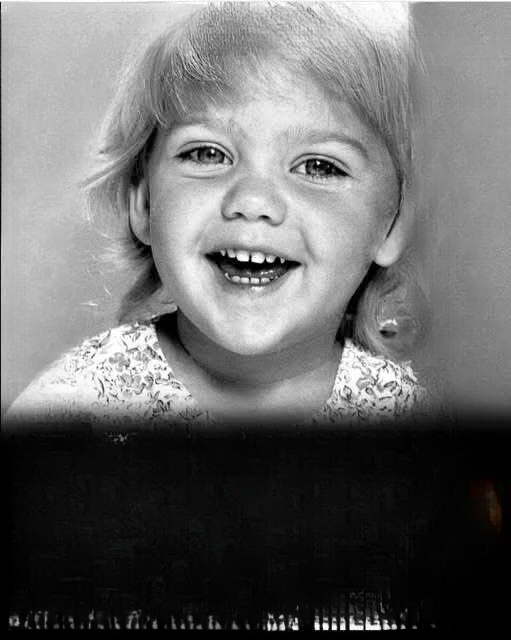
At just eleven months old, Drew Barrymore appeared in front of a camera for the first time, beginning a life that would unfold almost entirely in public view. Born into one of Hollywood’s most famous acting dynasties, her future seemed destined for fame long before she could understand what fame truly meant. Yet behind the bright lights, magazine covers, and early success was a childhood shaped by instability, overwhelming pressure, and emotional challenges that few children are equipped to navigate.
By the age of seven, she had become internationally recognized following her unforgettable role in E.T. the Extra-Terrestrial. Audiences adored her natural charm, emotional warmth, and unmistakable screen presence. To the public, she represented the ideal child star: talented, charismatic, and seemingly fearless in front of the camera.
But the reality behind that image was far more complicated.
Growing Up Too Fast in Hollywood
While millions admired her success, the structure and guidance many children rely on were largely missing from her early life. Hollywood fame arrived before emotional maturity, exposing her to environments and experiences far beyond her years. The entertainment industry often celebrates youth and confidence, but it can also place extraordinary pressure on young performers who are still developing emotionally and psychologically.
For Barrymore, the combination of fame, public scrutiny, and family struggles created an unstable foundation during childhood. Reports over the years have documented how early exposure to adult social circles and unhealthy environments contributed to serious personal difficulties while she was still extremely young.
By her early teens, she was already facing intense emotional struggles and public attention surrounding her personal life. At an age when most children are focused on school and friendships, she found herself navigating addiction, media headlines, and mental health challenges under constant public observation.
A Turning Point During Adolescence
At thirteen years old, Barrymore experienced one of the darkest periods of her life after a suicide attempt led to psychiatric treatment. She later spoke openly about spending more than a year in a structured mental health facility, describing the experience as emotionally difficult but ultimately transformative.
The discipline and structure she encountered there stood in stark contrast to the chaos that had defined much of her earlier life. Though painful at the time, this period became a major turning point in helping her rebuild stability and accountability.
Many former child stars struggle to recover once public perception shifts against them. In Barrymore’s case, Hollywood quickly moved on, labeling her as troubled and unreliable. The same industry that had once celebrated her talent now viewed her as a risk.
For many people, that kind of rejection would have ended their career permanently.
But for Barrymore, it marked the beginning of reinvention.
Rebuilding Life Outside the Spotlight
During her late teenage years, she stepped away from the glamorous image associated with celebrity culture and focused on rebuilding her life more privately. She worked ordinary jobs, including restaurant work and service industry positions, while attempting to regain emotional balance and personal independence.
This chapter of her life rarely receives as much attention as her early fame, yet it may have been one of the most important. Without the constant praise or pressure of Hollywood, she began forming an identity separate from public expectations.
Rather than trying to reclaim fame immediately, she focused on survival, discipline, and growth.
That period helped reshape the direction of her future.
Reinventing Herself in Hollywood
By her twenties, Barrymore slowly re-entered the entertainment industry with a different perspective. Instead of relying solely on the image that had made her famous as a child, she embraced more mature, comedic, and emotionally grounded roles.
Films like The Wedding Singer helped establish her as a beloved leading actress for a new generation of audiences. Her performances balanced humor, vulnerability, and relatability in ways that resonated strongly with viewers.
Importantly, her comeback was not simply about acting success.
It was about reclaiming control over her career.
Building a Production Company and Creative Independence
One of the most significant steps in her professional evolution came with the creation of Flower Films, the production company she co-founded.
Through producing as well as acting, Barrymore gained far greater creative influence over the projects she worked on. Rather than waiting for opportunities to be offered, she began helping create them herself.
This transition reflected a major shift in identity:
- From former child star
- To actress
- To producer
- To entrepreneur and media personality
Her production work contributed to multiple commercially successful films and television projects, helping establish long-term financial and professional stability beyond acting alone.
A Career Built on Authenticity
Part of Barrymore’s enduring appeal comes from the honesty she brings to public life. Unlike many celebrities who carefully separate their struggles from their public image, she has often spoken candidly about addiction, mental health, parenting, failure, and recovery.
Audiences responded to that openness because it felt human rather than manufactured.
Over time, her public image transformed dramatically:
- not into perfection,
- but into resilience.
That distinction matters.
People are often drawn more strongly to stories of growth and survival than to flawless celebrity narratives.
Transitioning Into Television and Media
In recent years, Barrymore expanded her career again by becoming the host of The Drew Barrymore Show. The program allowed her personality, warmth, and emotional openness to become central to her public identity in a new way.
Unlike traditional celebrity interviews built entirely around promotion, her hosting style often emphasizes empathy, vulnerability, humor, and genuine curiosity.
This evolution from actress to daytime television host further strengthened her reputation as someone audiences feel emotionally connected to rather than simply entertained by.
Prioritizing Family and Stability
Perhaps the most meaningful transformation in Barrymore’s life has occurred away from cameras entirely.
As a mother to her daughters, Olive and Frankie, she has spoken frequently about the importance of creating a stable, loving environment very different from the instability she experienced during childhood.
Many people who grow up in difficult circumstances struggle with the fear of repeating unhealthy cycles. Barrymore’s life reflects a conscious effort to break those patterns through structure, emotional awareness, and intentional parenting.
In interviews, she has often emphasized that peace, routine, and emotional safety matter more to her now than fame itself.
That perspective represents a profound shift from the chaos of her early years.
The Difference Between Fame and Fulfillment
Barrymore’s story highlights an important truth about celebrity culture:
public success and personal well-being are not always connected.
At one point, she had worldwide fame but very little stability.
Later, after being rejected by much of the entertainment industry, she quietly rebuilt herself step by step.
Today, her success reflects something deeper than celebrity visibility alone:
- emotional resilience,
- self-awareness,
- reinvention,
- and long-term personal growth.
Why Her Story Resonates So Strongly
Many people connect emotionally with Barrymore’s journey because it feels deeply human beneath the Hollywood setting.
Her life includes:
- early success,
- public mistakes,
- personal struggles,
- rejection,
- rebuilding,
- and eventual stability.
Those themes resonate far beyond entertainment.
Her story reminds people that identity is not permanently defined by the worst chapter of life. Reinvention remains possible, even after public failure or personal collapse.
A Legacy Beyond Child Stardom
Today, Drew Barrymore is recognized not only for her acting career, but also for her resilience, honesty, business success, and ability to evolve across multiple decades in a notoriously unforgiving industry.
What makes her journey remarkable is not simply that she survived fame.
It is that she managed to transform pain, instability, and public scrutiny into a life centered around purpose, creativity, family, and emotional balance.
Her legacy is no longer defined by being a child star.
It is defined by everything she became afterward.
Final Thoughts
The story of Drew Barrymore is ultimately about rebuilding.
From early fame and personal struggles to professional reinvention and family stability, her life reflects the complicated reality behind celebrity culture and the strength required to overcome it.
She did not simply return to Hollywood after hardship.
She reshaped her life entirely:
- professionally,
- emotionally,
- and personally.
In a culture obsessed with instant success and perfect public images, her journey offers something more lasting:
the reminder that resilience is often built slowly, imperfectly, and one decision at a time.