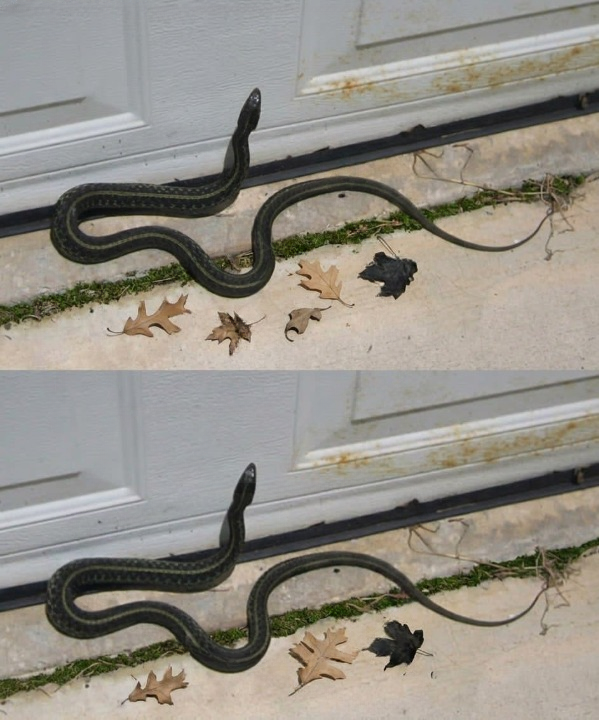
When a snake appears inside a home, it can feel startling or even unsettling. For many people, the immediate reaction is emotional—fear, confusion, or the assumption that something symbolic or “unusual” is happening. However, in practical terms, a snake entering a house is almost always a natural event with environmental explanations rather than a mystical meaning.
At its core, it is an encounter between wildlife and human living space. And like most wildlife encounters, it usually points to very specific, very fixable conditions.
The Most Common Reason: Searching for Food and Shelter
Snakes do not enter homes at random. In most cases, they are following basic survival instincts. A house can unintentionally provide everything a snake is looking for: warmth, darkness, and access to prey.
Small rodents such as mice and rats are one of the biggest attractors. If a home has even a minor pest problem, it can draw snakes closer over time. Insects can also contribute indirectly by attracting the rodents that snakes feed on.
This means the snake is often not the root issue—it is a sign of something else happening behind the scenes.
Entry Points You Might Not Notice
Snakes do not need large openings to get inside. Many species can slip through surprisingly small gaps. Common entry points include cracks in foundations, gaps under doors, torn window screens, vents without proper covers, and openings around plumbing or utility lines.
In older homes or buildings with weather damage, these vulnerabilities can go unnoticed for years. A snake entering the house can therefore highlight structural weaknesses that might also be letting in pests, moisture, or drafts.
In that sense, the sighting is less about randomness and more about opportunity. If there is a path inside, nature may eventually find it.
What the Snake’s Presence Often Reveals
While the snake itself is the immediate concern, its presence often points to a deeper issue: the ecosystem around your home.
For example, a snake may indicate a hidden rodent population inside walls, attics, or basements. Even if you haven’t seen mice or rats directly, their presence may still be enough to attract predators.
It can also suggest that outdoor conditions around the home—such as overgrown grass, wood piles, or clutter near the foundation—are creating an environment where snakes feel safe approaching.
In this way, the snake is not just an intruder. It is a signal that the surrounding environment may need attention.
Emotional and Symbolic Interpretations
Beyond the physical explanation, some people naturally interpret unexpected events through a symbolic lens. Across different cultures, snakes can represent transformation, awareness, danger, or change.
Seeing one inside a home can feel like a disruption of safety and personal space, which may lead people to reflect on their emotional environment as well as their physical one. For some, it becomes a moment to think about boundaries—what feels secure, what feels exposed, and what may need to be addressed in life more broadly.
While these interpretations are subjective and not scientific, they often reflect how strongly humans respond to unexpected encounters in their personal space.
The Most Important Response: Stay Calm and Act Safely
Regardless of interpretation, the practical response is always the same: remain calm and avoid direct interaction with the animal.
Most snakes are not aggressive toward humans and will try to avoid confrontation. Attempting to touch, chase, or remove the snake without proper knowledge can increase risk unnecessarily.
The safest course of action is to contact wildlife control or a professional pest service trained in humane removal. They can identify the species, safely relocate the animal if necessary, and ensure there is no ongoing infestation problem.
Preventing It From Happening Again
Once the immediate situation is resolved, the next step is prevention. This involves inspecting the home for potential entry points and sealing any gaps. Attention should be given to doors, windows, vents, basements, and areas where pipes or cables enter the structure.
It is also important to address conditions that may attract prey animals, such as unsecured food sources, cluttered storage areas, or unsealed trash. Keeping the surrounding yard maintained can reduce hiding places for both rodents and snakes.
The Bigger Picture
In most cases, a snake inside a home is not a sign of something mysterious or rare. It is a reminder that human spaces and natural environments overlap more than we often realize.
Rather than being interpreted as an omen, it can be understood as a practical signal—one that highlights small vulnerabilities in a home’s structure or environment that may need attention.
Handled correctly, it becomes less of a frightening event and more of an opportunity to improve safety, awareness, and maintenance.
In the end, the most important takeaway is simple: the snake is not the message. The conditions that allowed it inside are.