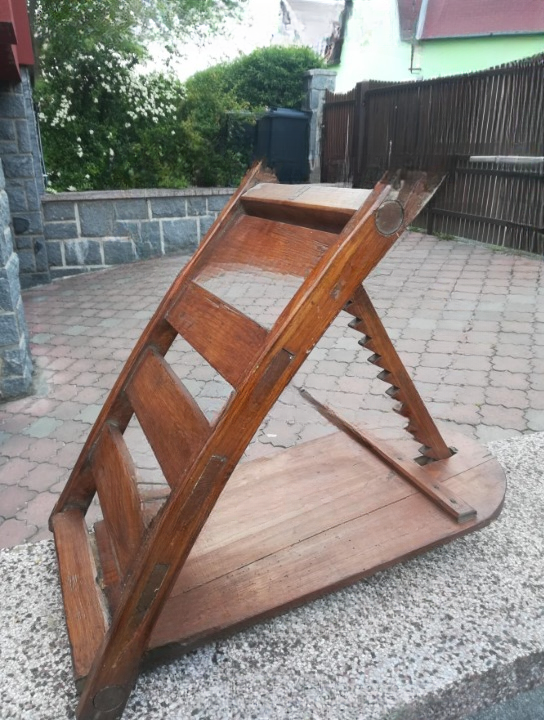
Introduction: Rediscovering a Forgotten Household Treasure
Exploring an old farmhouse, rural cottage, or ancestral home often feels like stepping into a living museum. Tucked away in attics, barns, or kitchen corners, one may discover objects whose purpose is no longer immediately obvious. These artifacts—weathered by time yet preserved by care—carry quiet stories of daily life in another era. Among such discoveries, one particularly fascinating tool stands out: the traditional wooden cheese press.
At first glance, a wooden cheese press may appear to be a simple structure made of wood, metal rods, and a lever or screw mechanism. However, this humble device once played a central role in home food production. Long before supermarkets and refrigeration systems became standard, families depended on tools like this to preserve food, nourish their households, and maintain self-sufficiency.
The wooden cheese press represents more than a kitchen implement. It symbolizes patience, craftsmanship, agricultural knowledge, and cultural tradition. Its presence in a home tells a story of resilience and creativity—of people who understood how to transform fresh milk into a product that could last through the seasons.
In this article, we explore the historical significance, functionality, craftsmanship, and lasting legacy of the wooden cheese press, examining how it shaped food culture and why it continues to inspire modern artisans today.
Understanding the Purpose of a Wooden Cheese Press
To appreciate the importance of the wooden cheese press, it helps to understand the basic principles of cheese-making.
Cheese begins with milk—commonly from cows, goats, or sheep. Through a carefully managed process, milk is curdled, separating into solid curds and liquid whey. While curds form the foundation of cheese, they contain excess moisture that must be removed to achieve the desired texture and durability.
This is where the cheese press becomes essential.
The Role of Pressure in Cheese-Making
The primary function of a cheese press is to apply controlled, steady pressure to curds placed inside a mold. This process:
-
Removes excess whey (liquid)
-
Compacts the curds into a uniform shape
-
Enhances texture and density
-
Supports proper aging
-
Extends shelf life
Without pressing, many types of cheese would remain too moist and unstable for storage. By gradually applying pressure, the cheese press helps produce a firm, cohesive block that can mature over time.
Traditional presses were often made entirely from hardwoods such as oak, maple, or beech—materials chosen for durability and strength. Designs varied widely, but most relied on lever systems, weighted arms, or screw mechanisms to generate consistent compression.
The beauty of this device lies in its simplicity. With no electricity or complex machinery required, families could reliably produce high-quality cheese using natural materials and mechanical principles.
A Historical Perspective: Cheese-Making Across Civilizations
Cheese-making is one of humanity’s oldest culinary practices, dating back thousands of years. Archaeological evidence suggests that early dairy processing existed in ancient Mesopotamia and Egypt. Over time, techniques evolved and spread throughout Europe, Asia, and eventually the Americas.
In many regions, cheese became a dietary staple because it provided concentrated nutrition and could be stored far longer than fresh milk.
Europe’s Rich Cheese Traditions
Across Europe, different climates and cultures gave rise to distinct cheese varieties and pressing methods:
-
In France, soft and semi-soft cheeses became culinary icons.
-
In Switzerland, alpine communities produced dense, long-aging cheeses suitable for mountain storage.
-
In Italy, regional traditions developed unique textures and aging practices.
-
In England, farmhouse cheddar became a symbol of rural food craftsmanship.
Each region adapted its cheese press design to local needs. Some presses were compact and suitable for household kitchens, while others were larger and used in cooperative dairy houses.
Cheese-Making in Rural America
When European settlers arrived in North America, they brought their cheese-making traditions with them. In colonial and frontier communities, dairy production quickly became essential.
Before industrialization, most families produced their own cheese. Farms often maintained dairy cows, and surplus milk was transformed into butter and cheese to avoid waste.
The wooden cheese press became a common fixture in barns and kitchens throughout rural America. Its presence represented security—food for winter months and nourishment during difficult seasons.
Craftsmanship Behind the Wooden Cheese Press
One of the most remarkable aspects of traditional cheese presses is the level of craftsmanship involved in their construction.
Unlike modern stainless steel equipment, wooden presses were handcrafted by local carpenters or farmers themselves. Each press reflected the skill of its maker and the needs of the household.
Materials and Construction
Common features included:
-
A sturdy wooden frame
-
A base platform to hold molds
-
A vertical screw or lever system
-
Removable molds lined with cloth
-
Adjustable weight mechanisms
Hardwood was preferred because it resisted warping and cracking under pressure. The grain of the wood, joinery techniques, and balance of the frame all contributed to the press’s effectiveness.
Many presses were built to last decades—sometimes even generations. It was not unusual for a family to pass down the same cheese press through multiple heirs.
The Art and Science of Pressing Cheese
Although the mechanical principle is straightforward, successful cheese pressing requires skill and attention.
Pressing is not simply about applying maximum force. It is about applying the right amount of pressure at the right time.
Gradual Pressure Application
Most traditional recipes required staged pressing:
-
Light pressure to begin draining whey
-
Moderate pressure to shape the curds
-
Increased pressure for final compaction
Too much force too quickly could trap moisture inside, leading to texture problems. Too little pressure could produce crumbly or weak cheese.
The cheese maker had to monitor:
-
Temperature
-
Humidity
-
Curds’ texture
-
Drainage rate
This balance of science and intuition made cheese-making both technical and artistic.
Cheese Presses and Self-Sufficiency
In earlier centuries, self-sufficiency was not a lifestyle choice—it was a necessity. Families relied on their own labor to survive. Dairy animals provided milk, but milk alone had a short shelf life. Converting it into cheese extended its usefulness significantly.
The wooden cheese press therefore played a vital role in food security.
Winter Survival and Preservation
Before refrigeration, preserving food for winter was critical. Cheese offered:
-
High protein content
-
Dense calories
-
Long storage life
-
Portability
Pressed cheeses could be stored in cool cellars for months. Some varieties improved with age, developing complex flavors.
The press enabled families to maximize every drop of milk, reducing waste and increasing sustainability.
Community and Cultural Identity
Cheese-making was often a communal activity. In many villages, neighbors gathered during peak dairy seasons to help process milk quickly.
This shared labor strengthened community bonds and preserved cultural identity. Recipes, techniques, and press designs became part of local heritage.
Festivals and markets frequently celebrated regional cheeses, turning dairy craftsmanship into a source of pride and economic opportunity.
The wooden cheese press, though silent and unassuming, stood at the center of these traditions.
Transition to Industrial Production
The Industrial Revolution transformed food production. Mechanized presses made of metal replaced wooden frames in commercial dairies.
Industrial equipment offered:
-
Greater efficiency
-
Uniformity
-
Scalability
-
Faster processing times
While this shift increased food availability and lowered costs, it also reduced the role of small-scale household production.
Despite this change, traditional wooden presses never disappeared entirely. Artisanal producers and homesteaders continued to value them for their authenticity and connection to heritage.
The Modern Revival of Traditional Cheese-Making
In recent decades, there has been renewed interest in traditional food crafts. Farmers’ markets, artisanal dairies, and homesteading movements have sparked a revival of small-scale cheese production.
Many modern enthusiasts appreciate:
-
Natural ingredients
-
Hands-on craftsmanship
-
Sustainable practices
-
Heritage methods
Wooden cheese presses have reappeared in workshops and home kitchens, often built by hobbyists or small artisans who respect traditional techniques.
This revival reflects a broader desire to reconnect with food origins and reduce reliance on industrial systems.
Sustainability and Environmental Awareness
Wooden cheese presses align with sustainable values in several ways:
-
Made from renewable materials
-
Long-lasting and repairable
-
No electricity required
-
Minimal environmental impact
In contrast to disposable modern appliances, a well-crafted wooden press can serve generations.
As environmental awareness grows, interest in durable, low-energy tools continues to increase.
Educational Value and Historical Preservation
Today, wooden cheese presses are often displayed in:
-
Agricultural museums
-
Living history farms
-
Culinary heritage centers
-
Educational workshops
They serve as teaching tools that demonstrate:
-
Basic mechanical principles
-
Traditional food preservation methods
-
Agricultural history
-
Craftsmanship techniques
Students and visitors gain a deeper understanding of how earlier generations sustained themselves without modern conveniences.
The Emotional Connection to Handmade Food
There is something uniquely satisfying about creating food from raw ingredients. The process demands attention, patience, and care.
Using a wooden cheese press transforms cheese-making into a tactile, immersive experience. The creak of wood, the slow turning of a screw, and the steady drip of whey create a rhythm that modern appliances cannot replicate.
This emotional connection explains why many people are drawn to traditional methods even when faster options exist.
Preserving and Caring for Antique Cheese Presses
For those who discover an old wooden cheese press, preservation is important.
Recommended steps include:
-
Cleaning gently without harsh chemicals
-
Inspecting joints and hardware
-
Avoiding excessive moisture
-
Applying food-safe oil if restoring for use
-
Consulting restoration experts when necessary
Whether used again or displayed as décor, these tools deserve respect as cultural artifacts.
Symbolism of the Wooden Cheese Press
Beyond its practical function, the wooden cheese press symbolizes:
-
Patience over speed
-
Craft over convenience
-
Sustainability over waste
-
Community over isolation
It reminds us that meaningful results often require time and effort.
In an era dominated by instant gratification, this lesson remains valuable.
Conclusion: Honoring a Legacy of Craft and Care
The wooden cheese press stands as a testament to human ingenuity and dedication. Once a daily necessity in farm kitchens around the world, it represents a tradition rooted in resourcefulness and respect for nature.
Though modern technology has transformed food production, the legacy of the wooden cheese press endures. It continues to inspire artisans, educators, and home cooks who seek deeper connections with their food and history.
Rediscovering such tools encourages us to slow down and appreciate the craftsmanship behind everyday essentials. It reminds us that innovation does not erase the past—it builds upon it.
When we encounter a wooden cheese press in an old home or museum display, we are not merely seeing wood and metal. We are witnessing a story of nourishment, resilience, and tradition.
And perhaps most importantly, we are reminded that sometimes the simplest tools carry the richest histories.