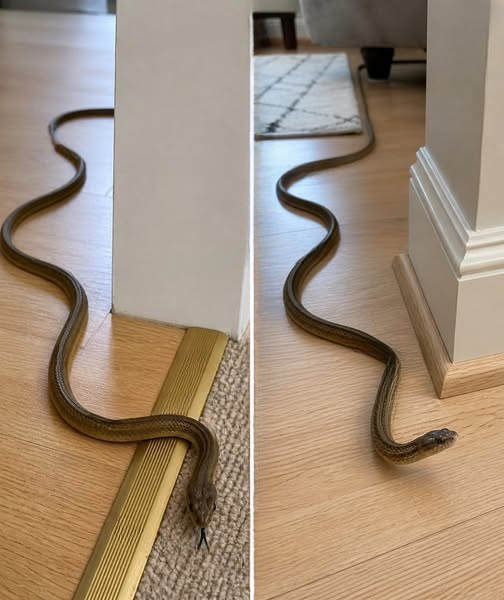
A snake appearing inside a home can be a deeply unsettling experience. For many people, the first reaction is fear, followed quickly by questions about whether it carries some kind of meaning or warning. Across cultures and generations, snakes have often been linked to symbolism, mystery, or even superstition. But in practical reality, a snake entering a home is almost always the result of simple environmental and survival-driven behavior.
Understanding why this happens is the key to reducing fear and responding safely. Rather than being a sign or message, a snake indoors is usually a reminder that human living spaces sometimes overlap with natural habitats.
Why Snakes Enter Homes
Snakes are not drawn to humans themselves. They are responding to conditions that make a home or yard temporarily attractive for survival.
One of the most common reasons is shelter. Homes provide dark, quiet, and undisturbed spaces that resemble natural hiding spots such as rock crevices or burrows. Areas like basements, garages, crawl spaces, and storage rooms can be especially appealing if they are rarely disturbed. Even small openings—such as gaps under doors, cracks in foundations, or unsealed utility entries—can allow entry without notice.
Another major factor is food availability. Snakes often follow prey, particularly rodents, insects, and small animals. If a home has an existing pest problem, it may indirectly attract snakes. In this sense, a snake is not “choosing” a house randomly—it is tracking a food source that is already present.
Weather and temperature changes also play an important role. Snakes are cold-blooded animals, meaning they rely on external heat sources to regulate body temperature. During extreme heat, they may seek cooler shaded areas. During colder seasons, they may look for warmth and insulation. A house can unintentionally provide both depending on conditions.
In some cases, entry is simply accidental. Open doors, damaged screens, or structural gaps can allow a snake to slip inside without intention. Once inside, it may be just as disoriented as the homeowner.
Myths and Misinterpretations
Because snakes have long been associated with symbolism in folklore, their presence indoors is sometimes interpreted as a sign of change, warning, or spiritual meaning. While these beliefs exist in many cultures and can carry personal significance, there is no scientific evidence supporting the idea that snake behavior is symbolic.
From a biological standpoint, the explanation is consistent and practical: snakes enter spaces that meet their basic survival needs. Their presence is environmental, not supernatural.
Are Indoor Snakes Dangerous?
Not all snakes pose a threat to humans. Many species are harmless and prefer to avoid contact entirely. In most cases, a snake’s natural instinct is to retreat rather than confront.
However, identification is not always easy. Some venomous species resemble harmless ones, depending on the region. For that reason, caution is always necessary.
If a snake is found indoors, the safest response is to avoid direct interaction. Do not attempt to touch, trap, or provoke it. Instead, keep distance and allow time for the animal to move away or for professionals to respond.
What to Do If You Find a Snake Indoors
The most important step is to remain calm. Sudden movements or attempts to handle the snake can increase risk for both people and the animal.
First, keep a safe distance. Snakes are generally not aggressive unless threatened, and many will attempt to escape if left alone.
Next, limit its movement if possible by closing nearby doors or creating a controlled area. This can help make professional removal easier.
Finally, contact wildlife control or local animal services. Trained professionals can identify the species and safely relocate the animal without harm. This is the recommended approach in all but the most familiar and non-risky situations.
How to Prevent Future Encounters
Preventing entry is far more effective than reacting to it.
One of the most important steps is sealing entry points. Homeowners should inspect areas such as door thresholds, vents, window seals, and pipe openings. Even very small gaps can be enough for a snake to pass through.
Reducing clutter around the home is also helpful. Piles of wood, debris, or overgrown vegetation can provide hiding places and attract rodents, which in turn attract snakes.
Since food sources are a major factor, rodent and insect control plays a key role in prevention. A home free of pests is far less likely to attract snakes.
Finally, maintaining clean landscaping around the property helps reduce shelter opportunities near foundations. Keeping grass trimmed and shrubs managed creates an environment that is less appealing to wildlife.
The Role of Snakes in the Ecosystem
Although encounters inside homes can be alarming, snakes play an important ecological role. They help regulate populations of rodents and other small animals, contributing to natural balance within ecosystems.
Their presence in a broader area is usually a sign of a functioning environment rather than a problem. The issue arises only when natural habitats overlap with human living spaces.
When to Seek Extra Caution
Certain situations require immediate professional attention. These include repeated indoor sightings, uncertainty about species identification, or living in regions where venomous snakes are common. In such cases, it is always safer to rely on trained experts rather than attempting removal independently.
Final Thoughts
A snake inside a home is rarely a mysterious or symbolic event. It is usually a simple case of wildlife following food, shelter, or environmental conditions into human space.
While the experience can be startling, the correct response is grounded in awareness rather than fear. By understanding why snakes enter homes and taking preventive steps, homeowners can significantly reduce future encounters.
In the end, the most important approach is calm observation, safe distance, and professional assistance when needed.