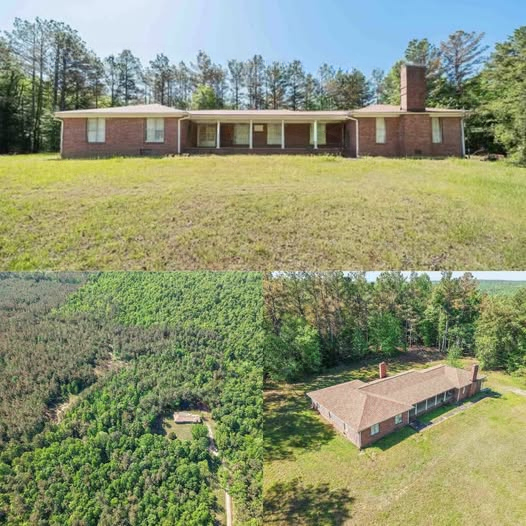
In today’s competitive real estate market, properties that combine scale, land, structural durability, and below-replacement pricing stand out as rare investment opportunities. The 5-bedroom, 3-bath brick ranch located in Saulsbury is one such asset. With over 3,500 square feet of interior space, 3 acres of usable land, and a strong all-brick exterior shell, it represents a classic “value-add” scenario for investors seeking renovation upside, rental potential, or long-term equity growth.
At first glance, the property’s appeal is straightforward: a large home at a low price per square foot. However, a closer examination reveals a layered investment profile where each component—from layout to basement potential to acreage utility—contributes to its financial attractiveness.
The home’s most immediately notable feature is its size. At approximately 3,512 square feet, the residence offers significantly more interior space than the average rural home in its price range. This alone creates multiple pathways for value creation. Large homes in rural markets often appeal to families seeking space, multi-generational households needing flexibility, or investors targeting rental strategies based on bedroom count. With five bedrooms already established, the property is positioned to maximize occupancy-based rental income or resale appeal after renovation.
Equally important is the traditional layout structure. The home includes a separate living room, dining room, and den—features that may feel dated in modern open-concept trends but are highly advantageous in investment scenarios. These defined spaces allow an investor to reposition the property strategically: walls can be removed to modernize flow, or the layout can be preserved to target buyers who prefer classic, segmented living arrangements. This flexibility increases the property’s market adaptability after upgrades.
The structural foundation of the home further strengthens its investment profile. Built with four-side brick construction, the exterior significantly reduces long-term maintenance costs. Unlike wood-frame homes, brick exteriors are resistant to rot, pests, and frequent repainting requirements. From an investor’s standpoint, this means fewer capital expenditures allocated to exterior maintenance and more budget directed toward high-ROI interior renovations such as kitchens, bathrooms, and flooring upgrades.
However, the most compelling feature of the property is the unfinished basement. In real estate investment terms, basements often represent “hidden square footage”—a space that can dramatically increase property value when properly developed. In this case, the basement is described as expansive and partially framed, which reduces the initial workload required for completion.
This opens several strategic possibilities. An investor could convert the basement into a rental unit, creating a multi-income property with independent living quarters. Alternatively, it could be transformed into a recreational space, home theater, gym, or workshop, each of which adds significant resale appeal. In higher-end renovations, basement completion can effectively double usable living space, pushing the home into a completely different valuation tier. This makes the basement not just an added feature, but the central engine of value creation.
The property’s mechanical systems also present opportunity rather than limitation. With climate control listed as “other,” the home likely requires modernization of HVAC infrastructure. While this represents an upfront cost, it is also a strategic advantage. Investors can install high-efficiency systems such as heat pumps or zoned mini-splits, which not only improve energy efficiency but also serve as strong selling points in resale markets increasingly driven by utility cost awareness.
Outside the home, the 3-acre lot provides another layer of investment flexibility. Unlike smaller suburban parcels, this level acreage allows for multiple expansion strategies. Investors could add detached garages, workshops, storage buildings, or even secondary dwellings depending on zoning regulations. The wooded perimeter enhances privacy, making the property attractive for buyers seeking seclusion without complete isolation.
Land value in rural investment properties is often underestimated. Here, the usable acreage is nearly maximized due to its level terrain. This significantly reduces development costs compared to sloped or heavily restricted parcels. For long-term investors, land also serves as a hedge against market volatility, since acreage tends to retain intrinsic value even when housing markets fluctuate.
From a financial standpoint, the property is positioned well below replacement cost metrics. At approximately $34 per square foot, it sits far under the typical cost of new construction, which often ranges between $150 and $200 per square foot depending on region and materials. This discrepancy alone creates immediate theoretical equity for any buyer capable of executing renovations efficiently.
Additionally, the low annual tax burden further enhances holding viability. With carrying costs remaining minimal, investors gain flexibility in renovation timelines without excessive financial pressure. This is particularly valuable for large-scale projects where construction may span several months or longer.
The surrounding location of Saulsbury contributes a quieter but important layer of value. Rural markets often experience slower appreciation cycles but offer lower entry prices and reduced competition. For investors, this creates opportunity windows where value-add properties can be acquired and improved without bidding pressure seen in urban markets.
Ultimately, the investment thesis for this property is built on three pillars: structural strength, spatial expansion potential, and land utility. The brick construction minimizes risk, the basement and interior layout maximize renovation upside, and the acreage provides long-term flexibility for development or lifestyle enhancement.
In conclusion, this Saulsbury brick ranch is not simply a large home—it is a multi-layered investment platform. It offers immediate equity potential through below-market pricing, significant upside through renovation and modernization, and long-term value through land ownership and structural durability. For investors with the capital and vision to execute a full value-add strategy, this property represents a rare alignment of scale, flexibility, and opportunity in today’s real estate landscape.