Walking into a nail salon is supposed to feel relaxing. The soft music, the scent of lotion, the warm water soaking your hands or feet—it’s one of those small rituals people use to unwind from busy lives. But for many customers, there’s one awkward moment that can quietly ruin the experience: tipping.
I didn’t realize how much anxiety I carried around tipping until one ordinary afternoon at my local nail salon. I had gone in for a simple manicure after a stressful week at work, hoping to relax for an hour and clear my head. My nail technician was patient, detail-oriented, and genuinely kind. She carefully shaped each nail, fixed a smudge without me asking, and somehow made me feel more human again by the time she finished.
Then came the moment that always made me uncomfortable—the payment screen.
The total appeared. Underneath it were several tip suggestions glowing back at me: 20%, 25%, 30%.
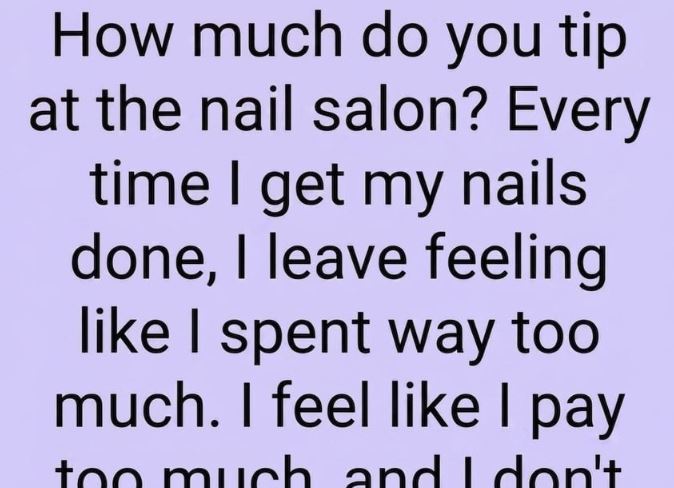
Suddenly, the peaceful atmosphere disappeared. My mind started racing. Was 20% enough? Would 15% seem rude? Was I supposed to tip more because she spent extra time fixing my nails? What if I couldn’t afford the higher amount today?
It felt ridiculous to be stressed over a tip after a relaxing appointment, but I knew I wasn’t alone. So many people quietly wonder the same thing every time they visit a salon.
The truth is, nail salon tipping etiquette has become confusing. Prices have risen over the years, digital payment screens create pressure, and social expectations seem to change constantly. But after talking to salon workers, longtime customers, and even friends in the beauty industry, I realized something important: there isn’t one perfect number everyone expects.
Most people generally tip between 15% and 20% for standard nail services. That’s considered the normal and respectful range in most salons. If your manicure costs $40, for example, a typical tip would be around $6 to $8.
For exceptional service, many customers choose to tip 25% or more. Maybe the technician stayed late for you, repaired damaged nails carefully, accommodated a last-minute appointment, or simply made you feel especially comfortable and cared for. In those cases, people often give extra because they genuinely appreciate the effort.
At the same time, smaller tips don’t automatically make someone rude or selfish. Life is expensive. Some customers save for weeks just to enjoy a basic manicure or pedicure. Most nail technicians understand that not everyone has unlimited money.
What matters most is sincerity and respect.
One technician I spoke with explained it perfectly. She said, “People think we judge every dollar, but honestly, we remember kindness more than numbers. A customer who smiles, says thank you, and treats us like human beings stands out more than someone who throws money around.”
That comment stayed with me.
I also learned that many nail salon workers rely heavily on tips because their base pay is often surprisingly low. In some salons, technicians rent their chairs or split earnings with the business owner. Tipping helps recognize the time, precision, and physical effort involved in the work. After all, nail technicians spend hours leaning over tables, handling chemicals, and focusing intensely on tiny details most people never notice.
Still, customers shouldn’t feel trapped by guilt every time they sit in a salon chair.
For a while, I found myself overthinking every appointment. I’d calculate percentages repeatedly in my head, wondering whether the amount looked generous enough. Instead of relaxing, I left feeling tense and self-conscious.
Eventually, I made a simple personal rule for myself.
For standard service, I tip around 20% whenever I can. If someone goes above and beyond or spends extra time helping me, I add more. And if money is tight during a particular month, I remind myself that a slightly smaller tip doesn’t erase my gratitude.
That small shift completely changed the experience.
I stopped obsessing over payment screens and silent social pressure. I stopped interpreting every facial expression after I handed over my card. Most importantly, I started enjoying the salon again for what it was meant to be—a moment of self-care, not stress.
There’s also something else people rarely talk about: kindness works both ways.
Some of the best salon experiences I’ve had came from simple human connection. Casual conversations. Shared laughter. Remembering someone’s name. Asking how their day is going. Those moments create warmth that no percentage can fully measure.
Of course, tipping remains important, especially in service industries where workers depend on it. But it shouldn’t become a source of shame or anxiety. A reasonable tip given with appreciation matters far more than trying to meet impossible expectations.
In the end, nail salon tipping isn’t really about chasing the “perfect” amount. It’s about acknowledging someone’s effort while still respecting your own financial reality.
Once I understood that, something shifted. I could finally sit back in the massage chair, listen to the soft music, and enjoy the experience again—without mentally calculating numbers the entire time.
And honestly, that peace turned out to be worth more than any tip percentage ever could.