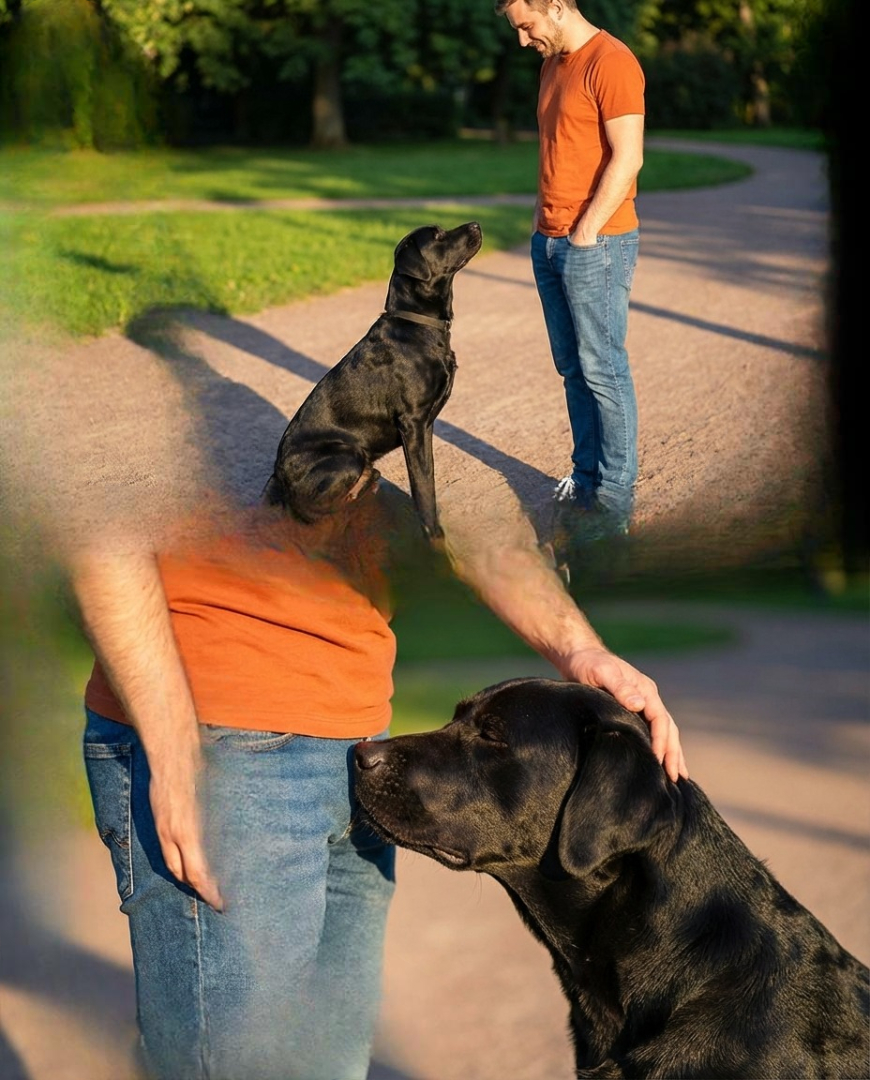
Most dog owners have experienced it at least once.
You introduce your dog to a guest, expecting a calm greeting, and within seconds your pet is enthusiastically sniffing the person from head to toe—sometimes in places that feel especially awkward in polite human society. Many people laugh nervously, apologize, or quickly pull the dog away, assuming the behavior is rude or badly trained.
But according to animal behavior experts, dogs aren’t trying to embarrass anyone.
They’re trying to understand them.
What humans often interpret as strange behavior is actually one of the most natural and sophisticated forms of communication in the canine world. To truly understand dogs, experts say we first need to understand one important fact:
Dogs experience the world primarily through smell.
Dogs “See” the World Through Their Noses
Humans rely heavily on sight. We recognize faces, body language, clothing, and visual surroundings almost instantly. Dogs, however, operate differently. Their brains are built around scent.
A dog’s nose contains up to 300 million scent receptors, compared to roughly six million in humans. Even more remarkable, the portion of a dog’s brain dedicated to analyzing smells is dramatically larger than ours relative to body size.
That means what feels like a quick sniff to us is actually an enormous amount of information for them.
When your dog sniffs someone, they may be learning:
- Where that person has been
- Whether they own other animals
- What they recently ate
- Their emotional state
- Whether they are nervous, calm, stressed, or excited
In many ways, a dog gathering scent information is similar to a human reading a detailed profile about someone in seconds.
Why Dogs Focus on Certain Areas
One reason dogs often sniff areas humans find uncomfortable is because those regions produce stronger scent signals.
Humans release chemical information through sweat glands and hormones, especially in areas like the hands, feet, and groin. Dogs naturally gravitate toward these stronger scent zones because they provide the richest information.
To a dog, it isn’t inappropriate.
It’s efficient.
Experts explain that dogs also possess a specialized sensory structure called the vomeronasal organ, sometimes referred to as Jacobson’s organ. This allows them to detect pheromones and subtle chemical changes that humans cannot perceive at all.
That’s why dogs can sometimes react differently to certain people seemingly without explanation. They may be detecting stress hormones, illness, fear, or excitement long before humans notice anything themselves.
Sniffing Is Communication, Not Misbehavior
Many owners mistakenly believe sniffing should be completely discouraged.
But canine behavior specialists say that approach can actually create confusion or anxiety in some dogs. Sniffing is one of the primary ways dogs gather information and feel secure in unfamiliar situations.
Imagine asking a human to greet someone without speaking, looking, or listening.
That’s essentially what happens when dogs are prevented from using scent entirely.
Of course, this doesn’t mean dogs should invade personal space whenever they want. Proper training and boundaries still matter. But understanding the motivation behind the behavior changes how owners respond to it.
Instead of reacting with frustration or embarrassment, owners can redirect calmly and teach structured greetings.
Training Helps Create Balance
Responsible dog ownership is not about suppressing natural instincts. It’s about teaching dogs how to express those instincts appropriately within human environments.
For example, many trainers recommend teaching dogs to:
- Sit before greeting guests
- Wait for permission before approaching
- Redirect attention when overstimulated
- Practice calm introductions in social settings
This allows dogs to satisfy their natural curiosity while still respecting boundaries.
Consistency is especially important. Dogs thrive when expectations are clear and predictable. Calm correction paired with positive reinforcement usually works far better than punishment or sudden tension.
Dogs Also Read Human Emotions
One of the most fascinating aspects of canine behavior is how sensitive dogs are to emotional energy.
Dogs constantly observe human tone, posture, facial expressions, and body language. If an owner becomes anxious or embarrassed during introductions, the dog often notices immediately.
That emotional shift can influence the dog’s behavior too.
A nervous owner may unintentionally create a nervous dog.
On the other hand, calm and confident handling often encourages calmer responses from the animal as well.
This emotional feedback loop is one reason experts emphasize education for owners just as much as training for dogs.
Understanding behavior reduces stress on both sides.
A Different Way of Experiencing the World
The deeper many people study canine behavior, the more they realize dogs are not simply “small furry humans.” They process reality differently.
Walks, for example, are not just physical exercise for dogs. They are mental stimulation. Every tree, sidewalk, and patch of grass contains layers of scent information humans cannot even detect.
What seems repetitive to us is constantly changing to them.
That’s why allowing dogs time to sniff during walks is actually beneficial for mental enrichment and emotional well-being.
The Real Meaning Behind the Behavior
At its core, sniffing is not about dominance, aggression, or bad manners in most situations.
It’s about curiosity.
It’s about gathering information.
And most importantly, it’s about communication.
Dogs are trying to understand the world the only way nature designed them to.
Once owners recognize that, everyday interactions begin to feel less frustrating and more meaningful. What once looked strange suddenly becomes understandable.
And in that understanding, the relationship between human and dog often grows stronger.
Because real companionship doesn’t come from forcing animals to behave exactly like humans.
It comes from learning how to meet them halfway.
The next time your dog pauses to sniff someone carefully, they aren’t trying to cause embarrassment.
They’re simply reading the world in a language far older — and far more detailed — than most people realize.