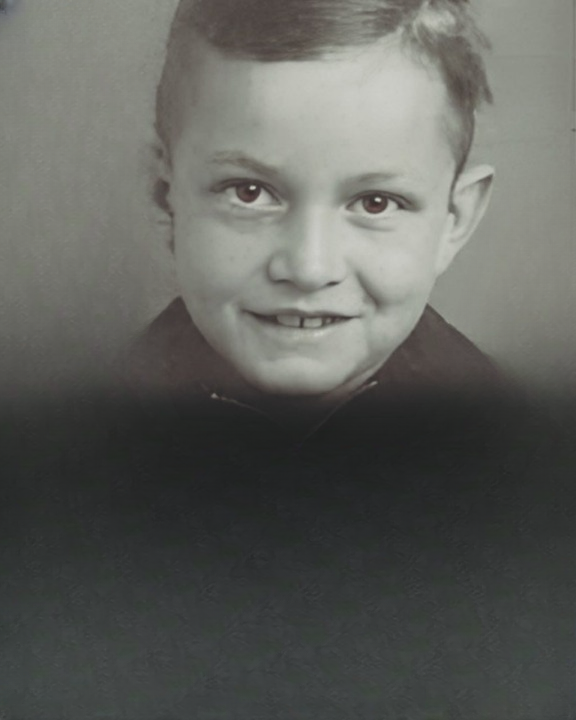
Johnny Cash was born on February 26, 1932, in Kingsland, Arkansas, during the depths of the Great Depression. He entered the world in a family of cotton farmers who knew hardship not as an occasional visitor, but as a permanent condition of life. Poverty was not a backdrop to his childhood—it was the environment that shaped every decision, every meal, and every expectation placed on him.
When Cash was still very young, his family moved to Dyess, Arkansas, a New Deal agricultural settlement created to give struggling families land to farm. In theory, it was an opportunity for a better life. In reality, it meant long days of exhausting labor in cotton fields that demanded the participation of every family member, including children. By the age of five, Cash was already working under the harsh sun, learning endurance long before he understood childhood as something carefree.
Yet even in those difficult years, music found its way into his life. At home, his mother sang hymns and played guitar, and the family often gathered in the evenings to sing gospel and folk songs. These moments became emotional anchors in an otherwise unforgiving existence. At the same time, radio broadcasts opened a wider world to him—introducing country, blues, and emerging American musical styles that would later shape his identity as an artist.
Tragedy struck early and left a permanent mark. In 1944, his older brother Jack died in a sawmill accident at just 15 years old. Jack had been deeply admired within the family, known for his discipline and religious devotion, and had even aspired to become a minister. His death was not just a personal loss—it fractured the emotional foundation of the household. Cash later described carrying a lifelong mixture of grief and guilt, a burden that would quietly surface in the emotional depth of his songwriting.
Despite these hardships, Cash developed an early talent for storytelling. By his teenage years, he was already writing poems and songs, using simple language to express complex emotions—loss, faith, struggle, and survival. After graduating high school, he briefly worked various jobs before enlisting in the United States Air Force in 1950.
Stationed in Landsberg, Germany, during the early Cold War, Cash worked as a radio operator intercepting Soviet transmissions. The role gave him discipline and technical skill, but more importantly, it placed him in an environment where he first began performing music seriously. He bought his first guitar during this time and formed a small band with fellow servicemen, playing in local clubs near military bases.
When he returned to the United States in 1954, Cash was determined to pursue music, despite having no connections or financial safety net. He settled in Memphis, Tennessee, a growing hub for country and rockabilly music. To support himself, he worked sales jobs during the day and performed at night, steadily building experience and reputation.
His persistence eventually led him to Sun Records, the legendary label run by Sam Phillips, who had helped launch artists like Elvis Presley and Jerry Lee Lewis. Phillips recognized something distinctive in Cash’s voice—a deep, resonant baritone paired with emotionally honest songwriting. He signed him, and Cash soon released early tracks that gained regional attention.
Songs like “Cry! Cry! Cry!” and “Folsom Prison Blues” introduced his signature style: simple arrangements paired with powerful storytelling rooted in real human struggle. In 1956, “I Walk the Line” became a nationwide hit, establishing Cash as one of the defining voices in American country music.
As fame grew, so did pressure. Constant touring, industry demands, and personal struggles led Cash into a dark period marked by substance abuse. Addiction to amphetamines and barbiturates severely affected his health, relationships, and public behavior. Arrests and instability followed, threatening both his career and his life.
At his lowest point, Cash considered stepping away from music entirely. It was during this time that June Carter of the Carter Family became a stabilizing presence in his life. Their relationship began through music but deepened through mutual understanding and emotional support. They married in 1968, and June played a central role in helping him overcome addiction and regain stability.
That same year marked a powerful resurgence in Cash’s career. His live prison albums, recorded at Folsom Prison and San Quentin, became defining moments in music history. Performing directly for incarcerated audiences, he demonstrated rare empathy for people society often ignored. These performances strengthened his reputation as an artist who did not merely sing about struggle—he understood it intimately.
In the 1970s, The Johnny Cash Show further expanded his influence, bringing country, folk, gospel, and rock artists together on national television. The program broke musical boundaries and introduced diverse genres to mainstream audiences.
Throughout his life, Cash remained deeply connected to themes of faith, redemption, and justice. He advocated for prison reform, Native American rights, and marginalized communities, using his platform to highlight issues often overlooked by mainstream culture.
In later decades, Cash experienced a remarkable artistic revival through collaborations with producer Rick Rubin. These stripped-down recordings were praised for their emotional honesty and reflection on mortality, introducing him to a new generation of listeners.
In 2003, he faced devastating personal loss when June Carter Cash passed away in May. Only months later, on September 12, 2003, Johnny Cash died in Nashville due to complications from diabetes. Their deaths marked the end of an era but not the end of their influence.
Johnny Cash’s legacy endures because it is rooted not in perfection, but in resilience. His life reflects a rare truth in art and humanity: greatness often emerges not from comfort, but from struggle transformed into meaning.