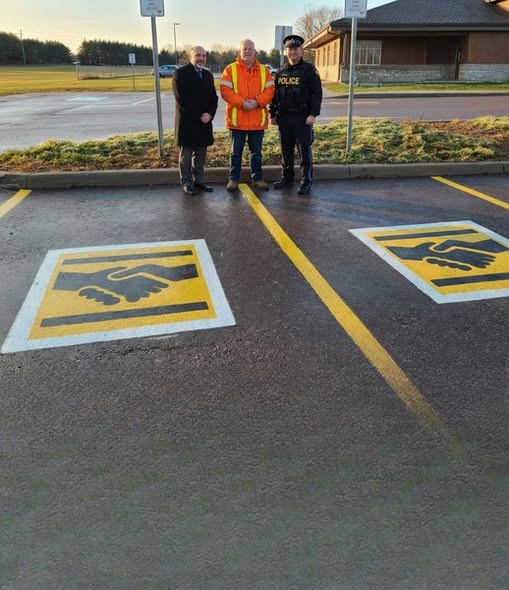
If you’ve ever pulled into a parking lot and noticed a painted handshake symbol on the pavement, you may have wondered what it represents. At first glance, it looks simple—two hands clasped in agreement. But in many communities, that small image carries an important message about public safety, trust, and responsible buying and selling.
Across Canada and the United States, local police services and municipalities have introduced designated “safe exchange” or “safe trade” areas. These are clearly marked public spaces—often outside police stations—where individuals can meet to complete online marketplace transactions in a more secure setting.
This article explains what the handshake symbol means, why these community exchange zones were created, how they work, and why they are increasingly relevant in today’s digital economy. We’ll also explore best practices for conducting safe in-person transactions and how these initiatives strengthen trust within local communities.
The Rise of Online Marketplaces and In-Person Exchanges
Over the last decade, online platforms have dramatically changed how people buy and sell goods. From used furniture and electronics to collectibles and vehicles, millions of transactions now begin with a simple online listing.
Popular platforms include:
-
Facebook Marketplace
-
Kijiji
-
Craigslist
-
eBay
These services provide convenience and flexibility. They allow people to declutter their homes, find affordable items locally, and connect directly with buyers or sellers in their area.
However, while digital communication is easy, most local marketplace transactions still require at least one in-person meeting. That meeting—between individuals who often do not know each other—introduces a new layer of responsibility and planning.
This is where designated community exchange zones come into play.
What Does the Handshake Symbol Represent?
The handshake icon painted on certain parking spaces symbolizes a “Safe Exchange Zone” or “Community Trade Area.” It indicates that the space is intentionally designated for completing in-person transactions that were arranged online.
The handshake was chosen deliberately. Across cultures, a handshake represents:
-
Mutual agreement
-
Good faith
-
Respect
-
Cooperation
-
Trust
When displayed in a marked parking space, the handshake becomes a visual signal that the area is:
-
Public
-
Well-lit
-
Visible
-
Monitored or near law enforcement facilities
It is not simply decorative. It communicates that the space exists to promote safe and transparent exchanges.
A Closer Look at Project Safe Trade in Ontario
One example of this initiative can be found in Pembroke, Ontario, where the Upper Ottawa Valley detachment of the Ontario Provincial Police introduced a program known as Project Safe Trade.
Located in Pembroke, the program designates specific parking spots outside police facilities as secure meeting locations for buyers and sellers. These spots are clearly marked and accessible around the clock.
Key features typically include:
-
Exterior lighting
-
Surveillance cameras in the surrounding area
-
High visibility
-
Proximity to police services
It’s important to note that police officers do not oversee individual transactions or verify items. Rather, the presence of a public, monitored location discourages misconduct and increases accountability.
Why Community Exchange Zones Matter
1. Increased Participation in Online Buying and Selling
Online marketplaces have become part of everyday life. Many households rely on them to:
-
Sell gently used items
-
Purchase affordable goods
-
Find discontinued or rare products
-
Conduct peer-to-peer transactions
As digital participation grows, so does the number of in-person meetups.
2. Reducing Unnecessary Risk
Most online transactions occur without incident. However, meeting in private or poorly lit locations—such as empty parking lots, secluded areas, or private residences—can create avoidable uncertainty.
Community exchange zones provide:
-
Neutral territory
-
Public visibility
-
Reduced pressure
-
A structured meeting point
This simple change in location significantly increases peace of mind for both parties.
3. Encouraging Responsible Behavior
When individuals meet in clearly marked, public areas associated with law enforcement or municipal oversight, they are more likely to conduct themselves responsibly.
The handshake symbol sends a subtle but powerful message: this space is intended for respectful, transparent exchanges.
How Safe Exchange Zones Work
Although specific details vary by municipality, most designated exchange areas share common characteristics:
Public Access
These zones are typically open 24 hours a day and do not require reservations.
Clear Markings
The handshake symbol or official signage identifies the area as intended for marketplace transactions.
Strategic Location
Many are located outside police stations, community centers, or municipal buildings.
Passive Oversight
Surveillance cameras and general police presence in the vicinity provide added reassurance.
Again, these zones are not supervised transaction counters. They are simply safer public meeting places.
Benefits for Buyers
For buyers, designated exchange zones offer:
-
A neutral environment
-
Improved visibility
-
Reduced anxiety
-
Easier navigation
-
Access to help nearby if needed
When purchasing high-value items such as electronics or collectibles, buyers often feel more comfortable meeting in a recognized public location.
Benefits for Sellers
Sellers also gain significant advantages:
-
A professional meeting location
-
Reduced concerns about sharing home addresses
-
Increased credibility
-
A clear, agreed-upon meetup point
By suggesting a safe exchange zone, sellers demonstrate transparency and responsibility.
Best Practices for Safe In-Person Transactions
While exchange zones enhance safety, individuals should still take common-sense precautions.
Meet in Designated Public Areas
Whenever possible, choose a marked community exchange zone. If one is unavailable, opt for busy, well-lit public spaces.
Bring a Companion
Having a friend or family member present can increase comfort and reduce misunderstandings.
Schedule During Daylight
Although many zones are available 24/7, daytime meetings provide better visibility.
Verify Items Carefully
Inspect goods thoroughly before completing payment.
Use Secure Payment Methods
Cash remains common for local transactions, but digital payment platforms with confirmation records can add another layer of documentation.
Keep Communication Records
Maintain copies of messages or listing details in case clarification is needed later.
Trust Your Judgment
If something feels unclear or uncomfortable, you can cancel the meeting.
Strengthening Community Trust
Community exchange zones do more than provide a safer place to meet. They reinforce broader values:
-
Accountability
-
Civic responsibility
-
Mutual respect
-
Transparency
By visibly supporting responsible transactions, municipalities demonstrate proactive leadership in adapting to digital trends.
Residents benefit from knowing their local authorities recognize and respond to modern marketplace habits.
Why the Handshake Symbol Was Chosen
Symbols matter. The handshake is universally associated with:
-
Agreement
-
Commitment
-
Honor
-
Good intentions
Unlike warning signs or caution symbols, the handshake communicates cooperation rather than fear. It focuses on positive behavior rather than highlighting risk.
In this way, the icon promotes confidence rather than anxiety.
The Broader North American Trend
Pembroke is not alone. Many cities across Canada and the United States have adopted similar programs.
Police departments and municipal governments have recognized that as online commerce grows, public infrastructure must evolve alongside it.
Safe exchange zones are:
-
Cost-effective
-
Easy to implement
-
Highly visible
-
Community-oriented
They represent a practical response to modern buying and selling habits.
Frequently Asked Questions
Are Safe Exchange Zones mandatory?
No. They are optional public spaces provided for convenience and safety.
Are transactions monitored live?
Generally, no. These areas may be under general surveillance, but officers do not supervise individual exchanges.
Can I use these zones for any item?
Most personal property transactions are acceptable, but individuals should always follow local laws and regulations.
Are these programs permanent?
Many municipalities have made them ongoing initiatives due to their positive community impact.
The Psychology of Public Safety Spaces
There is a psychological benefit to designated meeting points.
When people meet in structured, clearly marked environments:
-
They experience reduced stress.
-
They are more likely to communicate clearly.
-
They feel a sense of mutual accountability.
Even the visible presence of signage or nearby law enforcement can deter inappropriate behavior.
This is known as situational prevention—designing environments to encourage positive outcomes.
Seasonal Considerations
Safe exchange zones become especially useful during:
-
Holiday gift exchanges
-
Back-to-school shopping
-
Moving season
-
Community yard sale periods
At these times, marketplace activity often increases, and public meeting areas provide helpful structure.
A Simple Symbol with a Big Message
The handshake painted on a parking space may appear modest, but it represents a thoughtful response to modern commerce.
It tells residents:
-
Your safety matters.
-
Responsible buying and selling is encouraged.
-
Public spaces can adapt to digital needs.
Rather than reacting to problems, these initiatives focus on prevention and education.
The Future of Community Exchange Zones
As peer-to-peer commerce continues to expand, we may see:
-
More clearly marked exchange spaces
-
Improved lighting and signage
-
Integrated camera systems
-
Community awareness campaigns
Municipal leaders increasingly recognize that digital trends influence physical spaces.
Conclusion: A Symbol of Safety, Trust, and Smart Planning
The handshake symbol on a parking spot is more than paint on pavement. It marks a designated community exchange zone—a safer, more transparent place for completing online transactions.
Programs like Project Safe Trade in Pembroke, Ontario, demonstrate how local authorities can proactively support residents as digital marketplaces continue to grow.
By combining common-sense precautions with thoughtfully designed public spaces, communities can promote trust and reduce uncertainty in peer-to-peer exchanges.
The next time you see a handshake painted on the ground, you’ll know it stands for cooperation, accountability, and a shared commitment to safe, responsible transactions in the modern marketplace.