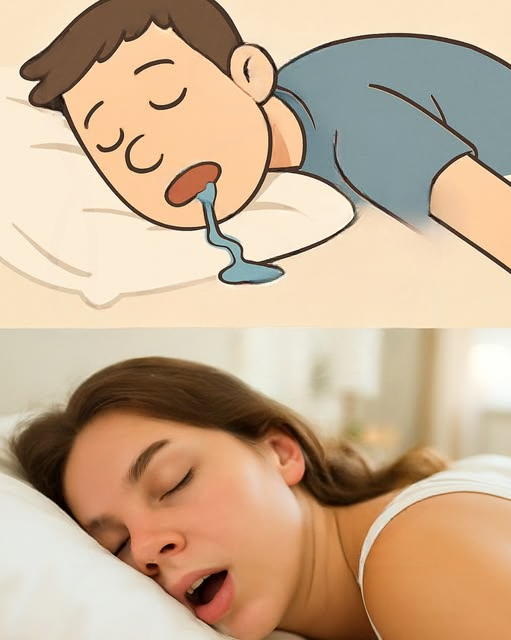
Drooling during sleep is a common phenomenon that many people experience at some point in their lives. Although it is often considered harmless or even slightly embarrassing, it can sometimes provide subtle clues about how your body behaves during rest. In most cases, nighttime drooling is completely normal and simply reflects natural changes in muscle control and breathing patterns during sleep. However, understanding why it happens can offer useful insight into sleep quality, physical health, and even certain underlying conditions.
Why Drooling Happens During Sleep
Saliva production is a normal and essential function of the body, helping with digestion, oral health, and the protection of teeth and gums. During waking hours, swallowing regularly ensures that saliva is controlled and does not accumulate. However, during sleep, especially in deeper stages, swallowing frequency decreases significantly.
At the same time, the muscles in the face, jaw, and mouth naturally relax. This relaxation can make it easier for saliva to escape from the mouth, particularly if the lips are slightly open. As a result, drooling occurs when saliva builds up faster than it is swallowed or contained.
The Role of Sleep Position
One of the most common factors influencing drooling is sleep position. People who sleep on their side or stomach are more likely to experience drooling because gravity allows saliva to flow outward more easily. In these positions, the mouth may also remain slightly open, increasing the likelihood of saliva escaping during the night.
In contrast, sleeping on the back may reduce drooling for some individuals, although it can introduce other issues such as snoring or airway obstruction in certain cases. This means that sleep position plays a significant role, but it is only one part of a broader picture.
Muscle Relaxation and Deep Sleep Stages
During deeper stages of sleep, the body enters a state of profound relaxation. This includes reduced muscle tone in areas responsible for facial control and swallowing. While this is a normal and healthy part of sleep, it can contribute to saliva accumulation.
Because the brain is focused on restorative processes during these stages, voluntary control over small actions like swallowing is reduced. This natural shift allows the body to fully rest, but it can also result in drooling for some individuals.
Breathing Patterns and Nasal Congestion
Another important factor is breathing. People who breathe through their mouth during sleep are more likely to drool. Mouth breathing can occur due to nasal congestion, allergies, sinus issues, or structural differences in the nasal passages.
When nasal breathing is restricted, the mouth naturally opens to maintain airflow. This not only increases the chance of drooling but can also affect sleep quality by reducing the efficiency of oxygen intake. In such cases, addressing the underlying cause of nasal blockage may help reduce both mouth breathing and drooling.
The Influence of Medications and Health Conditions
Certain medications can influence saliva production or muscle control, indirectly increasing the likelihood of drooling during sleep. For example, some drugs may increase saliva output, while others may relax muscles more deeply than usual.
In addition, specific medical conditions can contribute to excessive drooling. Neurological disorders, for instance, may affect the body’s ability to coordinate swallowing or maintain muscle control during rest. However, these cases are typically accompanied by other noticeable symptoms.
When Drooling May Be a Sign of Sleep Apnea
While occasional drooling is generally not a cause for concern, frequent or excessive drooling—especially when combined with symptoms such as loud snoring, choking during sleep, morning headaches, or daytime fatigue—may be associated with sleep apnea.
Sleep apnea is a condition in which breathing repeatedly stops and starts during sleep. In some cases, the body responds by opening the mouth more frequently to maintain airflow, which can increase drooling. If these symptoms are present, it is advisable to consult a healthcare professional for evaluation.
Cultural and Social Perspectives on Drooling
Interestingly, drooling has different meanings across cultures and social contexts. In many societies, it is viewed as something humorous or embarrassing, often associated with deep sleep or lack of awareness. In other contexts, it may simply be seen as a normal biological function without any social judgment.
In families, particularly with infants and young children, drooling is often considered a sign of development, especially during teething stages. Among adults, however, it is usually kept private or addressed through practical solutions such as pillows designed to reduce moisture or absorbent bedding.
These varying interpretations show how a simple biological process can carry different meanings depending on cultural expectations and social norms.
Biological Perspective: A Sign of Deep Relaxation
From a biological standpoint, drooling during sleep can sometimes be interpreted as a sign that the body has entered a deeply relaxed and secure state. Saliva plays an important role in maintaining oral health, and its production does not stop during sleep. When the body is fully relaxed, minor overflow may simply indicate that normal regulatory systems are at rest.
Some researchers also note that similar behaviors can be observed in other mammals, where drooling may occur during sleep or in states of comfort and anticipation. This suggests that drooling is not necessarily a malfunction but rather a natural byproduct of relaxation.
Psychological Interpretations and Human Behavior
From a psychological perspective, drooling during sleep is sometimes loosely associated with deep relaxation or reduced self-awareness. Because sleep involves a temporary suspension of conscious control, physical responses like drooling may reflect how deeply the body has disengaged from wakeful monitoring.
In popular culture, drooling is often exaggerated for comedic effect, reinforcing its association with deep or uncontrolled sleep. While this portrayal is not scientifically significant, it does influence how people perceive the behavior socially.
Practical Considerations and Management
For individuals who find drooling uncomfortable or inconvenient, there are several practical strategies that may help reduce it. Adjusting sleep position, improving nasal breathing, and maintaining good oral hygiene can all contribute to better control.
Using supportive pillows that encourage back sleeping or keeping nasal passages clear through allergy management may also help. In some cases, addressing underlying health issues can significantly reduce or eliminate the problem.
It is important to note that occasional drooling does not typically require treatment. Only when it becomes frequent, excessive, or associated with other symptoms should further evaluation be considered.
Final Thoughts
Sleeping drool is a natural and common occurrence that reflects the complex processes taking place in the body during rest. In most cases, it is harmless and simply related to sleep position, muscle relaxation, or breathing patterns.
However, in certain situations, it can provide subtle clues about overall sleep quality or underlying health conditions. By understanding the factors that contribute to drooling, individuals can better interpret their sleep patterns and make informed choices about their well-being.
Ultimately, what may seem like a minor and even amusing detail of sleep is actually part of a larger system that reveals how the body functions during rest, recovery, and relaxation.