Introduction
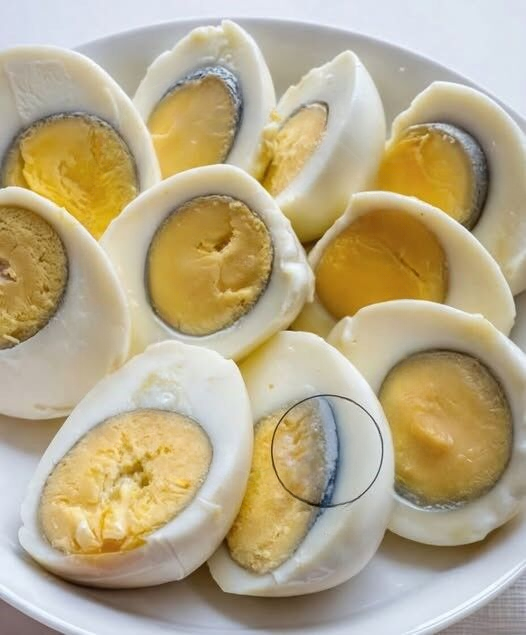
Hard-boiled eggs are one of the simplest and most widely used foods in everyday cooking. They are nutritious, affordable, and easy to prepare, making them a staple in many households around the world. However, anyone who has prepared them at home may have noticed an unexpected visual change at times—a green or grayish ring forming around the yolk.
For many people, this appearance can be surprising or even concerning. Some may wonder whether the egg is still safe to eat or if something has gone wrong during cooking.
The good news is that this phenomenon is completely harmless. It is a natural result of cooking chemistry and does not indicate spoilage or contamination.
Understanding why it happens can help improve cooking techniques and ensure consistently better results.
What Causes the Green or Gray Ring?
The green or gray ring around the yolk of a hard-boiled egg is caused by a simple chemical reaction involving sulfur and iron.
Eggs naturally contain:
- Sulfur compounds in the egg white (albumen)
- Iron in the yolk
When eggs are exposed to high heat for too long, these elements interact in a specific way. The sulfur in the egg white is released as gas during cooking and moves toward the yolk. At the same time, the iron in the yolk reacts with the sulfur.
This reaction produces a compound called iron sulfide, which forms a thin layer around the yolk. This layer is what creates the green, gray, or sometimes slightly bluish ring.
While it may look unusual, it is completely safe and does not affect the nutritional value of the egg.
Why Overcooking Is the Main Cause
The most common reason for this reaction is overcooking.
When eggs are boiled at a strong, continuous boil for too long, the internal temperature becomes high enough to accelerate the breakdown of proteins in the egg white. As these proteins break apart, more sulfur is released.
The longer the egg remains in boiling water, the more sulfur is produced and the more likely it is to react with the iron in the yolk.
This is why eggs that are cooked gently tend to have a clean, bright yellow yolk, while overcooked eggs develop the greenish ring.
The Science Behind Egg Color Changes
To understand this process more clearly, it helps to look at what happens inside an egg during cooking.
Eggs are made primarily of water, proteins, and minerals. When heat is applied:
- Proteins begin to unfold (denature)
- Water inside the egg starts to heat and expand
- Chemical bonds break and reform
In the egg white, sulfur-containing amino acids begin to break down at high temperatures. This releases hydrogen sulfide gas.
At the same time, the yolk contains iron, which remains stable under heat but is reactive when exposed to sulfur compounds.
When these two elements meet at high temperature, they form iron sulfide, which is responsible for the greenish discoloration.
This is a classic example of how cooking is not just a mechanical process but also a chemical transformation.
Is the Green Ring Safe to Eat?
Yes, absolutely.
Despite its unusual appearance, the green or gray ring does not make the egg unsafe. It does not indicate spoilage, bacterial growth, or contamination.
The egg remains:
- Safe to eat
- Nutritious
- Protein-rich
The only difference is visual and, in some cases, a slight change in texture near the surface of the yolk, which may become slightly drier.
Many people still consume overcooked eggs without realizing the cause of the discoloration.
How Cooking Time Affects Egg Quality
Timing plays a crucial role in achieving perfectly cooked eggs.
When eggs are cooked for too long, several changes occur:
- The yolk becomes dry and crumbly
- The white becomes rubbery
- Sulfur compounds are released in higher amounts
On the other hand, properly timed cooking results in:
- Smooth, creamy yolks
- Tender egg whites
- No discoloration around the yolk
For most medium-sized eggs, a cooking time of around 9 to 12 minutes is generally ideal after the water reaches a gentle simmer.
The Importance of Heat Control
One of the most common mistakes in egg preparation is maintaining a strong rolling boil throughout the cooking process.
While it may seem like boiling faster cooks food more efficiently, in the case of eggs, high heat is actually counterproductive.
A better method is:
- Bring water to a boil
- Add the eggs carefully
- Reduce heat to a gentle simmer
- Maintain steady, moderate heat until done
This controlled approach prevents excessive protein breakdown and reduces sulfur release.
The Role of Cooling in Preventing Discoloration
Another important step often overlooked is cooling the eggs immediately after cooking.
Once eggs reach the desired doneness, they should be transferred directly into cold water or an ice bath.
This process helps:
- Stop the cooking process instantly
- Prevent residual heat from continuing chemical reactions
- Preserve yolk color and texture
- Make peeling easier
Without rapid cooling, the eggs continue to cook internally even after being removed from heat, increasing the chance of discoloration.
Why Some Eggs Develop the Ring More Easily
Not all eggs behave the same way during cooking. Several factors can influence the likelihood of a green ring forming:
- Freshness of the egg
- Cooking temperature stability
- Cooking duration
- Altitude and water boiling point
- Size of the egg
Older eggs may sometimes be more prone to structural changes during cooking, while inconsistent heat can also increase the chances of overcooking certain areas.
However, the primary factor remains prolonged exposure to high heat.
How to Prevent the Green Ring: Practical Tips
Preventing this issue is simple once you understand the cause. Here are some effective methods:
1. Avoid Overboiling
Do not leave eggs at a rapid boil for extended periods. Gentle heat is more effective.
2. Use a Timer
Timing helps ensure consistent results. Most eggs need only 9–12 minutes.
3. Cool Immediately After Cooking
Place eggs in ice water as soon as they are done.
4. Start with the Right Temperature Method
Some cooks prefer placing eggs in cold water and gradually heating them to reduce shock and improve texture.
5. Cook in Small Batches
Overcrowding the pot can lead to uneven cooking.
What a Perfect Hard-Boiled Egg Should Look Like
A properly cooked hard-boiled egg should have:
- A bright yellow yolk
- A clean white without discoloration
- A smooth texture in both yolk and white
- No strong sulfur smell
When these conditions are met, the egg is not only visually appealing but also has a better taste and texture.
A Helpful Insight for Everyday Cooking
Understanding the science behind cooking helps reduce confusion and improves kitchen confidence. The green ring around egg yolks is a perfect example of how small changes in temperature and time can affect food appearance.
Rather than being a cooking mistake to worry about, it is simply a sign that the egg was exposed to slightly too much heat for too long.
With a few simple adjustments, it can easily be avoided.
Conclusion
The green or gray ring around hard-boiled egg yolks is a harmless and natural result of a chemical reaction between sulfur and iron during cooking.
It does not affect food safety, but it does indicate that the eggs were slightly overcooked.
By controlling heat, timing cooking correctly, and cooling eggs immediately after boiling, this issue can be easily prevented.
Ultimately, achieving perfectly cooked eggs is not about complexity—it is about understanding a few basic principles of heat and timing.
With the right technique, every hard-boiled egg can come out clean, smooth, and visually perfect.