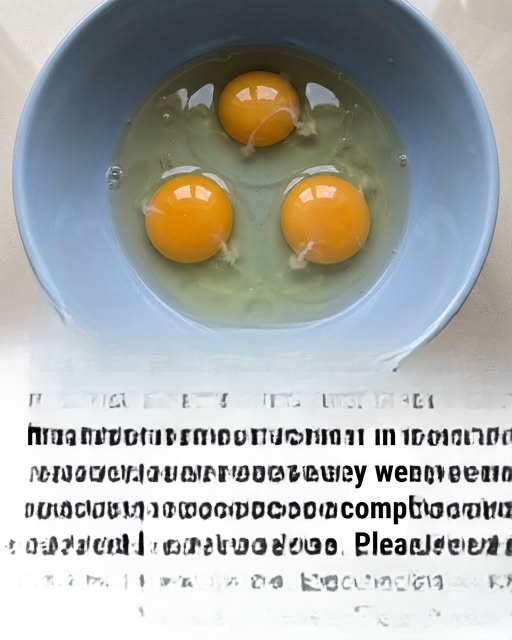
Have you ever cracked open an egg and noticed a small white, rope-like strand attached to the yolk? If so, you’re not alone. Many people spot it at some point and pause for a second. It can look unusual—almost like a string or twisted thread sitting in the middle of the egg white. If you’ve ever wondered what it is, whether it’s safe, or if it means something about the egg’s quality, this in-depth guide will walk you through everything you need to know.
Let’s clear up the mystery right away: that white strand is completely natural, entirely safe, and actually a sign of a healthy, fresh egg.
The Name of That White Strand: The Chalaza
The white strand you see is called the chalaza (pronounced kuh-LAY-zuh). The plural form is chalazae, though most people simply refer to it as “the chalaza.”
Every chicken egg contains chalazae—usually two of them. They are natural structural components of the egg and play an important role in keeping the yolk centered inside the shell.
When you crack a fresh egg and see the yolk sitting nicely in the middle instead of sliding off to one side, you can thank the chalaza for that.
What Exactly Does the Chalaza Do?
To understand the purpose of the chalaza, it helps to know a little about egg anatomy.
A chicken egg is made up of several parts:
-
The shell (outer protective layer)
-
The shell membranes
-
The egg white (also called albumen)
-
The yolk
-
The chalazae
The chalazae are twisted strands of protein that connect the yolk to the inner membranes of the shell. Imagine tiny elastic cords gently holding the yolk in place. Their job is to stabilize the yolk and keep it suspended in the center of the egg white.
This structural support is especially important in nature. If an egg were fertilized and incubated, keeping the yolk centered would help protect and properly position a developing embryo. Even in unfertilized eggs (like the ones sold in grocery stores), the chalaza still forms naturally as part of the egg’s structure.
In simple terms: the chalaza is part of the egg’s built-in support system.
Is the Chalaza Safe to Eat?
Yes, absolutely.
The chalaza is made from the same protein-rich material as the rest of the egg white. It is not harmful, not contaminated, and not a defect. It is simply a slightly denser, more tightly twisted portion of the albumen.
When cooked, the chalaza blends seamlessly into the egg white. You likely consume it regularly without ever noticing.
There is no health risk associated with eating it. You do not need to remove it. However, if you prefer to take it out for aesthetic reasons, that’s perfectly fine too. It’s a matter of personal preference, not safety.
Does the Chalaza Mean the Egg Was Fertilized?
No. This is a very common misconception.
The presence of a chalaza does not mean the egg was fertilized. All chicken eggs—fertilized or not—contain chalazae.
Eggs sold in grocery stores are almost always unfertilized unless specifically labeled otherwise. Even in the rare case of a fertilized egg, proper incubation conditions are required for development. Without those conditions, the egg remains just an egg.
So if you see a chalaza, it does not indicate that anything unusual has happened. It’s simply a normal anatomical feature.
Why Is It More Visible in Some Eggs Than Others?
You may notice that in some eggs, the chalaza is thick and clearly visible, while in others it’s barely noticeable. Several factors can influence its appearance.
1. Freshness
This is the most important factor.
Fresh eggs tend to have thicker, firmer egg whites and more distinct chalazae. As eggs age, the internal structure gradually changes:
-
The egg white becomes thinner.
-
The yolk flattens slightly.
-
The chalaza weakens and becomes less visible.
If you clearly see a strong, rope-like chalaza, that’s often a good sign the egg is fresh.
2. Hen Diet and Breed
Different breeds of hens and variations in diet can influence egg characteristics, including the firmness of the white. Eggs with firmer albumen may make the chalaza more noticeable.
3. Lighting
Bright kitchen lighting can make the chalaza stand out more clearly. In softer light, you might not notice it at all.
4. Egg Size
Larger eggs may make internal structures easier to see simply because there is more volume.
None of these factors indicate a problem. They simply reflect natural variation.
What Happens to the Chalaza When You Cook the Egg?
When heat is applied, egg proteins undergo a transformation known as denaturation. This process causes the proteins to unfold and bond together, turning the liquid egg white into a solid form.
The chalaza, being made of protein, behaves the same way. When cooked:
-
Its twisted structure breaks down.
-
It merges into the surrounding egg white.
-
It becomes indistinguishable from the rest of the cooked egg.
In scrambled eggs, you will never see it after cooking. In fried eggs, you might notice a slightly firmer white patch, but nothing unusual. In baked goods, it completely disappears.
In short: once cooked, the chalaza becomes invisible.
A Broader Look at Egg Freshness
Since the chalaza is often linked to freshness, it’s helpful to understand other signs of a fresh egg.
Visual Indicators When Cracked
Fresh eggs typically have:
-
A yolk that stands tall and rounded
-
Thick egg whites that stay close to the yolk
-
Clearly visible chalazae
Older eggs may:
-
Spread out more when cracked
-
Have flatter yolks
-
Show thinner whites
The Float Test
One common method to check egg freshness is the float test:
-
Fill a bowl with water.
-
Gently place the egg inside.
Results:
-
If it sinks and lies flat, it’s fresh.
-
If it stands upright on the bottom, it’s older but often still usable.
-
If it floats, it’s best to discard it.
Eggs float as they age because air enters through the porous shell, increasing buoyancy.
The Smell Test
If you’re ever unsure, smell is the most reliable indicator. A spoiled egg has a strong, unpleasant odor that is unmistakable. If it smells normal, it is generally safe to use.
Understanding Egg Structure in Detail
To fully appreciate the chalaza, it helps to understand how an egg forms.
Inside a hen’s reproductive system, the yolk develops first. As it travels through the oviduct, layers of albumen (egg white) are added around it. The chalazae form as part of this process, created by twisting layers of albumen protein that anchor the yolk in place.
Finally, membranes and the shell form around the contents.
The entire structure is carefully designed for protection, nutrition, and stability. The chalaza is not an accident or leftover piece—it is part of that thoughtful biological design.
Why Do Some People Remove the Chalaza?
In most home cooking situations, there is no need to remove it. However, in certain culinary settings, chefs may remove chalazae for texture or visual consistency, especially in delicate preparations like custards or very smooth sauces.
The reason is not safety—it’s aesthetics.
For example:
-
In ultra-smooth pastry creams
-
In certain fine-dining presentations
-
In clarified egg preparations
Even then, removal is optional.
At home, for scrambled eggs, omelets, baking, and frying, leaving it in is perfectly fine.
Eggs in Everyday Cooking
Now that we’ve clarified what the chalaza is, let’s zoom out and appreciate eggs as a whole. Eggs are one of the most versatile and widely used ingredients in kitchens around the world.
They are valued for their:
-
High-quality protein
-
Essential vitamins and minerals
-
Ability to bind ingredients
-
Ability to thicken liquids
-
Ability to emulsify sauces
-
Ability to provide structure in baking
Scrambled Eggs
Scrambled eggs are a classic comfort food. When cooked gently over low heat, they become soft and creamy. The chalaza blends in completely during cooking.
A simple method:
-
Crack eggs into a bowl.
-
Whisk with a pinch of salt.
-
Cook slowly over low heat with a small amount of butter or oil.
-
Stir gently until just set.
The key is patience. High heat can make eggs rubbery, while low heat keeps them tender.
Fried Eggs
Fried eggs showcase the egg’s structure beautifully. When cracked into a pan, you can see the yolk centered—thanks to the chalaza.
Whether you prefer sunny-side up or over-easy, the chalaza will disappear as the white cooks.
Poached Eggs
Poaching involves cooking eggs gently in simmering water. The white wraps around the yolk as it cooks. The chalaza dissolves into the white and is not noticeable.
Omelets
Omelets highlight eggs’ ability to create soft, flexible layers. Once beaten, the chalaza is broken apart and blends in completely.
Baking
Eggs are essential in baking. They:
-
Provide structure to cakes and muffins
-
Add richness to cookies
-
Create custards and puddings
-
Help dough rise and set
In baking, the chalaza plays no visible role. It simply becomes part of the overall mixture.
Eggs and Nutrition
Eggs are considered a nutrient-dense food. A single egg typically contains:
-
High-quality protein
-
Vitamin B12
-
Riboflavin
-
Selenium
-
Choline
-
Vitamin D (in smaller amounts)
The protein in eggs is considered complete, meaning it contains all nine essential amino acids.
The chalaza, being protein-based, contributes to that nutritional profile just like the rest of the egg white.
Common Egg Myths
Let’s address a few myths that often circulate.
Myth 1: The White Strand Is a Defect
False. It is a normal structural component.
Myth 2: It Means the Egg Is Spoiled
False. In fact, a prominent chalaza often indicates freshness.
Myth 3: It Means the Egg Was Fertilized
False. All eggs contain chalazae.
Myth 4: It’s Unsafe to Eat
False. It is completely edible.
Why We Sometimes Feel Uneasy About It
Humans naturally react to unexpected textures in food. We prefer smooth, uniform appearances. When something looks different—especially something string-like—we may instinctively question it.
But food is biological. It has structure. Not every natural feature looks perfectly symmetrical.
The chalaza is simply a reminder that eggs are natural products, not manufactured substances.
When Should You Actually Be Concerned?
While the chalaza itself is never a concern, there are signs that an egg should not be used:
-
A strong, unpleasant odor
-
Unusual discoloration (such as green, pink, or black spots)
-
Cracked shells that have been exposed for a long time
-
Floating eggs combined with off smells
If an egg looks and smells normal, it is generally safe.
Final Thoughts
That small white strand inside your egg is called the chalaza. It:
-
Anchors the yolk in place
-
Is made of protein
-
Is completely safe to eat
-
Often indicates freshness
-
Disappears when cooked
You can leave it in or remove it if you prefer. Either way, it poses no risk and requires no alarm.
The next time you crack open an egg and see that little white twist, you’ll know exactly what it is. No mystery. No concern. Just a natural part of how eggs are designed.
Eggs are simple foods with surprisingly intricate structures. The chalaza may be small, but it plays an important role behind the scenes—quietly doing its job, whether we notice it or not.