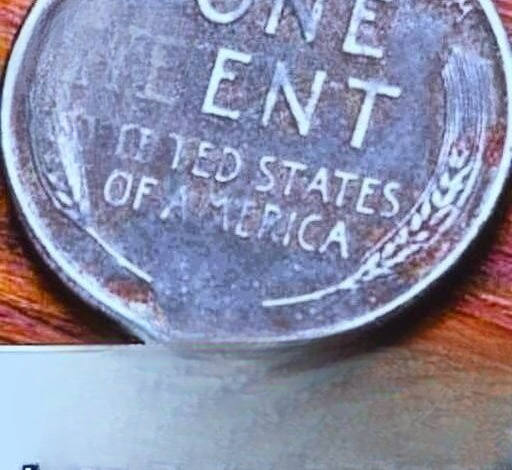
Most people don’t think twice about pennies. They collect in jars, disappear between couch cushions, and pile up in car cup holders. In today’s increasingly digital economy, loose change can feel like an afterthought — something to drop into a tip jar or feed into a coin-counting machine.
But what if one of those ordinary-looking coins could be worth tens of thousands of dollars?
In the world of coin collecting, a rare version of the 1943 Lincoln wheat penny has achieved near-legendary status. Under the right circumstances, a genuine example has sold for amounts that rival the price of a new car — and in some cases, even more. While most 1943 pennies are common and modestly valued, a tiny number were mistakenly produced in copper instead of steel. Those few accidental coins have become some of the most sought-after pieces in American numismatics.
Before you rush to empty your coin jar, it’s important to understand the full story — the history behind the coin, how to identify it properly, why it is so rare, and how to avoid common scams. This guide will walk you through everything you need to know in a responsible, realistic, and educational way.
A Wartime Shift That Changed American Coinage
To understand why this penny matters, we need to go back to the early 1940s.
In 1943, the United States was deeply involved in World War II. Materials that were once used for everyday products were suddenly redirected toward military production. Copper was especially important. It was needed for:
-
Ammunition shell casings
-
Electrical wiring
-
Military communication systems
-
Industrial equipment
Because of these demands, the U.S. government made the decision to conserve copper wherever possible.
At the time, the one-cent coin — known as the Lincoln wheat penny — was made primarily of copper. To save resources for the war effort, the United States Mint temporarily switched the composition of pennies in 1943 from copper to zinc-coated steel.
This change produced a very different-looking coin.
The 1943 Steel Cent: What Most People Have
The vast majority of 1943 pennies are steel cents. They have a silver-gray appearance and are often called “steelies” by collectors.
Key characteristics of a 1943 steel cent:
-
Silvery or gray color
-
Magnetic (they stick to a magnet)
-
Made from steel coated in zinc
-
Produced in extremely large numbers
Billions of these steel cents were minted in 1943. Because they were produced at such scale, most examples today are worth only a small premium above face value, unless in exceptional condition.
So if you find a 1943 penny and it looks silver and sticks to a magnet, you likely have a standard steel cent.
The rare coin people talk about is something different.
The Accidental Copper Pennies of 1943
During the transition from copper to steel production in 1943, something unusual happened.
Coin production involves the use of blank metal discs known as planchets. These blanks are fed into presses that stamp the coin design and date onto the surface. When the Mint switched materials at the end of 1942, it appears that a small number of leftover copper planchets remained in the machinery.
As production began for 1943 steel cents, a few of those copper blanks were accidentally struck with the 1943 date and design.
The result? A tiny number of genuine 1943 pennies made from copper instead of steel.
These coins were not intentional. They were manufacturing errors — and that is exactly what makes them valuable today.
How Rare Is the 1943 Copper Penny?
Estimates vary, but experts believe fewer than 40 genuine 1943 copper cents exist across all mint locations.
To put that into perspective:
-
Billions of steel cents were produced in 1943.
-
Only a few dozen copper versions are known.
That extreme rarity drives collector interest.
When authenticated examples come to auction, they often command significant prices. While values depend heavily on condition and market demand, some specimens have sold for well over $100,000. Even lower-grade authentic examples can command substantial sums compared to ordinary coins.
However, it’s important to remember: these coins are exceptionally rare.
The odds of finding one in circulation today are extremely low — but not impossible.
Why Condition Matters
Coin collectors assess value based on several factors:
-
Authenticity
-
Condition (grade)
-
Surface quality
-
Strike clarity
-
Historical demand
A coin that has been well-preserved with minimal wear typically commands a higher price than one heavily circulated for decades.
Grading uses a standardized scale that evaluates detail, luster, and preservation. Even among rare coins, small differences in condition can lead to significant price differences.
The Problem of Counterfeits
Because of the high value associated with the 1943 copper penny, the coin has become one of the most counterfeited pieces in American numismatics.
Common types of fakes include:
1. Copper-Plated Steel Cents
A regular steel 1943 penny is coated in copper to resemble the rare version.
2. Altered Dates
A 1948 copper penny is modified by filing down the “8” to look like a “3.”
3. Fabricated Replicas
Entirely fake coins produced to mimic the appearance of the rare cent.
For this reason, caution is critical.
The Magnet Test: First Step in Identification
If you find a 1943 penny that appears copper-colored, the simplest first test is using a magnet.
-
If it sticks to a magnet: It is steel (even if coated).
-
If it does not stick: It may be copper — and further evaluation is needed.
However, the magnet test alone is not enough for confirmation. Professional authentication is essential.
Professional Authentication Services
If you believe you’ve found a genuine 1943 copper cent, do not attempt to clean it. Cleaning can significantly reduce value.
Instead, contact a professional grading service such as:
-
Professional Coin Grading Service
-
Numismatic Guaranty Company
These organizations use specialized equipment to analyze:
-
Metal composition
-
Weight
-
Die characteristics
-
Surface integrity
They provide official certification and encapsulation, which verifies authenticity and protects the coin.
The Historical Significance Beyond Value
While headlines often focus on dollar amounts, the 1943 copper penny carries historical meaning beyond its auction price.
It represents:
-
A wartime material shortage
-
A manufacturing transition
-
An unintended production error
-
A tangible artifact from World War II-era America
During that period, families rationed goods, conserved resources, and supported national production efforts. The switch to steel pennies reflects how even small items were affected by global events.
Holding such a coin connects collectors directly to that history.
The Lincoln Wheat Penny Design
The 1943 penny features the classic wheat reverse design introduced in 1909 to honor President Abraham Lincoln.
Key design details:
-
Obverse: Portrait of Abraham Lincoln
-
Reverse: Two wheat stalks framing the words “ONE CENT”
-
Designer: Victor David Brenner
The wheat design remained in use until 1958 before being replaced by the Lincoln Memorial reverse in 1959.
Collectors often refer to pre-1959 Lincoln cents simply as “wheat pennies.”
Other Valuable Lincoln Cents
While the 1943 copper cent is among the most famous, other Lincoln cents are also sought after, including:
-
1909-S VDB
-
1914-D
-
1922 “No D”
-
1955 Doubled Die
Each has its own story tied to minting quirks or limited production.
However, none quite capture the public imagination like the accidental 1943 copper version.
Why Stories Like This Capture Attention
Rare coin discoveries appeal to people because they combine:
-
History
-
Chance
-
Tangible value
-
Everyday accessibility
Unlike buried treasure or hidden vaults, coins are familiar objects. The idea that something extraordinary could be hiding in plain sight is compelling.
It reinforces the idea that history lives in ordinary places.
Realistic Expectations
While it is technically possible that a rare coin remains undiscovered in a jar or collection, it’s important to remain realistic.
Most 1943 pennies are steel and worth modest amounts.
If you are searching through change, treat it as an educational hobby rather than a guaranteed financial opportunity.
Coin collecting can be enjoyable for many reasons:
-
Learning history
-
Studying mint marks
-
Appreciating craftsmanship
-
Building curated collections
Financial gain should never be assumed.
How to Start Checking Your Coins Responsibly
If you want to examine your change:
-
Gather pre-1959 Lincoln cents.
-
Separate any dated 1943.
-
Use a magnet test.
-
Weigh the coin (copper weighs ~3.11 grams; steel ~2.7 grams).
-
Consult a professional if uncertain.
Avoid altering, cleaning, or modifying coins.
The Role of Auctions
When authenticated rare coins are sold, they often appear in major numismatic auctions. Prices fluctuate depending on:
-
Market demand
-
Economic climate
-
Collector competition
-
Coin condition
Headlines sometimes highlight the highest sale prices, but not every example reaches those levels.
Why Authentication Matters So Much
Without certification, even a genuine coin may struggle to achieve full market value.
Certification provides:
-
Confidence for buyers
-
Protection against fraud
-
Documented grading
-
Market legitimacy
Collectors rely on recognized grading authorities to maintain trust in transactions.
The Emotional Appeal of Coin Discoveries
Beyond monetary value, there is an emotional component to rare coin stories.
People often discover unusual coins in:
-
Inherited collections
-
Old jars
-
Estate sales
-
Antique shops
These finds connect families to past generations.
Each coin has traveled through countless hands.
Moving Toward a Cashless Society
As digital payments increase, physical currency circulates less frequently.
Some collectors believe this makes historical coins even more intriguing, as tangible artifacts become less common in daily life.
Whether or not rare coins remain hidden in circulation, their stories endure.
Final Thoughts: Curiosity With Caution
The 1943 copper Lincoln wheat penny remains one of the most fascinating error coins in American history. Its rarity, historical background, and documented auction sales have cemented its place in numismatic lore.
But responsible enthusiasm is key.
If you happen to find a 1943 penny in your change:
-
Check its color.
-
Use a magnet.
-
Avoid altering it.
-
Seek professional evaluation if warranted.
Most will be ordinary steel cents — interesting historical pieces, but not life-changing.
On rare occasions, however, a genuine copper example has surfaced and transformed someone’s discovery into a significant financial event.
Whether or not you ever find one, the real value may lie in understanding the history behind it. Coins are small, but they carry stories of industry, war, design, and human error.
Sometimes the most ordinary objects — even a simple penny — can hold extraordinary stories waiting to be uncovered.