Sleep is one of the most essential pillars of well-being. While conversations about rest often focus on how many hours we get or how comfortable our mattress feels, there is another factor that deserves attention: body position. The way we position ourselves during sleep can influence digestion, circulation, breathing, and general comfort.
Among the various sleep positions—back, right side, left side, or stomach—sleeping on the left side has received increasing attention in both traditional wellness practices and modern health discussions. While no single sleep posture is a universal solution for everyone, some evidence and anatomical reasoning suggest that lying on the left side may offer specific benefits for certain individuals.
This article explores how left-side sleeping interacts with the body’s natural structure, how it may support digestion and circulation, and why some healthcare providers recommend it in specific situations. The goal is not to prescribe a one-size-fits-all solution, but to provide clear, balanced information so you can make informed decisions about your own sleep habits.
The Body’s Natural Asymmetry: Why Position Matters
The human body is not perfectly symmetrical on the inside. Although we may appear balanced externally, many of our organs are positioned slightly to one side. This internal arrangement influences how gravity affects digestion, circulation, and fluid movement when we lie down.
For example:
-
The stomach curves toward the left side of the upper abdomen.
-
The liver sits primarily on the right side.
-
The spleen is located on the left side.
-
The heart is slightly angled toward the left side of the chest.
-
Major blood vessels and lymphatic structures follow distinct pathways throughout the body.
Because of this layout, certain sleep positions may support or hinder natural processes depending on individual health conditions.
Sleeping on the left side is often discussed because it may align more comfortably with how some of these structures are positioned. Let’s look at how this might affect different body systems.
1. Left-Side Sleeping and Digestive Comfort
One of the most commonly cited advantages of sleeping on the left side involves digestive health, particularly for people who experience occasional acid discomfort at night.
The Stomach’s Position
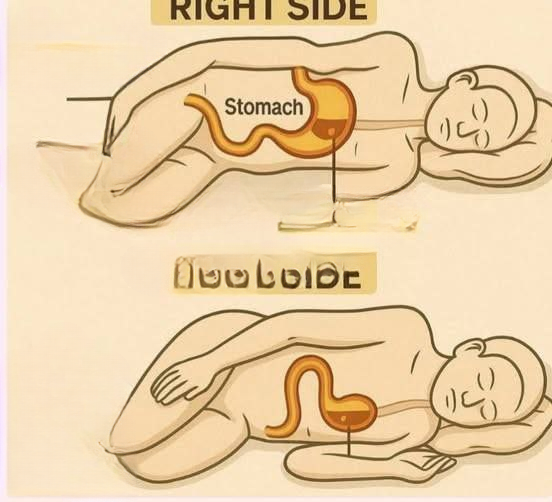
The stomach is shaped somewhat like a curved pouch and sits predominantly on the left side of the upper abdomen. The esophagus connects to the top portion of the stomach, and a muscular valve (the lower esophageal sphincter) helps prevent stomach contents from moving backward.
When lying on the right side, gravity may allow stomach contents to press more directly against this valve. For some individuals, this can contribute to nighttime discomfort.
When lying on the left side, gravity helps keep stomach contents lower, which may reduce the likelihood of acid moving upward. This position may provide comfort for people who experience occasional heartburn symptoms.
It is important to note that individuals diagnosed with chronic digestive conditions such as gastroesophageal reflux should consult a healthcare professional for personalized advice. However, adjusting sleep posture is often considered a simple, low-risk lifestyle modification worth trying.
2. Supporting Natural Digestive Flow
Beyond acid comfort, left-side sleeping may also complement the natural direction of the digestive tract.
After food passes through the small intestine, it enters the large intestine (colon). The colon travels upward on the right side (ascending colon), across the abdomen (transverse colon), and then downward on the left side (descending colon).
When lying on the left side, gravity may assist the movement of digested material from the transverse colon into the descending colon. While this effect is subtle and not a cure for digestive concerns, some people report improved regularity when maintaining consistent left-side sleep habits.
Of course, digestion is influenced by many factors including hydration, fiber intake, stress levels, and physical activity. Sleep posture is just one component of a broader digestive health strategy.
3. Circulation and Heart Function
The heart is slightly offset toward the left side of the chest cavity. Because of this, some researchers and clinicians have examined whether sleep position affects cardiac function.
When lying on the left side, the heart rests more naturally within the chest cavity without compressing against surrounding structures. For most healthy individuals, either side is safe. However, some people report feeling more comfortable breathing on their left side.
It’s also worth mentioning that during pregnancy (particularly later stages), healthcare providers often recommend left-side sleeping. This is because the inferior vena cava—a large vein that carries blood from the lower body back to the heart—runs along the right side of the spine. Lying on the left side may reduce pressure on this vein, potentially supporting better circulation.
For non-pregnant individuals, the circulatory benefits are generally subtle but may contribute to overall nighttime comfort.
4. The Lymphatic System and Fluid Balance
The lymphatic system plays a key role in immune function and fluid regulation. It transports lymph—a fluid containing white blood cells and waste products—throughout the body.
The thoracic duct, the largest lymphatic vessel, empties into the bloodstream on the left side of the body near the collarbone. Some wellness traditions suggest that sleeping on the left side may support natural lymphatic drainage by aligning with this anatomical pathway.
While scientific research in this specific area is still developing, maintaining consistent sleep and healthy circulation are known to support immune health overall.
It is important to understand that sleep posture alone does not “detoxify” the body. The liver and kidneys handle detoxification continuously. However, adequate rest and healthy circulation contribute to optimal system performance.
5. Liver and Organ Pressure Considerations
The liver is located primarily on the right side of the abdomen and is one of the body’s most important metabolic organs.
When lying on the right side, the weight of surrounding organs may place additional pressure on the liver area. For most healthy individuals, this pressure is not harmful. However, some proponents of left-side sleeping suggest that reducing pressure on the liver may allow more comfortable overnight function.
Again, this is not a replacement for medical treatment or liver care practices such as healthy nutrition and avoiding excessive alcohol. But posture may contribute to comfort in some cases.
6. Pregnancy and Left-Side Recommendations
Among all the potential benefits, pregnancy is the situation where left-side sleeping is most widely recommended by medical professionals.
As pregnancy progresses, the uterus expands significantly. Lying on the back can compress major blood vessels, and lying on the right side may place pressure on the inferior vena cava.
Sleeping on the left side can help:
-
Support blood flow to the placenta
-
Reduce swelling in legs and ankles
-
Improve circulation
-
Enhance comfort
Pregnant individuals are typically encouraged to use supportive pillows to maintain a stable side position.
7. Breathing and Sleep Comfort
For people who snore or experience mild breathing disruptions, side sleeping in general (left or right) is often preferred over back sleeping.
When lying on the back, the tongue and soft tissues in the throat may fall backward, partially obstructing airflow. Side sleeping can help maintain clearer airways.
While research does not strongly favor left over right for breathing, individuals who experience reflux-related throat irritation at night may find left-side sleeping more comfortable.
8. Adapting to a New Sleep Position
Changing long-established sleep habits can feel uncomfortable at first. The body naturally develops preferred positions over time.
If you want to try left-side sleeping, consider these tips:
-
Use a firm pillow to support your head and neck.
-
Place a pillow between your knees to maintain spinal alignment.
-
Position a pillow behind your back to prevent rolling over.
-
Consider a body pillow for additional support.
Gradual adjustment helps the body adapt without strain.
9. When Left-Side Sleeping May Not Be Ideal
Although left-side sleeping offers potential benefits, it is not perfect for everyone.
Some individuals with certain shoulder injuries may experience discomfort when lying on one side for extended periods. Others may find that alternating sides reduces pressure points.
If you have chronic pain, sleep apnea, or medical conditions affecting circulation, it’s best to discuss sleep posture with a healthcare provider.
Personal comfort plays an important role in sleep quality. If a position causes discomfort, it may disrupt rest more than it helps.
10. Sleep Position as Part of “Passive Wellness”
Health is often associated with active behaviors such as exercise, balanced meals, and hydration. However, sleep posture represents a quieter form of wellness—one that works in the background.
We spend roughly one-third of our lives asleep. That’s thousands of hours each year in a single position. Small adjustments made consistently over time can potentially influence comfort and function.
Left-side sleeping is not a cure-all, but it may support natural anatomy in subtle ways.
11. The Geometry of Health
When discussing sleep posture, it can be helpful to think in terms of alignment. The body functions best when systems operate with minimal obstruction or strain.
Gravity influences circulation, digestion, and fluid balance. Aligning the body in a way that works with gravity—rather than against it—may support smoother internal processes.
Left-side sleeping is often described as aligning with the body’s structural layout. Whether for digestive comfort, circulation support during pregnancy, or simply preference, it represents a small geometric adjustment with potential benefits.
12. A Balanced Perspective
It is important to approach sleep advice with balance. No sleep position guarantees perfect health, and individual needs vary widely.
Left-side sleeping may:
-
Support digestive comfort
-
Encourage natural colon movement
-
Reduce nighttime reflux symptoms
-
Promote circulation during pregnancy
-
Enhance airway stability
However, quality sleep also depends on:
-
Consistent sleep schedules
-
A supportive mattress
-
Comfortable room temperature
-
Stress management
-
Limiting screen exposure before bed
Position alone cannot replace healthy habits.
13. Making Sleep a Restorative Practice
Rather than viewing sleep as passive downtime, it helps to think of it as an active restorative process. During sleep:
-
Cells repair
-
Hormones regulate
-
Memory consolidates
-
Immune function strengthens
Choosing a position that enhances comfort may allow the body to perform these processes more efficiently.
If left-side sleeping reduces discomfort, it may contribute to deeper, uninterrupted rest.
Conclusion: A Simple Adjustment with Potential Benefits
Sleeping on your left side is not a miracle solution, but it is a simple, low-cost adjustment that may support comfort and certain physiological processes. Because of the body’s internal layout—particularly the position of the stomach and major blood vessels—this posture may help reduce nighttime digestive discomfort and support circulation in specific situations such as pregnancy.
Ultimately, the best sleep position is one that allows you to rest deeply and wake feeling refreshed. If you experience occasional reflux, digestive discomfort, or circulation concerns, experimenting with left-side sleeping may be worth considering.
As with any health-related practice, consult a qualified medical professional if you have persistent symptoms or medical conditions.
Sleep is more than just time spent unconscious—it is a foundational element of health. By paying attention not only to how long you sleep but also to how you position your body, you may enhance the restorative power of each night’s rest.
Sometimes, small adjustments lead to meaningful improvements.