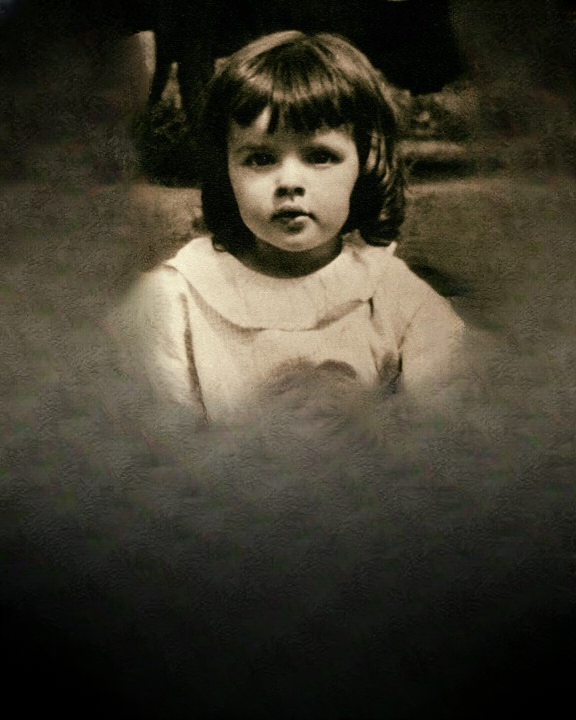
When people think of Judy Garland, they often picture a bright smile, a powerful voice, and the timeless image of a girl following a yellow brick road in The Wizard of Oz. Her performance as Dorothy Gale became one of the most iconic in film history.
But behind that image—behind the sparkle, the songs, and the applause—was a life shaped by pressure, control, and emotional complexity that began long before she ever stepped onto a Hollywood set.
This is not just the story of a star. It’s the story of a child who learned too early that love, approval, and survival could all become tangled together.
A Childhood That Was Never Truly a Childhood
Born Frances Ethel Gumm in 1922, Judy Garland grew up in a family deeply connected to performance. Her parents ran a theater, and from a young age, she was introduced to the stage.
For many children, performing might feel like play. For Judy, it quickly became something else—an expectation.
She performed alongside her sisters as part of “The Gumm Sisters,” and audiences loved her natural talent. But even in those early years, there were signs that her life would be shaped less by choice and more by circumstance.
Her mother, often described as ambitious and demanding, pushed her relentlessly. Whether that came from a desire to secure success or from the pressures of the entertainment world, the result was the same: Judy’s needs as a child often came second to her role as a performer.
The Transformation Into “Judy Garland”
When she signed with Metro-Goldwyn-Mayer (MGM) as a teenager, her life changed dramatically.
Frances Gumm was no more.
She became Judy Garland—a name that would soon be recognized across the world.
But that transformation came at a cost.
Studio executives carefully crafted her image. They decided how she should look, how she should act, and even how her body should change. Unlike some of her contemporaries, she did not fit the typical Hollywood mold of the time.
Instead of embracing her uniqueness, the system tried to reshape it.
She was criticized for her appearance. Compared to other young stars, she was told she needed to be slimmer, more polished, more “marketable.”
What followed was a strict regimen that would affect her for the rest of her life.
The Hidden Cost of Stardom
To maintain the demanding schedules required by the studio system, Judy was given substances intended to keep her awake during long filming days—and others to help her rest when the work finally stopped.
At the time, this practice was not uncommon in Hollywood.
But for a young performer still developing physically and emotionally, the impact was profound.
Her days became a cycle of performance and recovery, energy and exhaustion, control and collapse.
Food was restricted. Rest was managed. Privacy was nearly nonexistent.
And through it all, she was expected to smile.
A Star Is Born—But at What Price?
Despite the pressure, Judy Garland’s talent could not be contained.
Her performance in The Wizard of Oz cemented her place in entertainment history. When she sang “Over the Rainbow,” audiences felt something deeply personal—something vulnerable and real.
It wasn’t just a song.
It was an expression of longing.
Perhaps that’s why it resonated so strongly. Even without knowing her story, people could feel the emotion behind her voice.
That ability—to connect, to communicate something deeper—became her signature.
But it also made her more exposed.
Because the more she gave emotionally, the more was expected of her.
Life Beyond the Spotlight
As Judy moved into adulthood, the challenges she faced did not simply disappear.
Fame brought opportunities, but it also brought instability.
She experienced multiple marriages, each one carrying the hope of stability and companionship. Yet, like many aspects of her life, these relationships were often complicated by the pressures surrounding her career and personal struggles.
She became a mother, a role she valued deeply. Her children—including Liza Minnelli—would later speak about both the warmth and the difficulty of growing up in such a unique environment.
Judy’s desire for connection was clear.
But finding lasting stability proved difficult.
The Cycle of Pressure and Recovery
Throughout her life, Judy Garland experienced periods of success followed by setbacks.
She would return to the stage, deliver unforgettable performances, and remind the world of her extraordinary talent.
Then, just as quickly, she might face exhaustion, health challenges, or personal struggles that forced her to step back.
This cycle became a defining part of her story.
It wasn’t a lack of strength.
If anything, her repeated comebacks showed resilience.
But resilience alone cannot replace support, balance, and well-being.
An Industry Under the Microscope
Judy Garland’s life has often been discussed not just as a personal story, but as a reflection of the entertainment industry during her time.
The studio system of early Hollywood operated with a high level of control over performers’ lives. Contracts were strict. Expectations were intense. Personal boundaries were often blurred.
Young actors, in particular, were vulnerable.
They relied on adults—managers, executives, even family members—to guide and protect them.
When that protection fell short, the consequences could be lasting.
Judy’s experiences have contributed to ongoing conversations about performer rights, mental health awareness, and the importance of ethical standards in the industry.
The Power of Her Voice
Despite everything she faced, one thing remained constant: her voice.
It carried emotion in a way that felt authentic and immediate. Whether performing on stage or on screen, she had the ability to draw audiences in completely.
People didn’t just hear her.
They felt her.
That connection is part of why her legacy continues today.
It’s not just about the roles she played or the songs she sang.
It’s about the honesty she brought to every performance.
A Legacy That Continues to Inspire
In the years since her passing, Judy Garland’s story has taken on new meaning.
Modern audiences often view her life through a more informed lens—one that recognizes the importance of mental health, personal boundaries, and ethical treatment within the entertainment industry.
Her daughter, Liza Minnelli, went on to build her own remarkable career, carrying forward a legacy of talent and resilience.
At the same time, Judy’s story has inspired discussions about how the industry can evolve to better support performers—especially those who begin their careers at a young age.
Lessons from a Complex Life
Judy Garland’s life cannot be reduced to a single narrative.
It is not just a story of success or struggle.
It is both.
And within that complexity are important lessons:
Talent deserves protection.
Natural ability should be nurtured, not exploited.
Support systems matter.
Even the strongest individuals need stability, understanding, and care.
Public success doesn’t equal private happiness.
What we see on stage or screen is only part of the story.
Resilience is powerful—but it has limits.
Strength should not be a substitute for proper support.
Final Thoughts: Beyond the Rainbow
The image of Judy Garland as Dorothy, singing about a place “somewhere over the rainbow,” remains one of the most enduring in film history.
But beyond that image was a person navigating a life filled with both extraordinary opportunity and significant challenges.
Her story reminds us to look deeper—to recognize the humanity behind the performance.
To appreciate not just the talent, but the person.
And to understand that behind even the brightest spotlight, there can be shadows that deserve attention, compassion, and change.
In the end, Judy Garland’s legacy is not defined solely by her struggles or her success.
It is defined by her ability to connect—to turn personal emotion into something universal.
Something lasting.
Something that, even today, continues to resonate.