When people imagine space exploration, they often picture breathtaking rocket launches, flawless technology, and astronauts gazing peacefully at Earth from orbit. The reality, however, is far more complex—and far more human.
The mission of NASA’s Artemis program represents one of the most ambitious efforts in modern space exploration: returning humans to the Moon for the first time since the Apollo 17 mission. As part of this effort, Artemis II marks a major milestone—the first crewed flight of the Orion spacecraft around the Moon in over half a century.
While the launch itself captured global attention for its precision and spectacle, what happened shortly afterward revealed something even more compelling: the deeply human side of space travel.
The Launch: A Moment of Precision and Promise
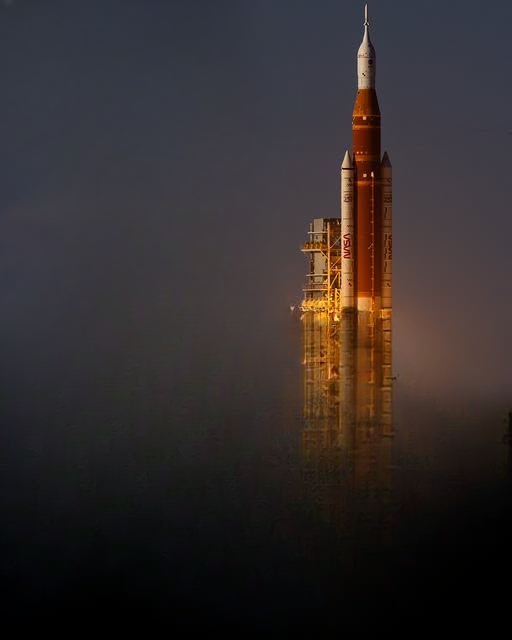
The launch of Artemis II was nothing short of extraordinary. Years of engineering, planning, and testing culminated in a powerful ascent that lit up the sky and reignited humanity’s dream of deep space exploration.
At the heart of this mission was the Orion spacecraft—a next-generation vehicle designed to carry astronauts farther than any modern spacecraft has traveled. The crew onboard included highly trained astronauts, among them Christina Koch, whose experience and composure would soon become essential.
The initial phase of the mission went exactly as planned. Systems performed nominally, trajectory remained stable, and communication with mission control was seamless. To outside observers, everything appeared perfect.
But space missions, no matter how carefully prepared, always involve unpredictability.
The Unexpected Issue: A Reminder of Reality
Hours into the mission, after the excitement of launch had settled, the crew encountered an unexpected technical issue. It wasn’t related to navigation, propulsion, or communication—systems typically associated with high-stakes risk.
Instead, the issue involved one of the most basic, essential systems onboard: sanitation.
While it may seem minor compared to other spacecraft systems, waste management is a critical component of any long-duration mission. In microgravity, even simple daily routines become complex. A malfunction in this area is not just inconvenient—it can impact hygiene, crew health, and overall mission morale.
Importantly, the situation was handled calmly and professionally. There was no panic, no danger to the mission, and no immediate risk to the crew. However, it required attention and problem-solving.
Life in Microgravity: Small Problems, Big Implications
To understand why such a system matters, it’s important to consider the environment inside a spacecraft like Orion spacecraft.
In microgravity:
- Liquids do not flow normally
- Air circulation must be carefully controlled
- Even small particles can drift unpredictably
- Hygiene requires specialized equipment and procedures
Systems that function effortlessly on Earth must be redesigned entirely for space. This includes sanitation systems, which rely on airflow, suction, and precise engineering to operate effectively.
When something doesn’t work as expected, astronauts must rely on both training and adaptability to resolve the issue.
Problem-Solving in Space: A Team Effort
When the issue arose, the crew followed established protocols. Communication with mission control remained constant, ensuring that ground engineers could assist in diagnosing the problem.
Christina Koch played a key role in addressing the situation. Guided by experts from NASA’s mission control, she carefully worked through the troubleshooting process.
This involved:
- Identifying the root of the malfunction
- Accessing internal components of the system
- Making adjustments using onboard tools
- Testing the system to confirm proper operation
This kind of hands-on technical work is a core part of astronaut training. Astronauts are not just passengers—they are engineers, scientists, and problem-solvers.
The Moment of Resolution
After careful work and coordination, the system was successfully restored to normal function.
Mission control confirmed that everything was operating as expected. The crew, understandably, felt a sense of relief—not just because the issue was resolved, but because it demonstrated their ability to adapt and overcome challenges in real time.
Moments like these often don’t make headlines, but they are essential to mission success.
Why These Moments Matter
Stories like this highlight an important truth about space exploration: it is not defined by perfection, but by resilience.
Even with decades of technological advancement since Apollo 17, space missions remain complex and unpredictable. Every system, no matter how small, plays a role in the overall success of the mission.
More importantly, these situations demonstrate:
- The importance of preparation and training
- The value of teamwork between crew and ground control
- The adaptability required in extreme environments
The Human Side of Exploration
One of the most compelling aspects of this incident is how it underscores the humanity of astronauts.
Despite operating in one of the most advanced technological environments ever created, astronauts still deal with everyday challenges—just under extraordinary conditions.
This shared human experience creates a connection between those in space and those on Earth. It reminds us that exploration is not just about machines and milestones, but about people.
Lessons for Future Missions
As NASA prepares for future missions—including potential long-duration stays on the Moon and eventual journeys to Mars—experiences like this provide valuable insights.
Engineers and mission planners can use this information to:
- Improve system reliability
- Refine maintenance procedures
- Enhance crew training programs
- Design more robust life-support systems
Each mission contributes to a growing body of knowledge that will shape the future of human space exploration.
The Bigger Picture: Artemis and Beyond
The Artemis II mission is part of a broader effort to establish a sustainable human presence beyond Earth.
Future goals include:
- Returning astronauts to the lunar surface
- Building infrastructure for long-term exploration
- Preparing for missions to Mars
These ambitions require not only advanced technology but also a deep understanding of how humans live and work in space.
A Journey Defined by Resilience
While the launch of Artemis II will be remembered for its technical achievements, it is moments like these that truly define the mission.
They show that exploration is not about avoiding challenges—it’s about facing them with skill, determination, and teamwork.
From the engineers on the ground to the astronauts in orbit, every individual plays a role in ensuring success.
Conclusion: A Realistic View of Space Exploration
The story of this onboard challenge is not one of failure, but of capability.
It reminds us that:
- Space missions are complex and require constant attention
- Even small systems are critical to overall success
- Human ingenuity remains the most important asset in exploration
As humanity takes its next steps beyond Earth, missions like Artemis II will continue to inspire—not because they are perfect, but because they reflect our ability to adapt, learn, and move forward.
In the end, space exploration is not just about reaching new destinations. It is about understanding what it means to be human—even millions of miles from home.