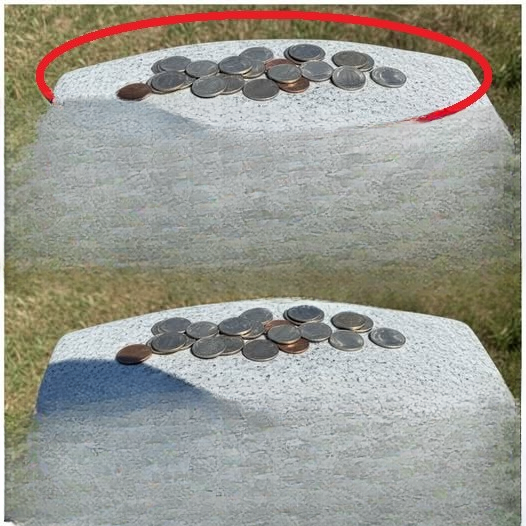
If you have ever walked through a cemetery—especially one dedicated to military service members—you may have noticed small coins resting on top of certain gravestones. At first glance, these coins might seem random, perhaps dropped accidentally or left without much thought. However, this understated gesture carries deep meaning.
The tradition of placing coins on graves is a powerful, symbolic act rooted in respect, remembrance, and connection. While simple in appearance, each coin can convey a specific message, particularly in military cemeteries where bonds formed in service are honored in subtle yet meaningful ways.
What may look like spare change is often a silent expression of gratitude, shared history, or personal loss. Understanding this practice reveals a thoughtful ritual that has evolved across generations and cultures.
A Simple Coin, A Powerful Message
Cemeteries are places of reflection. Visitors come to honor loved ones, remember shared moments, and pay respect to those who came before them. The act of leaving a coin is one way people communicate these feelings without words.
Unlike flowers or flags, coins are small and unassuming. Yet their symbolism runs deep. In many cases—especially in military settings—different denominations can carry distinct meanings.
Though practices may vary slightly by region or individual interpretation, the tradition has become widely recognized as a sign of honor and connection.
The Meaning Behind Each Coin
The Penny: A Sign of Remembrance
The penny is the most commonly left coin. Though modest in monetary value, its symbolic weight is significant.
Leaving a penny often communicates a simple but meaningful message: “I visited.” It’s a quiet acknowledgment that someone stopped to pay respects. In military cemeteries, it can also signal that a fellow service member, friend, or even a stranger recognizes the sacrifice made by the person buried there.
For families of the deceased, seeing pennies left on a gravestone can bring comfort. It reassures them that others continue to remember their loved one.
The penny serves as a universal sign of respect—accessible to anyone who wishes to participate in the tradition.
The Nickel: Shared Training or Service
In many interpretations of the tradition, a nickel represents a deeper connection. It often signifies that the person leaving the coin attended boot camp or served in the military at the same time as the deceased.
This gesture reflects shared experience. Military training builds strong bonds, and leaving a nickel acknowledges that connection. It suggests familiarity, camaraderie, and a shared journey.
The nickel says, in effect, “We walked part of this path together.”
The Dime: Serving Side by Side
A dime typically symbolizes an even closer relationship. In traditional interpretations, it means the visitor served alongside the deceased in active duty.
Serving together—especially during deployments—creates lasting bonds. The dime communicates solidarity and respect between individuals who experienced the same challenges, responsibilities, and sacrifices.
It’s a quiet way of saying, “We stood together.”
The Quarter: Present at the End
The quarter is often regarded as the most personal coin in the tradition. In many cases, it signifies that the person leaving the coin was present when the service member passed away.
This gesture reflects deep emotional weight. It acknowledges shared final moments and the profound impact of loss.
While interpretations may vary, the quarter generally represents one of the strongest forms of tribute within the coin tradition.
Emotional Comfort for Families
For families who visit a loved one’s grave, discovering coins can be deeply meaningful.
Even if they don’t know who left them, the presence of coins signals that others remember and honor the individual. This can be especially comforting for families of military members whose service may have taken them far from home.
The coins become quiet affirmations that the person’s life and contributions continue to matter.
A Tradition With Historical Roots
The practice of leaving coins on graves is not entirely modern. Its origins can be traced back thousands of years.
Ancient Burial Customs
In ancient Greek and Roman traditions, coins were sometimes placed with the deceased as symbolic payment for passage to the afterlife. According to mythology, the ferryman Charon required payment to carry souls across the River Styx.
Placing a coin with the deceased ensured safe passage.
Over time, while religious interpretations changed, the symbolic act of placing coins near the deceased remained a gesture of respect.
The Modern Military Connection
In the United States, the tradition became especially visible during and after the Vietnam War. During that era, political tensions sometimes made public displays of military service complicated.
Leaving a coin on a grave became a subtle, respectful way for veterans to honor fallen comrades without drawing attention. It functioned as a private language—understood by those familiar with its meaning.
Over time, the practice expanded and became more widely recognized in military cemeteries across the country.
One of the most well-known military burial sites where this tradition is often observed is Arlington National Cemetery. Visitors frequently leave coins there as a sign of remembrance and gratitude.
Practical Aspects of the Tradition
Beyond symbolism, coins left on graves sometimes serve additional purposes.
Supporting Veteran Organizations
In some cemeteries, collected coins are periodically gathered and donated to organizations that support veterans and military families. These funds may assist with healthcare programs, housing assistance, or memorial initiatives.
While the amounts collected from individual coins are small, over time they can add up and contribute to meaningful support efforts.
This adds another layer of purpose to the tradition: remembrance combined with community assistance.
Respecting the Practice
If you encounter coins on a gravestone, it’s important to leave them undisturbed. They are placed intentionally and carry emotional meaning.
Removing them can unintentionally disrupt a tribute someone else has made.
Cemeteries are spaces of shared memory. Respecting the gestures left by others helps preserve their significance.
Cultural Variations and Shared Themes
While the coin tradition is particularly associated with military cemeteries in the United States, similar practices exist in other cultures.
Across the world, people leave small tokens—stones, ribbons, flags, flowers—on graves to signify visitation and remembrance.
Though the objects differ, the theme is universal: honoring those who have passed.
The use of coins specifically carries additional symbolic weight because currency represents value. Leaving a coin can be interpreted as offering something of worth—even if modest—as a gesture of respect.
Why Small Gestures Matter
In times of grief, small actions often carry deep meaning.
A coin may cost little, but its presence communicates:
-
Recognition
-
Gratitude
-
Shared history
-
Continuing remembrance
Unlike elaborate ceremonies, this tradition is accessible to anyone. It does not require formal arrangements or public recognition.
Its simplicity is part of its strength.
The Quiet Language of Symbols
Human beings rely on symbols to express emotions that words cannot fully capture. Coins on graves function as a silent language.
They allow visitors to communicate:
“I remember.”
“I served with you.”
“I honor your sacrifice.”
“You are not forgotten.”
In places where silence is often observed, such gestures speak volumes.
Common Questions About the Tradition
Is it only for military graves?
While most commonly seen in military cemeteries, the practice can appear in civilian cemeteries as well. The meaning may differ slightly depending on context.
Do denominations always carry the same meaning?
Interpretations are widely shared but not officially standardized. The symbolic meanings described above are common but may vary by community or individual understanding.
Are coins ever removed?
In some cases, cemetery staff may collect coins periodically for cleaning or charitable purposes. Policies differ depending on the location.
A Practice That Connects Generations
One of the most powerful aspects of this tradition is how it bridges generations.
Younger visitors may observe coins on a gravestone and ask about their meaning. In learning the story behind the practice, they gain insight into history, service, and respect.
The tradition becomes a teaching moment—one that reinforces values of gratitude and remembrance.
The Broader Message of Remembrance
Ultimately, the practice of leaving coins is about honoring lives and acknowledging sacrifice.
Military service members, in particular, often form close bonds during their time in service. The coin tradition reflects those relationships and keeps them alive in memory.
It also reminds society of the cost of service and the importance of gratitude.
Final Thoughts
The next time you see a coin resting on a gravestone, you’ll know it likely carries more meaning than meets the eye.
What appears small and ordinary is often a deeply intentional act of respect. Whether it’s a penny signifying simple remembrance or a quarter representing a shared final moment, each coin tells a story.
This quiet tradition continues because it offers a meaningful way to connect the past and present. It allows individuals to honor others in a personal, dignified, and accessible manner.
In a world that often moves quickly, the simple act of placing a coin on a grave reminds us to pause—to remember, to respect, and to acknowledge the lives that shaped our communities.
Sometimes, the most powerful tributes are the ones spoken without words.