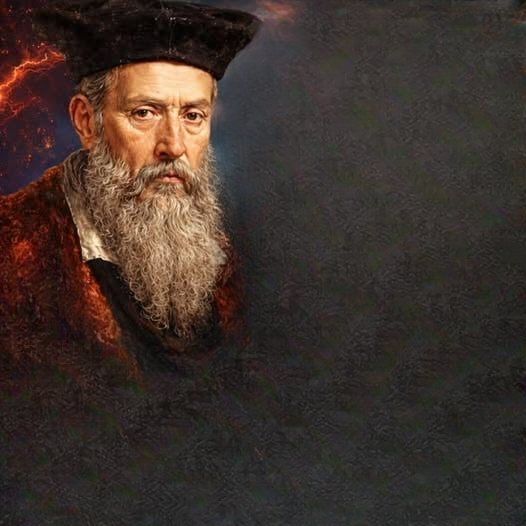
For centuries, the writings of Nostradamus have captured the imagination of readers around the world. His cryptic verses, often referred to as quatrains, continue to spark curiosity, debate, and interpretation long after they were first published in the 16th century.
What makes these writings so enduring is not their clarity, but rather their ambiguity. Nostradamus did not provide direct explanations or precise timelines. Instead, he used symbolic language, metaphors, and imagery that can be interpreted in many different ways. This openness has allowed each generation to revisit his work and connect it to contemporary events.
In today’s world—where global developments, political shifts, and economic uncertainties are frequently discussed—many people once again turn to these centuries-old texts, searching for meaning or insight. But what do these interpretations really tell us? Are they predictions of the future, or reflections of our own concerns?
This article explores the enduring fascination with Nostradamus, examines three common ways his writings are interpreted in modern times, and reflects on the deeper lessons behind humanity’s ongoing search for meaning in uncertain times.
Who Was Nostradamus?
Nostradamus, born Michel de Nostredame in 1503, was a French physician, astrologer, and writer. He lived during a time of great upheaval in Europe, marked by plagues, wars, and significant social change.
His most famous work, Les Prophéties, was first published in 1555. It consists of hundreds of quatrains—four-line verses—written in a mixture of languages, including French, Latin, and Greek. These verses are often obscure and symbolic, making them difficult to interpret definitively.
Nostradamus’s writings gained attention during his lifetime, but their popularity has grown significantly over the centuries. Today, he is often associated with predictions about major historical events, though interpretations of his work vary widely.
Why Do People Still Turn to Nostradamus?
The continued interest in Nostradamus can be explained by several factors:
1. Ambiguity Invites Interpretation
Because his writings are not straightforward, they can be adapted to fit a wide range of events. This flexibility allows readers to see connections between his words and current situations, even when those connections are subjective.
2. Human Desire for Certainty
In times of uncertainty, people often seek patterns or explanations that make the world feel more predictable. Prophetic writings can provide a sense of structure, even if they do not offer concrete answers.
3. Cultural and Historical Influence
Over time, Nostradamus has become a cultural symbol associated with foresight and mystery. His name is often referenced in discussions about the future, reinforcing his relevance in modern conversations.
Three Common Modern Interpretations of Nostradamus’s Writings
Although Nostradamus’s quatrains are open to many interpretations, certain themes tend to appear repeatedly in modern analyses. Below are three common ways his writings are interpreted today.
1. Symbolic Representations of Global Powers
One of the most frequent interpretations involves symbolic animals or figures that are believed to represent nations or global powers. For example, references to creatures like eagles, bears, or lions are often associated with different countries.
It is important to note that these associations are not explicitly defined by Nostradamus himself. Instead, they are interpretations made by modern readers based on cultural and historical symbolism.
This approach reflects how people use familiar imagery to make sense of complex global dynamics. By linking symbols to contemporary nations, readers create narratives that feel relevant to current events.
2. Cycles of Change and Transformation
Another common interpretation focuses on the idea that history moves in cycles. Nostradamus’s writings are often seen as describing periods of rise, decline, and renewal.
In this context, his verses are not viewed as specific predictions but as reflections of patterns that repeat over time. Societies evolve, face challenges, and adapt, creating a continuous cycle of change.
This perspective aligns with historical analysis, which shows that civilizations have experienced similar patterns throughout history. By viewing Nostradamus’s work through this lens, readers find parallels between past and present developments.
3. Reflections of Human Concerns
Perhaps the most insightful interpretation is that Nostradamus’s writings serve as a mirror for human fears and hopes. Rather than predicting events, they reveal how people interpret uncertainty.
When individuals read his quatrains, they often project their own concerns onto the text. This means that interpretations can vary widely depending on the context in which they are read.
For example, during times of political tension, readers may focus on themes of conflict or instability. During periods of innovation, they may highlight ideas related to transformation and progress.
The Psychology Behind Prophecy Interpretation
Understanding why people interpret prophetic texts in certain ways requires a look at human psychology.
Pattern Recognition
Humans are naturally inclined to look for patterns, even in ambiguous information. This ability helps us make sense of the world, but it can also lead to seeing connections where none were intended.
Confirmation Bias
People tend to focus on information that supports their existing beliefs. When reading Nostradamus’s writings, individuals may emphasize interpretations that align with their expectations.
The Need for Control
In uncertain situations, having a sense of predictability can be comforting. Prophetic interpretations can provide a feeling of control, even if they are not based on concrete evidence.
History Is Patterned, Not Predetermined
One of the most important ideas to consider when discussing Nostradamus is the distinction between patterns and predetermined outcomes.
History shows that events often follow recognizable patterns, such as periods of growth, conflict, and recovery. However, these patterns are influenced by human decisions, not fixed scripts.
This means that while certain trends may repeat, the outcomes are not inevitable. The future is shaped by actions taken in the present, rather than by predetermined prophecies.
The Role of Leadership and Society
When examining global developments, it becomes clear that leadership and collective decision-making play a significant role in shaping outcomes.
Leadership Decisions
Leaders influence policies, strategies, and responses to challenges. Their choices can have lasting effects on societies and global dynamics.
Public Engagement
Citizens also play a role through participation, communication, and collaboration. Collective actions contribute to shaping the direction of communities and nations.
Media, Technology, and Modern Interpretations
In today’s digital age, interpretations of Nostradamus spread quickly through social media, websites, and online discussions.
Rapid Information Sharing
Technology allows ideas to reach a global audience almost instantly. This can amplify interpretations, making them more widely known.
The Risk of Misinformation
At the same time, not all interpretations are accurate or well-researched. It is important to approach such content critically and seek reliable sources.
Why Critical Thinking Matters
When engaging with historical texts and modern interpretations, critical thinking is essential.
Evaluating Sources
Understanding where information comes from helps determine its reliability.
Considering Context
Interpreting texts within their historical context provides a clearer understanding of their meaning.
Avoiding Overgeneralization
Recognizing that interpretations are subjective helps prevent drawing overly broad conclusions.
The Value of Nostradamus’s Legacy
Despite the ambiguity of his writings, Nostradamus’s work continues to hold cultural and intellectual value.
Encouraging Reflection
His quatrains prompt readers to think about history, change, and the nature of prediction.
Inspiring Discussion
They serve as a starting point for conversations about the future and how it is shaped.
Moving Beyond Predictions
Rather than focusing solely on predictions, it can be more meaningful to consider what Nostradamus’s writings reveal about human nature.
They highlight our desire to understand the unknown, our tendency to seek patterns, and our need for reassurance in uncertain times.
Shaping the Future Through Action
While it can be interesting to explore interpretations of historical texts, the future ultimately depends on choices made in the present.
Individual Actions
Everyday decisions contribute to broader societal trends.
Collective Efforts
Collaboration and shared goals can lead to positive change.
Conclusion: Between Uncertainty and Opportunity
The enduring fascination with Nostradamus reflects a universal human experience: the search for meaning in an unpredictable world.
His writings, with their symbolic language and open-ended nature, invite interpretation rather than provide definitive answers. This makes them a powerful tool for reflection, but not a roadmap for the future.
Ultimately, the most important lesson is that while history may show patterns, it is not predetermined. The future is shaped by decisions, actions, and the ability to adapt to change.
Rather than relying on interpretations of the past, individuals and societies have the opportunity to actively influence what lies ahead.