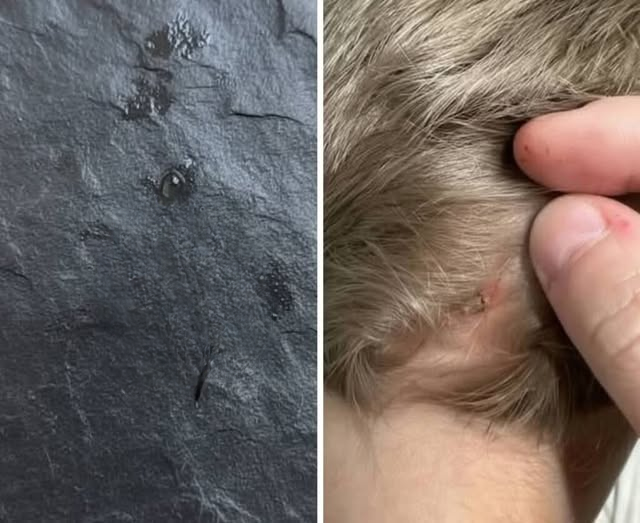
It often happens in the most ordinary moments.
Maybe you’re brushing your child’s hair after a bath, gently working through tangles. Or perhaps you’re helping them get ready for school, parting their hair carefully to tie it back. Everything feels routine—calm, predictable—until suddenly, something unusual catches your eye.
A tiny movement.
A dark speck that doesn’t belong.
And just like that, your heart skips a beat.
The Moment That Triggers Every Parent’s Fear
Discovering an unfamiliar bug in your child’s hair can feel overwhelming. It’s not just about what you see—it’s about everything your mind starts imagining in that instant.
Questions rush in all at once:
-
Is it lice?
-
Could it be a tick?
-
Is my child in danger?
-
Do I need to act immediately?
That initial reaction is completely natural. It’s instinctive to feel protective, even alarmed. But while panic might be the first response, it’s not the most helpful one.
The truth is, most of these situations are manageable—if you approach them calmly and carefully.
Why Staying Calm Matters More Than Anything
When something unexpected like this happens, your reaction sets the tone.
Children are incredibly perceptive. If they sense fear or panic in your voice or behavior, they’re likely to feel anxious too—even if they don’t fully understand what’s happening.
Instead, take a breath.
Treat the situation like a small problem that needs solving—not a crisis.
With a calm approach, you can turn a stressful moment into something controlled and manageable.
Step One: Identify What You’re Dealing With
Before taking any action, it’s important to understand exactly what you’ve found.
In most cases, insects discovered in a child’s hair fall into one of three common categories. Each one looks different, behaves differently, and requires a slightly different response.
Common Cause #1: Head Lice
Head lice are the most frequent reason parents find small insects in their child’s hair, especially among school-aged kids.
These tiny bugs are usually about the size of a sesame seed and can appear tan, gray, or slightly darker depending on lighting. They don’t fly or jump—instead, they crawl quickly from one strand of hair to another.
Lice survive by staying close to the scalp, where they feed and lay eggs.
What to Look For
Often, the clearest sign isn’t the insect itself—it’s the eggs, known as nits.
These are very small, oval-shaped, and firmly attached to the hair shaft. Unlike dandruff or dirt, they don’t fall off easily when you try to brush or shake them away.
You’ll typically find them in warmer areas of the scalp, such as:
-
Behind the ears
-
Along the neckline
-
Near the crown of the head
Common Cause #2: Ticks
Ticks are less common but more serious if found.
Unlike lice, ticks don’t move around in the hair. Instead, they attach themselves to the skin and remain fixed while feeding.
They may appear small and flat at first, but can become larger and swollen over time.
Key Signs
-
Firmly attached to the scalp
-
Does not move when touched
-
Round or oval shape
-
May look grayish or slightly enlarged
Because ticks can sometimes carry illnesses, proper removal is especially important.
Common Cause #3: Harmless Visitors
Not every insect found in hair is harmful.
Children spend a lot of time outdoors—playing in grass, climbing, or sitting on floors. Sometimes, a small insect like an ant, beetle, or spider simply gets caught in their hair by accident.
If you only see one bug, and there are no eggs or signs of irritation, it’s likely nothing more than a temporary visitor.
The Truth About Itching (And Why It Can Be Misleading)
Many people believe that itching is the first and most obvious sign of lice.
But that’s not always true.
The itch actually comes from a reaction to the insect—not from the movement itself. This reaction can take time to develop, meaning a child might have lice for days or even weeks without showing any symptoms.
That’s why regular checks are helpful, especially during school seasons.
What To Do Right Away
Once you’ve spotted something unusual, your next steps matter—but they don’t need to be rushed.
Here’s how to handle the situation calmly and effectively:
1. Keep the Environment Calm
Avoid reacting with fear or urgency. Speak gently and reassure your child that everything is okay.
2. Take a Closer Look
Use good lighting and, if possible, a fine-tooth comb to examine the hair more closely.
Try to determine:
-
Is it moving?
-
Is it attached to the skin?
-
Are there more of them?
-
Are there visible eggs?
3. Avoid Harsh Reactions
It might be tempting to immediately use strong products or remedies, but it’s better to first understand what you’re dealing with.
Different situations require different solutions.
Safe and Effective Next Steps
If It’s Lice
-
Use a fine lice comb to remove both insects and eggs
-
Wash bedding, hats, and clothing
-
Avoid sharing personal items like combs or hair accessories
If It’s a Tick
-
Remove it carefully using clean tools (avoid squeezing)
-
Clean the area afterward
-
Monitor the skin for any unusual changes
If It’s a Random Bug
-
Simply wash the hair thoroughly
-
Check briefly for anything else
-
No further action is usually needed
Preventing Future Problems
While you can’t prevent every situation, there are simple steps that can reduce the chances:
-
Regularly check your child’s hair
-
Teach them not to share hats or brushes
-
Keep hair clean and tied back when possible
-
Be extra attentive after outdoor play
Turning Fear Into Confidence
Moments like these can feel overwhelming at first, but they also offer an opportunity.
An opportunity to stay calm under pressure.
To respond thoughtfully instead of reacting emotionally.
To show your child that problems can be handled step by step.
What begins as a moment of fear can quickly become one of reassurance and control.
Final Thoughts
Finding a bug in your child’s hair is never pleasant—but it’s rarely a disaster.
Most cases are manageable with simple care and attention.
The key is not panic, but awareness.
Not fear, but understanding.
Because when you stay calm and informed, even the most uncomfortable situations become easier to handle—and far less frightening than they first appear.