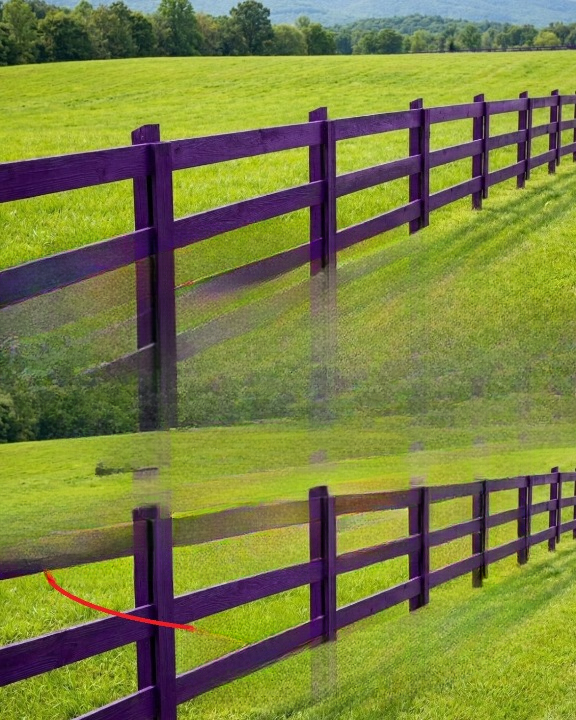
If you enjoy hiking, exploring rural areas, or taking quiet walks through the countryside, you may occasionally notice something unusual on a fence post or tree. Instead of the usual natural wood or neutral paint colors, you might see a bright purple stripe painted vertically along the surface.
At first glance, this can feel puzzling. Purple is not a typical color for fences, posts, or trees. Unlike common outdoor paint colors like white, brown, or green, purple tends to stand out immediately against natural landscapes. When people encounter it for the first time, they often wonder whether it is simply a decorative choice, an artistic expression, or perhaps a leftover mark from construction or maintenance work.
However, in many areas—especially rural parts of the United States—purple paint is not decorative at all. Instead, it serves a practical purpose. In certain states, purple paint marks placed on fences or trees can function as a visual indicator that the property is private and entry is not permitted without permission.
The system is sometimes referred to informally as a “purple paint law” or “purple paint marking system.” It provides landowners with a simple and durable way to communicate property boundaries without relying entirely on traditional signage.
In this article, we’ll explore:
-
What purple paint markings on fences or trees mean
-
Why purple was chosen as the signal color
-
How the marking system typically works
-
Where the practice is commonly used
-
Why it can be helpful for property owners and visitors alike
-
What you should do if you encounter purple markings while exploring outdoors
By understanding the purpose behind these markings, you can better recognize property boundaries and respect private land while enjoying outdoor spaces responsibly.
Why Purple Paint Is Used as a Boundary Signal
At first glance, purple might seem like an unusual color for marking property boundaries. Many people might expect warning colors such as red or bright orange to serve this role instead.
However, purple has several advantages that make it well suited for outdoor boundary markers.
1. Purple Is Highly Visible
One of the primary reasons purple was selected is its strong visual contrast against natural surroundings.
In rural environments, landscapes are typically filled with greens, browns, and earthy tones. Against this backdrop, purple stands out clearly, making it easier for people to notice the marking even from a distance.
The color also remains visible on different surfaces such as:
-
Tree bark
-
Wooden fence posts
-
Metal fencing structures
-
Rock surfaces
This visibility helps ensure that people approaching a property line are able to recognize the marking before entering restricted areas.
2. Purple Is Rare in Nature
Another advantage is that purple rarely appears naturally on trees, fence posts, or soil surfaces.
Because the color is uncommon in those settings, it is less likely to be mistaken for something accidental or naturally occurring. When people see a purple stripe painted intentionally on a surface, it signals that the mark was placed deliberately.
This makes the marking system more recognizable than colors that might blend into the environment.
3. Purple Paint Is Durable Outdoors
Paint used for these markings is usually selected for its durability. Outdoor paints designed for weather resistance can withstand exposure to:
-
Rain
-
Sunlight
-
Wind
-
Temperature changes
Compared to paper signs or lightweight markers that can fade, tear, or blow away, a painted stripe can remain visible for much longer.
This durability helps property owners maintain boundary markers with minimal maintenance.
The Purpose of Purple Paint Markings
The primary purpose of purple paint markings is to communicate that a piece of land is privately owned and that entry is restricted without permission.
In many places, traditional “No Trespassing” signs have long been used to convey this message. However, signs can sometimes be damaged by weather, knocked down by wind, or removed over time.
The purple paint system offers an alternative method of marking property boundaries in a way that is:
-
Long-lasting
-
Highly visible
-
Relatively easy to maintain
In some jurisdictions, painted markings may carry similar legal meaning to posted signs when applied according to specific guidelines.
However, it is important to note that rules can vary depending on location, so individuals should always check local regulations for accurate details.
Typical Guidelines for Purple Paint Markings
In areas where purple paint markings are recognized, certain guidelines are often recommended or required to ensure that the markings are clear and intentional.
Although the exact standards may differ by region, several common practices are frequently used.
Vertical Markings
Most guidelines specify that the purple paint should appear in vertical stripes rather than random splashes or irregular shapes.
Vertical lines are easier to recognize and less likely to be mistaken for accidental paint spills or decorative designs.
This helps ensure that anyone approaching the property understands that the mark serves a deliberate purpose.
Size and Visibility
To remain visible at a distance, the stripes typically need to meet certain size recommendations.
Common guidelines suggest that each stripe should be approximately:
-
At least one inch wide
-
Around eight inches long or longer
These dimensions help ensure that the markings can be seen clearly from a reasonable distance.
Height Above the Ground
Placement height also plays an important role in visibility.
Many guidelines recommend painting the stripes approximately three to five feet above the ground. This range helps ensure that the markings remain visible without being blocked by:
-
Tall grass
-
Low vegetation
-
Snow accumulation in winter
Painting the stripes within this height range increases the likelihood that people walking nearby will notice them.
Spacing Along the Boundary
In addition to size and placement, spacing between markings is also important.
Property boundaries are often marked with purple paint at regular intervals, commonly around every 100 feet or so along the fence line or tree line.
This repeated pattern helps ensure that people approaching the property from different directions will encounter a visible marker.
Where Purple Paint Markings Are Commonly Used
The purple paint system is most commonly seen in rural areas, where large properties may have extensive boundaries that are difficult to mark with traditional signs alone.
Examples of locations where purple markings may appear include:
-
Agricultural land
-
Forested areas
-
Ranches or farmland
-
Private hunting land
-
Large undeveloped properties
In these environments, installing signs every few feet may not be practical. Painted markings offer a more efficient solution for communicating property boundaries.
Differences Between States and Regions
While purple paint markings are widely recognized in some places, they are not universally adopted everywhere.
Some regions have specific laws or regulations acknowledging purple paint as a valid method of posting property boundaries. In other places, traditional signage may still be the primary recommended method.
Because rules can vary by location, landowners interested in using painted markings should consult local regulations or property guidelines before relying on them as their sole method of posting property boundaries.
Similarly, hikers, hunters, and outdoor enthusiasts should be aware that markings can have different meanings depending on where they are located.
Why Landowners Choose the Purple Paint System
There are several practical reasons why property owners choose to mark boundaries with purple paint.
Reduced Maintenance
Signs can deteriorate over time due to weather exposure. Paper signs may fade, while metal signs can rust or fall off their mounting posts.
Painted markings generally require less maintenance and can last longer before needing to be refreshed.
Cost Efficiency
Purchasing and installing multiple signs across large properties can become expensive. A small amount of durable outdoor paint can mark many boundary points at a much lower cost.
Visibility in Remote Areas
In wooded areas or remote fields, signs may become hidden by vegetation or debris. Purple paint applied to trees or posts often remains easier to spot.
Consistent Boundary Communication
By placing multiple paint markings along a property line, landowners can create a consistent visual signal that clearly identifies the boundary.
What Visitors Should Do When They See Purple Paint
If you encounter purple paint markings while hiking, exploring rural roads, or walking near wooded areas, it is best to treat the marking as a notice that the land beyond may be private property.
Respecting property boundaries helps avoid misunderstandings and ensures that outdoor spaces remain safe and enjoyable for everyone.
If you are unsure whether a trail crosses private land, consider:
-
Looking for posted signs or markers
-
Consulting local maps or trail guides
-
Asking nearby property owners or local authorities
Responsible outdoor recreation includes respecting both public and private land boundaries.
Purple Markings on Trees
In addition to fence posts, purple paint is sometimes applied directly to tree trunks along property lines.
When used on trees, the stripes are typically painted in the same vertical pattern and height range as fence markings.
Trees provide convenient natural boundary markers, especially in wooded areas where fences may not exist.
Painting trees along the edge of a property can create a visible line indicating where private land begins.
Why the System Works
Although the concept might seem unusual at first, the purple paint system works effectively because it combines simplicity and visibility.
The color immediately stands out, drawing attention to the marking. Once people learn what the symbol represents, they can recognize it quickly and understand the message it conveys.
Over time, awareness of the system has spread through outdoor communities, helping people identify property boundaries more easily.
The Importance of Respecting Property Boundaries
Respecting private property is an important part of maintaining positive relationships between landowners and visitors.
Many rural properties are actively used for:
-
Farming
-
Ranching
-
Forestry
-
Wildlife management
Unintentional entry onto private land can sometimes interfere with these activities.
Clear boundary markers—whether signs, fences, or paint—help reduce confusion and protect both landowners and visitors.
A Small Mark With a Clear Message
The next time you see a purple stripe on a fence post or tree, you will know that it likely serves a specific purpose. What may appear to be an unusual paint choice is actually part of a practical system designed to communicate property boundaries.
A simple stripe of paint can carry a clear message: the land beyond this point may be privately owned and entry should be avoided without permission.
Understanding these markers allows people to enjoy outdoor environments responsibly while respecting the rights of property owners.
Final Thoughts
Outdoor spaces are filled with subtle signals that help guide our behavior and keep shared environments respectful and safe. Purple paint markings are one of those signals—simple, easy to apply, and easy to recognize once you know their meaning.
Although not every region uses this system, it has become an effective way for landowners in certain areas to communicate property boundaries without relying solely on traditional signage.
So if you ever spot a purple stripe on a fence post, tree, or gate while walking through rural areas, take a moment to appreciate the practical idea behind it. What looks like an unusual splash of color may actually be a thoughtful method of protecting private land and helping people understand where public access ends.
A single stripe of purple paint may seem small, but it carries a message that is both clear and widely respected: this area is private, and the boundary should be honored.