Home design often involves creativity. When people look at their houses, they naturally search for ways to make better use of every available corner. Over the years, I’ve seen countless examples of homeowners transforming unused areas into something practical. Pantries have become compact powder rooms, attics have turned into cozy bedrooms, and large closets have been redesigned into quiet home offices. Some homeowners even convert sections of garages into living spaces.
Occasionally, these creative solutions work beautifully. A once-forgotten corner becomes a functional and attractive part of the home. But not every design idea delivers the benefits people expect. In fact, some space-saving projects can introduce hidden problems that only become clear months or even years later.
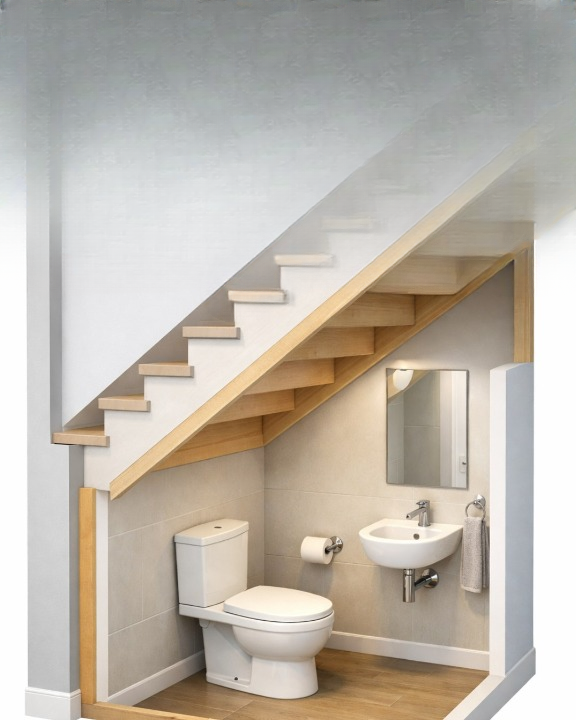
One example that often seems appealing at first—but frequently leads to frustration—is installing a bathroom beneath a staircase.
At first glance, the idea seems clever. The triangular space under a staircase is often unused, dimly lit, and awkwardly shaped. Since it rarely serves a clear purpose, homeowners may see it as the perfect location to add a small restroom. By placing a compact toilet and sink there, it appears possible to gain a convenient powder room while making use of an otherwise empty area.
However, after working with many homeowners and reviewing renovation projects over the years, I’ve noticed that bathrooms installed under staircases often bring challenges that people never anticipated. These issues can range from ventilation difficulties to plumbing complications, and in some cases even structural concerns.
This article takes a closer look at why building a bathroom under the stairs can sometimes lead to unexpected complications, what homeowners should consider before attempting such a project, and what alternative solutions may work better.
The Appeal of Using Under-Stair Space
In many homes, the area beneath a staircase looks like wasted square footage. It might be used as a storage closet or simply left empty. Because homes are becoming more compact and people are trying to maximize every inch of available space, the idea of turning that area into something useful can be very tempting.
A small powder room seems like a logical choice. Guests would have a convenient place to wash their hands, and the house would technically gain an additional bathroom. In real estate discussions, extra bathrooms are often associated with increased convenience and sometimes improved market appeal.
From a design perspective, the concept appears efficient. A sink and toilet do not require much space compared to larger rooms, so the triangular footprint beneath the stairs might appear sufficient.
Unfortunately, what seems like a smart use of space on paper can present practical challenges once construction begins.
The Difference Between Concept and Reality
When homeowners first imagine an under-stair bathroom, they often picture a neat, compact room that fits perfectly into an otherwise unused area. In reality, bathrooms are among the most complex rooms in any home. They require careful planning, reliable plumbing, proper ventilation, and strict adherence to building codes.
Unlike a storage closet or pantry, a bathroom introduces water supply lines, drainage pipes, electrical connections, moisture management systems, and ventilation requirements. Each of these elements must function correctly to keep the room safe, comfortable, and durable over time.
Trying to fit all of these systems into a tight, oddly shaped space can lead to compromises. Those compromises sometimes create maintenance issues or reduce the overall comfort of the room.
Let’s explore the most common challenges that arise when bathrooms are installed beneath staircases.
Ventilation Can Be Difficult
One of the most common problems with under-stair bathrooms involves airflow.
The space beneath a staircase is typically surrounded by walls and interior framing. Unlike rooms that sit along the outer walls of a house, this location rarely has direct access to windows or exterior walls. As a result, natural ventilation is usually limited or completely absent.
Bathrooms generate moisture whenever sinks or toilets are used, and humidity levels can increase quickly. Without proper ventilation, that moisture may linger in the room, potentially leading to unpleasant odors or long-term damage to surfaces.
To manage humidity effectively, bathrooms usually rely on ventilation fans connected to ducts that carry moist air outside the home. Installing this type of system in a stairwell area can be complicated because ducts must travel through framing or ceilings to reach an exterior vent.
If ventilation is not planned carefully, the room may feel damp or stale over time. Good airflow is essential in bathrooms, and achieving it in an under-stair space can require additional design work.
Plumbing Can Become Complicated
Another significant challenge is plumbing.
In most homes, bathrooms are located near existing water supply and drainage lines. Kitchens, laundry rooms, and other bathrooms are often grouped together because this arrangement simplifies plumbing installation and maintenance.
The area beneath a staircase, however, is not always close to these systems. As a result, installing water lines and drain pipes may require extensive modifications to the existing plumbing network.
Drainage pipes must follow specific slopes so that wastewater flows properly through the system. When a bathroom is placed far from existing drain lines, maintaining the correct slope can become difficult.
In some cases, homeowners explore specialized equipment that helps move wastewater through pipes when gravity alone is not enough. While these systems can work in certain situations, they may require additional maintenance and should always be installed by qualified professionals.
Proper planning is essential to ensure the plumbing system remains reliable over the long term.
Building Code Requirements
Bathrooms must comply with local building codes, which are designed to protect safety, health, and structural integrity. These codes cover many aspects of construction, including ceiling height, ventilation, electrical safety, and plumbing design.
Under-stair spaces sometimes present challenges because the ceiling slopes downward following the staircase. In some areas, this slope may reduce headroom below the minimum height required by building regulations.
If a bathroom does not meet code requirements, it may create difficulties during home inspections, renovations, or future property sales. For this reason, it’s always wise to consult professionals before beginning any project that alters plumbing or structural components.
A licensed contractor or architect can help determine whether the available space meets local requirements and suggest safe design solutions if modifications are needed.
Structural Considerations
Staircases are important structural components of a home. They support the weight of people moving between floors and often connect to the framing of surrounding walls and floors.
When installing a bathroom beneath the stairs, contractors sometimes need to modify framing or create space for pipes and fixtures. Any structural changes must be carefully planned to ensure the staircase remains stable and secure.
Removing or weakening support beams without proper reinforcement could affect the strength of the structure. For this reason, structural changes should always be evaluated by qualified professionals who understand how to maintain the integrity of the building.
Safety should always take priority over convenience when making modifications near load-bearing structures.
Space and Comfort Limitations
Even if ventilation, plumbing, and structural issues are addressed successfully, the finished room may still feel cramped.
The triangular shape beneath a staircase often results in a sloped ceiling. This can limit standing room and create an unusual layout where certain areas of the room feel more confined than others.
Placing fixtures such as a sink or toilet in a comfortable position may require careful planning. Adequate clearance is necessary to ensure that people can use the space comfortably.
Lighting can also be a challenge. Since under-stair spaces rarely have windows, artificial lighting must be designed carefully to avoid making the room feel dark or enclosed.
In some cases, homeowners discover that the space technically functions as a bathroom but does not provide the level of comfort they expected.
Noise and Privacy
Another factor to consider is location.
Staircases are often positioned near entryways, living rooms, or hallways where people frequently pass by. Installing a bathroom in this location can sometimes reduce privacy because sounds from plumbing fixtures may be noticeable in nearby areas.
Soundproofing techniques can help reduce noise transmission, but they may not eliminate it entirely. For homeowners who value quiet and privacy in shared living spaces, the location of a bathroom beneath the stairs may feel less than ideal.
How It Can Affect Home Value
Adding a bathroom to a home is often associated with improved convenience and sometimes increased property value. However, the quality and usability of the space matter just as much as the number of fixtures.
If a bathroom feels cramped, poorly ventilated, or awkwardly placed, potential buyers may view it differently than a well-designed bathroom located in a more practical area of the house.
Real estate professionals often emphasize that thoughtful design matters. A carefully planned addition that blends naturally with the rest of the home is more likely to appeal to future buyers than a space that feels improvised.
Alternative Ways to Add a Small Bathroom
For homeowners who want to add a bathroom in a compact house, there are several creative alternatives that may work better than using the space beneath the stairs.
Converting a Closet
Larger closets sometimes offer enough space for a compact powder room. Because closets are already enclosed and framed, they can sometimes be adapted more easily than irregular stairwell spaces.
Using Basement Space
Basements often provide greater flexibility for adding plumbing lines and ventilation systems. If the layout allows, a small bathroom in the basement can serve guests and increase the functionality of the lower level.
Locating Bathrooms Near Existing Plumbing
When possible, placing a new bathroom near existing water lines and drainage pipes simplifies installation and reduces construction costs.
Using Space-Saving Fixtures
Modern plumbing fixtures designed for small spaces—such as wall-mounted sinks or compact toilets—can help create efficient bathrooms without sacrificing comfort.
Planning Before Starting a Renovation
Every home renovation project benefits from careful planning. Before making changes to structural areas or plumbing systems, it’s helpful to speak with professionals who can evaluate the space and offer practical advice.
Architects, contractors, and plumbers can provide valuable insight about feasibility, cost, and safety. Their expertise can help homeowners avoid common mistakes and ensure the finished project meets both functional and regulatory requirements.
Taking time to explore different design options may reveal solutions that are more comfortable, durable, and cost-effective.
Final Thoughts
The space beneath a staircase can certainly spark creative ideas. On paper, installing a compact bathroom there may seem like an efficient way to use unused square footage.
However, real-world experience shows that such projects often involve challenges related to ventilation, plumbing, structural considerations, and overall comfort. While it may be possible to design a functional bathroom in that location, doing so usually requires careful planning and professional guidance.
Homeowners who are considering this type of renovation should take time to evaluate all available options. Sometimes a different area of the house can accommodate a bathroom more easily while maintaining comfort and safety.
Ultimately, thoughtful design decisions help ensure that every room in a home serves its purpose well and contributes positively to the overall living environment.