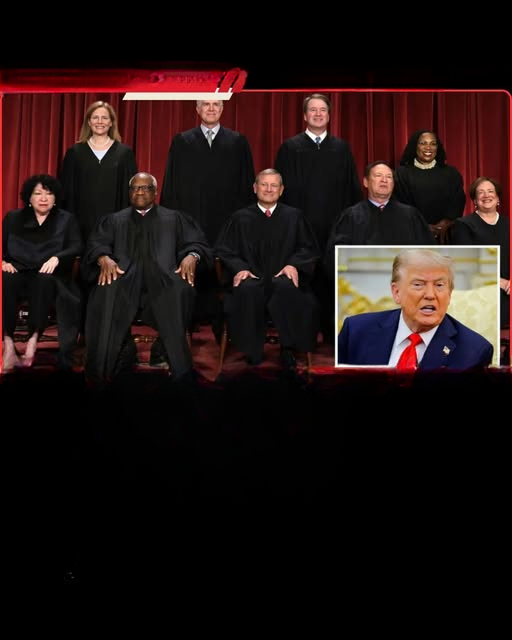
In Washington, conversations about the future of the United States Supreme Court are almost constant. Because justices hold lifetime appointments under the Constitution, any potential change in membership carries long-term consequences for constitutional interpretation, federal law, and national policy. Recently, legal commentators and court observers have been discussing the possibility that Justice Samuel Alito — one of the senior members of the Court — could choose to retire in the coming years.
At this time, it is important to emphasize that Justice Alito has made no public announcement indicating plans to step down. The discussion remains speculative, driven largely by his age, tenure, upcoming projects, and the broader political landscape.
Still, because the Supreme Court plays such a central role in American governance, even informal conversations about potential vacancies generate significant interest. The implications of a retirement — whenever it might occur — would extend well beyond the Court’s marble steps.
This article examines the context surrounding the speculation, Justice Alito’s tenure and jurisprudence, how Supreme Court retirements typically unfold, the political and institutional factors that influence timing, and what a future vacancy could mean for the Court and the country.
Justice Alito’s Tenure on the Court
Justice Samuel Alito was nominated to the Supreme Court by President George W. Bush in 2005 and was confirmed by the Senate in early 2006. Since taking his seat, he has served for two decades, making him one of the longer-serving members of the current Court.
Born in 1950, Alito brought to the bench prior experience as a federal appellate judge on the U.S. Court of Appeals for the Third Circuit. Over time, he became known as a leading voice within the Court’s conservative wing.
His judicial philosophy often emphasizes textual interpretation of statutes and a historically grounded understanding of constitutional provisions. In numerous cases, he has written majority opinions, concurrences, and dissents that reflect a consistent approach to questions involving federal authority, administrative agencies, religious liberty, and constitutional structure.
As of 2026, Alito is in his mid-70s. In recent decades, Supreme Court justices have often retired around their late 70s or early 80s, though there is no required retirement age.
Why Retirement Conversations Arise
Speculation about potential retirements tends to emerge for several reasons:
-
A justice’s age
-
Length of service
-
Health considerations
-
Major upcoming projects (such as books or speaking engagements)
-
The political composition of the White House and Senate
Because justices serve for life unless they resign, retire, or are impeached, timing can be influenced by institutional considerations. Historically, some justices have chosen to retire while a president aligned with their judicial philosophy holds office, thereby increasing the likelihood that their successor shares similar interpretive views.
Observers note that Justice Alito, at 75, is approaching an age at which retirement discussions become common. However, many justices have continued serving well beyond that age.
Commentary From Legal Scholars
Legal academics have weighed in on the timing question in media interviews and podcasts.
Melissa Murray, a law professor at New York University, suggested in a recent public discussion that reaching certain tenure milestones can sometimes prompt reflection among justices about the next chapter of their careers. She did not indicate that any official decision had been made.
Similarly, legal commentators such as Steve Vladeck of Georgetown University have noted that upcoming publication projects — including a book reportedly scheduled for release in October — could be interpreted in different ways. Some analysts suggest that book tours may be easier to coordinate outside the Court’s busiest argument periods, while others argue that publication timing does not necessarily signal retirement intentions.
David Lat, a legal commentator and writer, has offered the counterpoint that book sales often benefit from the author’s continued public role, which could support the idea that Justice Alito intends to remain on the bench.
At this stage, these interpretations remain speculative and reflect differing analytical perspectives rather than confirmed plans.
The Political Context
Speculation has also grown because of the current political environment. If a vacancy were to arise, the sitting president would nominate a replacement, subject to Senate confirmation.
President Donald Trump has previously appointed three justices to the Supreme Court during his time in office:
-
Neil Gorsuch
-
Brett Kavanaugh
-
Amy Coney Barrett
Those appointments significantly shaped the Court’s current ideological balance.
If a retirement were to occur while the presidency and Senate majority are aligned politically, confirmation proceedings could proceed relatively quickly. Conversely, divided government often results in slower or more contentious processes.
It is worth noting that Senate leaders traditionally exercise discretion regarding the timing of hearings, especially during election years. Political calculations sometimes factor into decisions about when confirmations move forward.
However, none of these considerations confirm or predict an actual retirement.
Historical Patterns of Supreme Court Vacancies
Since the 1950s, relatively few presidents have had the opportunity to appoint multiple justices.
Presidents such as:
-
Dwight D. Eisenhower
-
Richard Nixon
-
Ronald Reagan
appointed several justices during their terms, influencing the Court for decades.
Lifetime tenure means that even a single appointment can shape constitutional interpretation for a generation. When multiple appointments occur within a short period, the impact can be even more pronounced.
As a result, speculation about future vacancies often centers not only on individual careers but also on long-term judicial philosophy.
The Current Court’s Composition
The Supreme Court presently includes a mix of justices appointed by both Republican and Democratic presidents. The ideological alignment of the Court is frequently described as conservative-leaning, though justices do not always vote in predictable blocs.
The Court’s 2025–26 term includes cases addressing:
-
The scope of federal agency authority
-
Immigration policy questions
-
Constitutional interpretation disputes
-
Administrative law principles
Because Supreme Court decisions can influence national policy in areas ranging from healthcare to environmental regulation, even a single change in membership can alter voting coalitions and legal reasoning.
Age and Retirement Trends
Legal analyst Bruce Mehlman has pointed out that most current justices are younger than the average retirement age of approximately 79 for recent decades.
Justice Alito will turn 76 in April. Several justices historically have served into their 80s, including:
-
John Paul Stevens
-
Ruth Bader Ginsburg
Age alone, therefore, is not a reliable indicator of imminent retirement.
Health, personal considerations, workload preferences, and long-term planning all factor into such decisions.
Book Publication and Public Life
Justice Alito reportedly has a book scheduled for release in October. Some analysts suggest that major publication efforts may coincide with transitions in professional life. Others counter that sitting justices frequently publish books while remaining active members of the Court.
In recent years:
-
Justice Ketanji Brown Jackson released a book during her tenure.
-
Justice Amy Coney Barrett also published while serving.
These examples demonstrate that book releases do not necessarily correlate with retirement decisions.
Institutional Considerations
Supreme Court retirements are deeply personal decisions. Justices often weigh:
-
Physical stamina
-
Intellectual engagement
-
Family considerations
-
Desired legacy
-
Confidence in the nomination process
Some choose to retire strategically; others remain on the bench until health issues compel departure.
There is no formal announcement schedule, and historically, retirement statements are issued directly by the justice through official channels.
As of now, no such statement has been made by Justice Alito.
Potential Impact of a Future Vacancy
If a vacancy were to occur, the president would nominate a successor. The Senate Judiciary Committee would conduct hearings, followed by a confirmation vote in the full Senate.
A younger nominee could potentially serve for decades, influencing areas such as:
-
Separation of powers
-
Executive authority
-
First Amendment jurisprudence
-
Federal regulatory oversight
-
Civil rights interpretation
Because constitutional rulings often shape policy long after administrations change, appointments are closely watched by both legal scholars and the public.
The Broader Conversation About Supreme Court Reform
Speculation about retirement often intersects with broader debates about Court structure, including:
-
Term limits for justices
-
Expansion of the Court
-
Mandatory retirement ages
Currently, Supreme Court justices serve under lifetime appointments as outlined in Article III of the Constitution. Any structural changes would require significant legislative or constitutional action.
While such discussions continue in academic and political circles, they remain separate from individual retirement decisions.
President Trump’s Public Remarks
President Donald Trump has previously expressed admiration for both Justice Alito and Justice Clarence Thomas, describing them as strong jurists.
He has stated publicly that he hopes they remain on the Court but has also acknowledged that retirement decisions ultimately rest with the justices themselves.
Presidents often avoid directly commenting on specific retirement timing out of respect for judicial independence.
Media, Speculation, and Responsible Reporting
When it comes to Supreme Court matters, speculation can spread quickly. However, responsible reporting distinguishes between:
-
Confirmed announcements
-
Analytical commentary
-
Political strategy discussions
-
Unverified rumor
As of this writing, no formal steps toward retirement have been announced.
Legal observers continue to analyze signals, but the only definitive source of such information would be an official statement from Justice Alito or the Court.
Conclusion: Watching Without Presuming
Discussions about the possible retirement of Justice Samuel Alito reflect the enduring importance of the Supreme Court in American governance.
Given his tenure, age, and influence, it is natural that analysts consider what a future transition might mean. However, speculation remains just that — speculation.
The Court continues its current term, hearing arguments and issuing opinions. Justice Alito remains an active member of the bench.
If and when a retirement decision is made, it will follow established constitutional procedures for nomination and confirmation.
Until then, conversations about timing and succession remain part of the broader public dialogue about the Supreme Court’s evolving role in shaping American law.